8 Types of Course Management Systems Explained for 2025
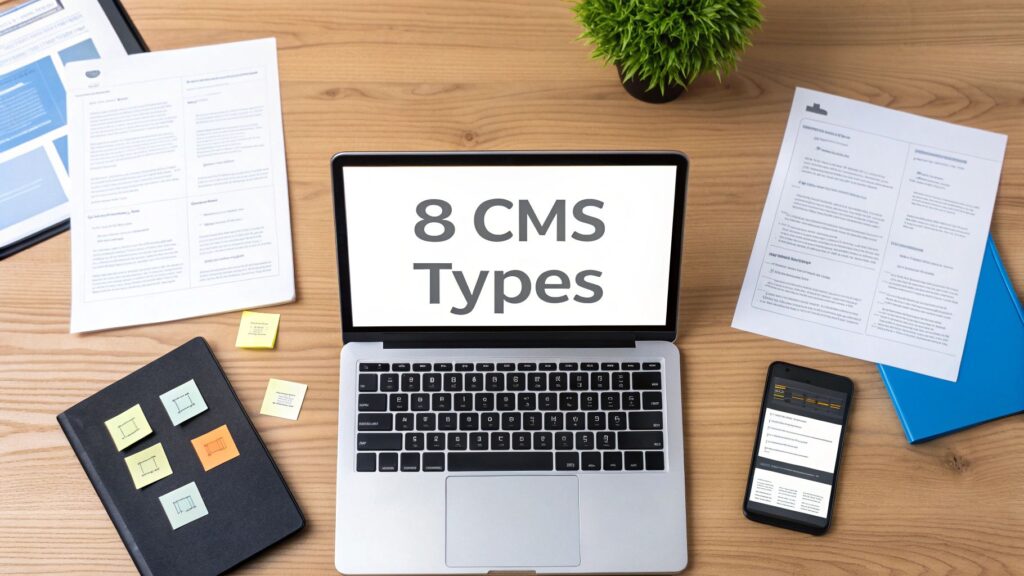
Hey there, course creator! If you’re diving into the world of online education, you’ve probably realized that not all platforms are built the same. Picking the right tool can feel overwhelming. It is often the difference between a smooth launch and a technical nightmare for both you and your students. It’s easy to get lost in all the jargon like LMS, synchronous, and asynchronous.
So, I wanted to break it all down for you. Think of this as your friendly guide to understanding the different types of course management systems out there. We’re going to explore eight distinct categories, from traditional Learning Management Systems (LMS) to modern Social and Collaborative Learning Platforms.
For each type, we’ll cover its core features, ideal use cases, and key pros and cons. This will help you see exactly how each system functions in a real-world scenario. While there are countless specific tools on the market, understanding these fundamental categories is the first step. To help you navigate the vast landscape of options, an ultimate online course platform comparison can provide detailed insights into various solutions.
By the end of this article, you’ll have a much clearer idea of which system fits your unique teaching style, content format, and student community. Let’s find the perfect home for your course.
1. Learning Management Systems (LMS)
When people think of online course platforms, they are usually picturing a Learning Management System (LMS). As one of the most established types of course management systems, an LMS is an all-in-one software application designed to deliver, manage, track, and report on educational courses or training programs. Think of it as a centralized digital campus.
LMS platforms are the workhorses of online education. They’re used extensively by universities like Stanford (using Canvas) and corporations like Amazon for employee training. They provide a structured environment where instructors can upload course materials, create assignments, manage discussions, and grade students, all within a single system.
When to Use an LMS
This is the right choice if you need a comprehensive, structured learning environment. An LMS is ideal for formal education settings, corporate compliance training, and any program requiring detailed progress tracking and certification. If you’re managing multiple instructors and a large volume of students who need a consistent, unified experience, an LMS is built for that scale.
Actionable Tips for Implementation
Getting started with an LMS can feel like a big project, but a few key steps can make it much smoother.
- Launch a Pilot Program: Before a full-scale rollout, test the LMS with a small, engaged group of instructors and learners. This helps you identify potential issues and gather valuable feedback.
- Invest in Training: A powerful tool is only useful if people know how to use it. Provide comprehensive training and ongoing support for your instructors to help them leverage the platform’s full potential.
- Leverage Analytics: Use the built-in reporting features to track learner engagement, completion rates, and assessment scores. These insights are crucial for identifying areas where your course content can be improved.
- Prioritize Mobile Access: Ensure the LMS you select offers a robust mobile experience. Learners expect to access content on their phones and tablets, so this is non-negotiable for modern education.
Choosing the right platform is a critical first step. For a deeper dive into the selection process, you can explore this guide on how to choose an LMS.
2. Open-Source Learning Platforms
For those who want complete control over their digital learning environment, open-source platforms offer a powerful alternative. As a distinct category among the types of course management systems, an open-source platform provides its source code for free. This allows anyone to modify, customize, and redistribute it. This gives you the ultimate flexibility to build a learning environment tailored precisely to your needs, free from vendor lock-in.
These systems are the foundation for many large-scale educational initiatives and institutions that require a high degree of customization. Moodle, one of the most well-known examples, is used by countless universities and organizations worldwide. Similarly, Open edX powers massive online course providers, demonstrating the scalability and robustness of these community-driven platforms. You are in the driver’s seat, able to shape every feature.
When to Use an Open-Source Platform
This approach is best if you have access to technical resources and a clear vision for a custom learning experience. An open-source platform is ideal for institutions wanting to avoid licensing fees, integrate with unique in-house systems, or build proprietary features. If you have the IT staff or budget to manage hosting, security, and maintenance, the trade-off is unparalleled control and a system that can evolve with your organization’s specific needs.
Actionable Tips for Implementation
Deploying an open-source platform requires a hands-on approach. The right strategy can lead to a highly successful and cost-effective system.
- Allocate a Budget for IT Resources: While the software is free, you will need to invest in hosting, maintenance, security, and skilled IT personnel. Plan for these operational costs from day one.
- Join the Community: Engage with the platform’s community forums and developer networks. This is an invaluable resource for peer support, troubleshooting, and discovering best practices.
- Utilize Plugins and Extensions: Before building custom features from scratch, explore the vast library of existing plugins. This can save significant development time and extend functionality without altering the core code.
- Implement Strong Security Protocols: You are responsible for securing your platform. Regularly update the software, use security plugins, and enforce strong password policies to protect user data.
- Document All Customizations: Keep detailed records of any changes or modifications you make to the platform. This documentation is crucial for future updates, troubleshooting, and onboarding new developers.
The flexibility of these systems makes them a unique and powerful option. To better understand how they fit into the broader landscape, you can learn more about the different types of learning management systems.
3. Synchronous Learning Platforms
When you need to bring the energy of a live classroom online, you are looking for a Synchronous Learning Platform. Unlike systems that let learners study on their own time, these types of course management systems are all about real-time, simultaneous interaction. Think of them as virtual classrooms where instructors and students connect live through video conferencing, screen sharing, and interactive tools.

Platforms like Zoom, Microsoft Teams, and Google Meet have become household names. They power everything from university lectures to corporate training workshops. They create an engaging, face-to-face dynamic by allowing for live Q&A, group discussions, and immediate feedback. This direct connection helps build a sense of community and keeps learners actively involved in the material.
When to Use a Synchronous Learning Platform
This is the right choice when real-time interaction is crucial to the learning experience. Synchronous platforms are perfect for live workshops, coaching sessions, collaborative projects, and any course that benefits from spontaneous discussion and direct instructor guidance. If your goal is to foster community, answer questions as they arise, and replicate the immediacy of a physical classroom, this is the tool for the job.
Actionable Tips for Implementation
Hosting a successful live session requires more than just sending a meeting link. A few key practices can make all the difference.
- Set Clear Participation Rules: Start each session by explaining how you want students to participate. Should they use the “raise hand” feature, type questions in the chat, or unmute to speak? Setting expectations early prevents confusion.
- Use Breakout Rooms: For group activities, breakout rooms are your best friend. They allow you to divide a large class into smaller, more focused discussion groups, which encourages collaboration and active participation from everyone.
- Test Your Tech Early: Always log in 10-15 minutes before the session starts to test your camera, microphone, and screen sharing. Encourage your students to do the same to ensure a smooth start.
- Record Every Session: Not everyone can make the live event. Recording the session and making it available afterward ensures that students who missed it or want to review the material can do so on their own time.
4. Asynchronous Learning Platforms
While many systems facilitate live interaction, Asynchronous Learning Platforms are designed for the opposite. This is one of the most flexible types of course management systems, where learning happens on the student’s own schedule. Content is pre-recorded and uploaded. This lets learners access materials, watch lectures, and complete assignments whenever and wherever they choose. Think of it as on-demand education.
This model was popularized by the Massive Open Online Course (MOOC) movement. Platforms like Coursera and Udemy brought university-level courses to a global audience. The core idea is to remove the constraints of time and place, making education accessible to working professionals, international students, and anyone needing to fit learning into a busy life.
When to Use an Asynchronous Platform
This approach is perfect when your audience has diverse schedules or lives in different time zones. It’s the best choice for self-paced courses, evergreen training content, and programs where learner autonomy is a priority. If your goal is to reach the widest possible audience without requiring everyone to be online at the same time, an asynchronous platform is your ideal solution.
Actionable Tips for Implementation
Keeping learners engaged without live interaction requires a thoughtful strategy. Here’s how to make your asynchronous course a success.
- Create Structured Learning Paths: Without a live instructor to guide them, learners need a clear roadmap. Organize content into logical modules with defined milestones to prevent them from feeling lost.
- Break Content into Chunks: Instead of one-hour lectures, create a series of 5-10 minute videos. Shorter, focused content is easier to digest and helps maintain learner motivation.
- Establish Communication Expectations: Let students know how and when they can expect to hear from you. Set clear guidelines for response times on questions or assignment feedback to build a sense of support.
- Incorporate Peer Interaction: Use discussion forums or peer-review assignments to foster a sense of community. This encourages learners to engage with each other and learn collaboratively, even on their own time.
5. Mobile Learning Management Systems (mLMS)
A Mobile Learning Management System (mLMS) isn’t just a standard LMS that works on a phone. It’s a platform built from the ground up for the mobile experience. As one of the most learner-centric types of course management systems, an mLMS prioritizes on-the-go access, responsive design, and features that leverage a smartphone’s native capabilities. It’s all about delivering learning content directly into the hands of users, wherever they are.

These systems are designed for modern learners who expect flexibility. Think of the seamless experience on apps like Duolingo or the mobile versions of Coursera and Canvas. They recognize that learning doesn’t just happen at a desk. An mLMS provides offline access to materials, uses push notifications for reminders, and presents content in bite-sized, easily digestible formats perfect for a commute or a quick study session.
When to Use an mLMS
This is the perfect choice when your learners are frequently on the move, work in the field, or simply prefer using their mobile devices. An mLMS is ideal for just-in-time training, performance support, microlearning modules, and any educational program where immediate and convenient access is a top priority. If your audience is primarily Gen Z or millennials, a mobile-first approach is an expectation.
Actionable Tips for Implementation
Deploying an effective mobile learning strategy means thinking smaller and more intentionally. A few key practices can make a huge difference.
- Design for Small Screens First: Start your course design with the mobile view, not the desktop one. This “mobile-first” approach forces you to prioritize essential content and create a clean, uncluttered user interface.
- Enable Offline Functionality: Don’t assume your learners will always have a stable internet connection. Allow users to download key videos, documents, and quizzes for offline access.
- Optimize Your Media: Large video files and high-resolution images can drain data and load slowly. Compress your media to ensure a smooth, fast experience without sacrificing quality.
- Use Push Notifications Strategically: Send timely reminders about deadlines, new content, or discussion updates. Be careful not to overuse them, as too many notifications can lead to users disabling them entirely.
6. Corporate Training and Compliance Management Systems
While a general LMS can handle corporate training, a specialized Corporate Training and Compliance Management System takes it to another level. As a specific subset of the types of course management systems, these platforms are purpose-built to manage employee onboarding, professional development, and mandatory regulatory training. Their primary focus is on organizational efficiency, risk mitigation, and proving the return on investment (ROI) of learning initiatives.
Platforms like Cornerstone OnDemand and SAP SuccessFactors Learning are designed to integrate seamlessly into a company’s ecosystem. They excel at tracking mandatory training completion, managing certifications that expire, and generating detailed reports needed for regulatory audits. This is about ensuring the workforce is skilled, compliant, and aligned with business goals.
When to Use a Corporate Training System
This is your go-to solution when your training is directly tied to business operations, safety, or legal requirements. If you need to certify employees, track compliance for industry regulations like HIPAA or OSHA, or tie learning outcomes directly to performance metrics, a specialized corporate system is essential. It’s built for organizations that view training as a critical business function.
Actionable Tips for Implementation
Deploying a corporate training system effectively requires a focus on both technology and user engagement.
- Integrate with HR Systems: Connect your platform with your existing Human Resources Information System (HRIS). This creates a single source of truth for employee data, automating enrollments and simplifying reporting.
- Automate Compliance Reporting: Set up the system to automatically generate and send compliance reports to stakeholders. This saves countless hours and ensures you’re always prepared for an audit.
- Use Gamification for Engagement: Mandatory training can feel dry. Incorporate gamification elements like leaderboards, badges, and points to boost participation and make learning more enjoyable.
- Schedule Refresher Training: Don’t let certifications lapse. Use the system’s automation to schedule and assign mandatory refresher courses well before credentials expire, keeping your workforce continuously compliant.
For those navigating the corporate learning space, platforms like iSpring Learn offer robust features tailored to these specific business needs.
7. Social and Collaborative Learning Platforms
Moving away from the top-down structure of traditional systems, Social and Collaborative Learning Platforms are built on the idea that learning is a community activity. As one of the more modern types of course management systems, these platforms prioritize peer-to-peer interaction, discussion, and knowledge sharing over one-way content delivery. Think of them as a dedicated social network for learning.

Platforms like Mighty Networks, Circle, and even educational communities on Slack are prime examples. They create an environment where learners can ask questions, share insights, and collaborate on projects organically. The focus shifts from a single instructor as the source of truth to a community where everyone contributes to the collective understanding.
When to Use a Social and Collaborative Learning Platform
This is the ideal choice if your primary goal is to build a vibrant, engaged community around your subject matter. It works exceptionally well for mastermind groups, coaching programs, and any course where discussion and shared experience are central to the learning process. If you want to foster long-term relationships and encourage learners to support each other, this model is far more effective than a traditional LMS.
Actionable Tips for Implementation
Building a successful learning community requires more than just choosing the right software. You need to actively cultivate the culture.
- Establish Clear Community Guidelines: From day one, set the tone for respectful and constructive interaction. A clear code of conduct prevents misunderstandings and ensures the space remains safe and welcoming for everyone.
- Model the Behavior You Want to See: As the facilitator, be active in discussions. Ask thoughtful questions, share your own insights, and respond to members. Your engagement sets the standard for the rest of the community.
- Create Smaller Subgroups: Large communities can be intimidating. Create smaller, topic-specific groups or channels to facilitate more intimate and focused conversations. This helps members connect on a deeper level.
- Recognize and Reward Contributions: Publicly acknowledge members who provide exceptional value, answer questions, or support others. This simple act of recognition encourages continued participation and reinforces a positive community culture.
To explore a platform that excels at this, you can check out how communities are built on a platform like Mighty Networks.
8. Microlearning and Just-in-Time Learning Platforms
Breaking away from traditional, long-form course structures, microlearning platforms deliver short, highly focused learning modules. As one of the most agile types of course management systems, these platforms are built to provide “just-in-time” knowledge. They offer bite-sized content (typically 2-5 minutes) that solves a specific problem or teaches a single skill. Think of it as a library of quick answers rather than a semester-long textbook.
This approach is popularized by apps like Duolingo for language learning and used in corporate settings by companies like SafetySkills for on-demand safety training. The core idea is to fit learning into the natural flow of work and life. It’s about delivering information precisely when it’s needed most. This format respects the learner’s time and improves knowledge retention by focusing on one concept at a time.

When to Use a Microlearning Platform
This is the perfect choice for performance support, skills reinforcement, and training on rapidly changing topics. Microlearning is ideal for mobile-first audiences who need to learn on the go. An example would be sales teams needing quick product refreshers or field technicians accessing repair guides. If your goal is to provide immediate, actionable knowledge rather than comprehensive certification, this approach is far more effective.
Actionable Tips for Implementation
Deploying a microlearning strategy requires a shift in how you think about content creation.
- Stick to One Objective: Each micro-lesson should have a single, clear learning objective. Don’t try to cram multiple topics into one short module.
- Embrace Multimedia: Use a mix of short videos, infographics, quizzes, and interactive elements to keep learners engaged. The format should be as dynamic as the content.
- Enable Mobile-First Access: Your content must be flawlessly accessible on a smartphone. Learners will be using these platforms during commutes, breaks, or right on the job site.
- Connect to Performance: Tie microlearning modules directly to real-world tasks and job performance. This provides immediate context and demonstrates the value of the training.
Choosing the right platform is key to success. For those seeking highly concise and efficient learning solutions, exploring microlearning platforms like Shortgenius can provide insights into systems designed for quick, bite-sized content delivery. You can also explore this guide on the best platforms for microlearning to see more options.
8-Point Comparison of Course Management Systems
| Platform | Implementation complexity | Expected outcomes | Ideal use cases | Key advantages |
|---|---|---|---|---|
| Learning Management Systems (LMS) | High configuration, integrations, instructor training | Centralized course delivery, enrollment, grading, analytics | Universities, schools, large corporate programs needing full-featured system | All-in-one solution; scalable; robust reporting |
| Open-Source Learning Platforms | High installation, customization, ongoing maintenance | Highly customizable environment, vendor independence, data control | Institutions with technical expertise seeking control and low licensing fees | No license fees; full customization; data ownership |
| Synchronous Learning Platforms | Low–Medium setup and scheduling, real-time tooling | Immediate interaction, live Q&A, higher real-time engagement | Live classes, webinars, tutoring, real-time workshops | Real-time feedback; strong engagement; classroom-like interaction |
| Asynchronous Learning Platforms | Low–Medium content design and course structuring | Flexible self-paced learning, scalable reach, repeatable content delivery | MOOCs, professional development, learners in varied timezones | Flexibility; scalable; learners can review content on demand |
| Mobile Learning Management Systems (mLMS) | Medium mobile-first design, app development, testing | Mobile access, higher engagement, improved completion rates | Commuter learners, microlearning, on-the-go workforce training | Mobile-first access; offline capability; optimized for short sessions |
| Corporate Training & Compliance Systems | Medium–High HR integrations, reporting, governance | Compliance documentation, certification tracking, audit readiness | Large enterprises with regulatory and mandatory training needs | Automated compliance tracking; HR integration; audit trails |
| Social & Collaborative Learning Platforms | Low–Medium platform setup, community guidelines, moderation | Peer-to-peer knowledge sharing, stronger community engagement | Community learning, peer support groups, project-based courses | Builds community; encourages peer learning and collaboration |
| Microlearning & Just-in-Time Platforms | Low–Medium focused content creation, sequencing | Rapid skill acquisition, high completion rates, quick refreshers | Just-in-time training, busy professionals, performance support | Bite-sized modules; high retention; quick to consume and update |
Making the Right Choice for Your Learners
We’ve just navigated the expansive landscape of course management systems, from the structured powerhouses of traditional Learning Management Systems (LMS) to the agile, on-the-go nature of Microlearning Platforms. That was a lot of ground to cover, but now you’re equipped with a detailed map to guide your decision-making process. The goal was to give you the clarity to find the platform that aligns perfectly with your educational vision and, most importantly, your learners’ needs.
Understanding the different types of course management systems is the first critical step. It shifts your perspective from simply searching for a tool to strategically designing an entire learning experience. The right system is the digital campus where your community will grow, knowledge will be shared, and transformations will happen.
From Theory to Action: Your Next Steps
So, where do you go from here? It’s time to move from understanding the options to making a concrete choice. Here’s a simple, actionable framework to guide you:
Define Your Ideal Learner Journey: Before you look at any more features, sketch out the experience you want your students to have. Do they thrive on live interaction (Synchronous)? Do they need the flexibility to learn on their own schedule (Asynchronous)? Or are they corporate professionals who need quick, compliant training (Corporate Training Systems)? Your learners’ needs are your North Star.
Audit Your Content and Teaching Style: Take a hard look at what you teach and how you teach it. Is your content designed for deep, collaborative projects (Social Learning Platform)? Or is it better suited for short, focused bursts of information that can be accessed on a phone (mLMS or Microlearning)? Your platform should amplify your teaching style, not force you into a box.
Evaluate Your Technical Comfort and Resources: Be honest about your own capabilities. Are you comfortable with the setup and maintenance required for an Open-Source Learning Platform, or do you need a plug-and-play solution? Your time and technical skills are valuable resources, so choose a system that respects them.
Ultimately, remember that you might not find everything you need in a single platform. Many successful educators create a powerful learning ecosystem by blending different types of course management systems. For example, you could use a robust Asynchronous Platform for your core curriculum while integrating a Synchronous Learning Platform for weekly live office hours and Q&A sessions.
The power is now in your hands. You have the knowledge to look past the marketing hype and focus on the architecture that will best support your educational goals. Choosing the right system is a foundational decision that will impact everything from student engagement to your own administrative workload. Take your time, trust your gut, and build the amazing learning environment your students deserve.