
How to Increase Learner Engagement in Your Course

You’ve poured countless hours into creating your online course, but are your students really connecting with it? Learner engagement is the engine that drives any successful online program. When students are involved and motivated, they don’t just finish your course—they get real, lasting results.
But let’s be honest, figuring out how to boost that engagement can feel like a huge challenge. Where do you even begin?
I’ve found it helps to break it all down into three core pillars: Intentional Design, Compelling Content, and a Thriving Community. When these three elements work together, you create an environment where learners actually want to show up and participate.
This simple visual breaks down the key areas we’ll be diving into.
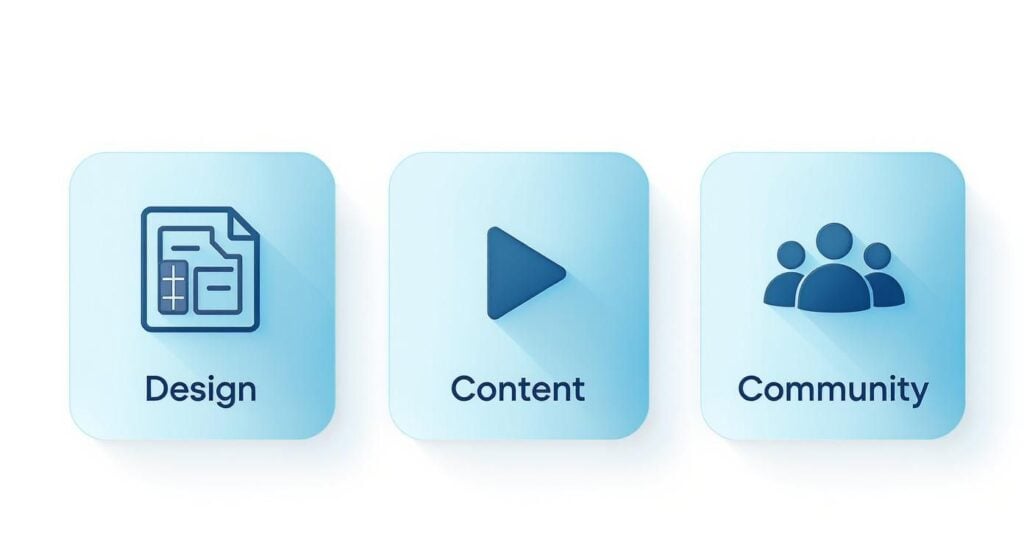
Think of these as the legs of a stool. If one is weak, the whole experience becomes wobbly.
Why Engagement Isn’t Just a “Nice-to-Have”
Engagement isn’t just a fluffy metric. It directly impacts your completion rates, student satisfaction, and whether they’ll buy from you again. When a learner feels connected, they’re far more likely to succeed.
The data backs this up. A recent Gallup poll found that student engagement is at an all-time high, with 50% of students agreeing that school gives them the chance to do what they do best. You can dig into the latest findings on Gen Z student engagement for more detail.
What does this tell us? People are actively seeking learning experiences that feel personal and relevant.
The goal is to make your course feel less like a lecture and more like a conversation. You want to create an experience so valuable that students can’t help but get involved.
Throughout this guide, I’ll walk you through practical strategies to build a more engaging course from the ground up. We won’t be talking about vague theories. Instead, we’ll focus on actionable steps you can implement right away.
Here’s a quick summary of what’s coming up.
Core Engagement Strategies at a Glance
Here is a quick summary of the key pillars for boosting learner engagement, their main benefits, and a simple first step for each.
| Strategy Pillar | Primary Benefit | Your First Step |
|---|---|---|
| Course Design | Builds momentum and encourages active participation from the start. | Add one short, low-stakes quiz or interactive element to your first module. |
| Content Delivery | Keeps learners interested and prevents them from feeling overwhelmed. | Send a “coming soon” email teasing the next module to build anticipation. |
| Community Building | Fosters connection and provides a support system for learners. | Post one open-ended question in your community forum or group this week. |
This table is just your starting point. You can quickly see where your course is already strong and identify a few opportunities for easy wins that will make a big difference.
Design Your Course for Maximum Interaction
Great engagement isn’t a happy accident. I’ve learned the hard way that it begins long before your first student ever clicks “enroll.” Simply uploading a bunch of videos and worksheets doesn’t cut it anymore. That just creates a digital library, not a learning experience.
We have to intentionally build opportunities for interaction directly into the fabric of our courses. This means shifting our mindset from creating a passive content archive to building an active, buzzing space where students feel involved. Let’s dig into how to structure your lessons to hold attention, embed activities that feel hands-on, and add social elements that get your students talking.
Break It Down with Microlearning
One of the biggest engagement killers is overwhelm.
When a student logs into a module and sees a two-hour video staring back at them, their first instinct is often to log right back out and check their email instead. This is exactly where microlearning becomes your secret weapon.
Microlearning is simply the practice of breaking down big, complex topics into small, focused, and easily digestible chunks. Think five- to seven-minute videos instead of a single long lecture. Each bite-sized lesson should tackle just one core idea or skill, making it easy for students to make real progress even if they only have a few minutes to spare.
This approach respects your students’ time and their cognitive load. It helps them build momentum and feel a sense of accomplishment with each small piece they complete, which is a massive factor in keeping them motivated for the long haul.
For instance, instead of one giant “Introduction to Digital Marketing” lesson, you could create a series of micro-lessons:
- What is SEO? (5-minute video)
- Key On-Page SEO Factors (3-minute video + checklist)
- Understanding Backlinks (6-minute video)
This structure immediately feels more approachable and helps learners actually absorb the information more effectively.
Weave In Interactive Elements
Once you have your bite-sized lessons, the next step is to get your students doing something with them. Passive consumption leads to boredom and poor retention. Active participation, on the other hand, sparks curiosity and makes learning stick.
The most effective training formats always involve some kind of action. Research backs this up, showing that things like simulations, quizzes, and discussions keep learners far more involved than just watching a video. You can get more details on how these strategies boost engagement in a report from talentlms.com.
A platform like TalentLMS often shows a course dashboard as the first thing a student sees. It’s a reminder that a clean, intuitive interface is the foundation of a good user experience and the very first step toward engagement.
Here are a few simple ways I love to sprinkle in interaction:
- Low-Stakes Quizzes: After a video, pop in a quick one- or two-question quiz to reinforce the main point. Making it ungraded takes the pressure off.
- Simple Polls: Ask students for their opinion or experience related to the topic. It makes them feel seen and immediately connects the content to their own lives.
- Drag-and-Drop Activities: These are great for sorting concepts into categories or putting the steps of a process in the right order. It’s a fun, hands-on way to check for understanding.
The goal is to make your lessons feel like a two-way conversation, not a one-way broadcast. Every interactive element is an invitation for your student to participate in their own learning.
If you’re looking for more inspiration, we put together a whole guide on this. Check out our post on creative interactive learning design ideas to get your own ideas flowing.
Create Social Hooks for Connection
Learning online can feel pretty isolating, especially in a self-paced course. That’s why building in “social hooks” is so critical for keeping engagement high. These are just intentional prompts and activities designed to get students connecting and learning from one another.
When you foster a real community, your course becomes so much more than just content. It turns into a support system, a sounding board, and a valuable networking opportunity.
You can spark this connection by designing assignments that require a bit of collaboration. A peer-review assignment, for example, is a fantastic way to get students interacting. They not only learn from the material but also gain valuable new perspectives from each other’s work.
Another powerful social hook is a group project. You can create small teams and give them a challenge to solve together based on what they’ve learned in a module. This helps them form stronger bonds within the course while building real-world teamwork skills.
And never underestimate the power of a simple, well-placed discussion prompt. At the end of a lesson, ask an open-ended question like, “How are you planning to apply this concept in your own work this week?” then point them to a dedicated forum or community space to share their answers. That one simple step can ignite some seriously powerful conversations.
Deliver Content That Keeps Learners Coming Back
The way you release your course material is just as important as the content inside.
Imagine giving someone a massive textbook and telling them to “have at it.” It’s overwhelming. The same thing happens when a new student logs in and sees a library of 100 lessons waiting for them. That initial excitement quickly turns into anxiety.

I’ve had a lot more success by controlling the flow of information. You want to create a journey, not just dump a folder of files on your students. This is how you build momentum and keep them excited to log back in week after week.
Let’s look at a few powerful ways to deliver your content.
Pace Your Course with Drip Content
One of my favorite methods for delivering content is the drip model. Instead of unlocking the entire course at once, you release lessons on a set schedule. For example, Module 1 becomes available on day one, Module 2 unlocks a week later, and so on.
This approach does a few fantastic things for learner engagement. First, it completely eliminates that initial feeling of being overwhelmed. When a student only sees the first few lessons, the path forward feels clear and achievable.
Second, it builds anticipation. It turns your course into an event, something students look forward to each week. This simple shift in delivery can dramatically improve how people pace themselves, helping them to properly digest the information instead of just binge-watching videos to get to the end.
By pacing your content, you are guiding the learning experience. This structure often leads to better comprehension and higher completion rates because students focus on mastering one concept at a time.
This is about creating a manageable and motivating rhythm for your course, not just locking content.
Host Live Sessions to Build Connection
Self-paced courses are great, but they can sometimes feel lonely. That’s why I’m a huge believer in mixing in live, real-time events. Live sessions are your chance to connect with your students on a personal level and build a real sense of community.
It’s an opportunity for learners to ask you questions directly, get immediate feedback, and interact with their peers. This human connection is often the missing ingredient that turns a good course into a great one.
Here are a few types of live sessions that work really well:
- Casual Q&A Calls: Host a monthly or bi-weekly “ask me anything” session where students can bring their questions about the course material or their own projects.
- Hands-On Workshops: Go deeper on a specific topic with a practical workshop. For example, you could review a student’s work live or walk through a technical process step-by-step.
- Expert Interviews: Bring in a guest expert to talk about a related topic. This adds massive value and gives your students fresh perspectives.
The quality of your video during these sessions is key, as it directly impacts the student experience. For some practical advice on this, you might be interested in our guide on how to create engaging online course videos.
Use Automated Nudges to Keep Momentum
Even the most motivated students get busy. Life happens. That’s where automated nudges come in. These are small, timely reminders sent via email or platform notifications that prompt students to stay on track.
They aren’t meant to be pushy. Instead, they act as gentle accountability partners that keep your course top of mind. Research shows that simple behavioral cues can have a huge impact on follow-through.
I like to set up a few different types of automated nudges:
- The “You’ve Got This” Nudge: If a student hasn’t logged in for a week, send a friendly email checking in and reminding them of the next lesson.
- The “Milestone Celebration” Nudge: When a student completes a challenging module or reaches the halfway point, send an automated congratulations message. This positive reinforcement is a powerful motivator.
- The “New Content” Nudge: Whenever you drip a new module, send a notification letting students know what’s new and why it’s exciting.
These small, automated touchpoints show that you’re paying attention and invested in their success. It’s a simple way to increase learner engagement without adding a ton of manual work to your plate.
Use Technology and AI to Personalize Learning
Technology, and especially AI, can be a massive ally in creating a course experience that feels personal and actually keeps people hooked. This is about using smart tools to scale that one-on-one feeling, giving each student a journey that feels like it was designed just for them, not letting robots take over your teaching.
When I talk about personalization, I’m not just talking about using a student’s first name in an email. I mean creating learning paths that genuinely adapt to their progress, making sure they’re always challenged but never totally overwhelmed. This is how you crank up engagement without burning yourself out in the process.

This kind of clean, modern learning environment is the perfect backdrop for integrating smart, user-friendly tech. When your tools work seamlessly behind the scenes, they amplify the learning instead of distracting from it.
Create Adaptive Learning Paths
One of the most powerful things you can do with technology is build adaptive learning paths. Imagine a quiz that changes on the fly based on a student’s answers. If they totally get a concept, the system could serve up a more advanced question or let them skip ahead. If they’re struggling, it could offer extra resources or a different style of question to help things click.
This dynamic approach keeps students in that sweet spot where the material is just hard enough to be interesting. It cuts out the frustration of being stuck on something they don’t get and the boredom of reviewing things they’ve already mastered.
And this isn’t some far-off, futuristic concept. Plenty of platforms and tools can help you build this into your courses right now. The whole point is to make the learning journey feel responsive. For a deeper dive, check out our guide on finding the right adaptive learning software for your specific needs.
Automate Feedback and Support
Timely feedback is absolutely crucial for engagement, but let’s be honest, it can be one of the most time-consuming parts of running a course. This is an area where AI tools can be a lifesaver. You can use them to automate feedback on quizzes, offer instant suggestions on written assignments, or even power a chatbot that answers common student questions 24/7.
For example, you could plug in a tool that provides instant grammar and style feedback on an essay. This lets the student make immediate improvements while freeing you up to focus on the big-picture stuff, like their ideas and critical thinking.
This kind of instant support helps learners feel seen and heard without creating a bottleneck where they’re all waiting for you to reply. It keeps their momentum going strong.
The impact of a tech-supported environment like this is pretty staggering. One study found that students in AI-enhanced settings had a 13-fold increase in talk time and a 16-fold increase in nonverbal engagement. Even better, these learners scored 54% higher on tests compared to their peers in traditional classrooms.
Recommended Tools for Increasing Engagement
Finding the right tools can feel a bit overwhelming, but you don’t need a complicated tech stack to make a real difference. To get you started, here’s a look at a few categories of tools that can seriously boost engagement through personalization and interaction.
| Tool Category | Example Tool | Key Engagement Feature |
|---|---|---|
| Interactive Content | Typeform or Articulate 360 | Create engaging quizzes, surveys, and branching scenarios that adapt to user input. |
| AI Writing Assistants | Grammarly or Jasper | Provide automated, instant feedback on written assignments to improve skills. |
| Community Platforms | Circle.so or Heartbeat | Use AI to suggest relevant discussion topics or connect members with similar interests. |
| Video Platforms | Synthesia or Descript | Quickly create personalized video messages or summaries for different learner segments. |
These are just a few examples to get the wheels turning. The key is to find tools that solve a specific problem for you and your students.
For a broader look at how artificial intelligence can really shake up the learning experience, this article on 10 ways AI revolutionizes education is a fantastic resource for exploring what’s possible.
Ultimately, the best tool is the one that helps you connect with your students more effectively. My advice? Start small. Pick one area you want to improve, test out a tool, and see how a little bit of technology can make a huge difference in your students’ experience.
How to Measure and Improve Engagement Over Time
You can’t improve what you don’t measure. Gut feelings are a great starting point, but data tells the real story of how engaged your learners truly are. Let’s get practical about tracking the metrics that actually matter so you can make smart, informed improvements.
This is all about moving beyond assumptions and digging into the real behaviors of your students. By focusing on the right data, you can make small, targeted changes that lead to huge improvements in learner engagement and satisfaction over time.
Define Your Key Engagement Metrics
First things first, you need to know what to look for. Not all data is created equal, and vanity metrics can be seriously misleading. I always recommend focusing on a handful of Key Performance Indicators (KPIs) that directly reflect active participation.
These are the numbers that show you whether students are just logging in or are actually absorbing the material.
Here are a few of the most important metrics I always keep an eye on:
- Course Completion Rates: This is the big one. It shows you exactly how many enrolled students make it to the finish line. A low rate can signal that your content is too long, too difficult, or just isn’t compelling enough to hold their attention.
- Time Spent on Lessons: Most platforms let you see how long a student stays on a specific video or lesson page. If your ten-minute video is only being watched for two minutes on average, that’s a flashing red light that you need to make it more captivating.
- Community Participation: Keep a close watch on how many students are posting, commenting, and interacting in your community forums or groups. This is a direct measure of the “social hooks” we talked about earlier.
Monitoring these metrics isn’t about judging your students. It’s about understanding their journey so you can remove roadblocks and make their learning experience smoother and more enjoyable.
Get Started with A/B Testing
Once you have a handle on your baseline metrics, you can start experimenting. This is where A/B testing, also known as split testing, comes into play. It might sound technical, but the concept is actually simple. You create two versions of something to see which one performs better.
You just show Version A to one group of students and Version B to another, then compare the results to see which one drove more engagement. This data-driven approach takes all the guesswork out of improving your course.
You’d be surprised how small changes can make a huge difference.
Practical A/B Testing Ideas
You don’t need to be a data scientist to run effective A/B tests. The key is to change only one thing at a time. That way, you know exactly what caused the shift in behavior.
Here are a few simple tests you can run to start boosting learner engagement:
- Test Different Lesson Titles: Try a benefit-driven title (like “How to Write Headlines That Convert”) against a more direct one (“Lesson 3: Writing Headlines”). See which one gets more clicks and longer watch times.
- Experiment with Quiz Formats: Pit a multiple-choice quiz against a fill-in-the-blank version. You might find that one format feels more engaging and leads to higher completion rates for a specific module.
- Vary Your Call to Action: At the end of a lesson, test two different prompts. Version A could be, “Share your biggest takeaway in the forum,” while Version B is, “Complete the attached worksheet.” Check to see which prompt generates more activity.
A key part of improving learner engagement is learning how to accurately measure user satisfaction through different methods and metrics. This helps you understand the “why” behind your data.
By consistently testing and tweaking, you create a powerful feedback loop where every piece of data helps you build a more effective and engaging course. This iterative process is the real secret to long-term success.
Your Action Plan for Better Engagement

Alright, we’ve covered a ton of ground, from the nitty-gritty of course design to the numbers that actually tell you what’s working. Now, let’s pull it all together into a simple, actionable plan you can start using today.
The biggest mistake I see course creators make is getting completely overwhelmed. They try to overhaul their entire course in a weekend, burn out, and then nothing changes. Let’s not do that.
Instead, the goal here is to build momentum. Just pick one or two things that feel manageable and take that first small step.
Maybe that means spending an hour this week breaking your longest module into a few shorter, bite-sized micro-lessons. Or perhaps it’s finally getting that first live Q&A session on the calendar. Just get a win on the board.
Prioritize for the Biggest Impact
To help you decide where to start, think about what might give you the quickest and most satisfying win. What’s one small change that could make a real difference for your students right now?
Here’s a simple checklist to get you thinking:
- Add one interactive element: Could you pop a simple poll or a low-stakes quiz into your most popular (or most boring) lesson? It can take just a few minutes.
- Send one community prompt: Go into your community forum or group and post a single, open-ended question. Spark one conversation. That’s it.
- Identify one key metric: Before you do anything else, log into your course platform and find your overall course completion rate. This number is your baseline, your starting point.
The secret to making real, lasting improvements is focusing on small, manageable wins. Seeing one small change boost your engagement is far more motivating than staring at a giant to-do list and doing nothing.
By starting small and being intentional, you’ll start creating a more dynamic and sticky learning environment. And trust me, your students will notice.
Of all the topics course creators obsess over, learner engagement is right at the top of the list. It’s the one thing everyone wants more of. Over the years, I’ve been asked the same handful of questions time and time again by creators trying to crack the code.
Here are my straight-up, no-fluff answers based on what I’ve seen actually move the needle in the real world.
How Do I Know if My Learners Are Actually Engaged?
It’s tempting to stare at your course completion rate, but that number is a classic vanity metric. It doesn’t tell you the real story. I’ve seen courses with 80% completion rates where students just passively clicked “next” to get it over with.
Real engagement is active. It’s voluntary.
I look for life in the community forums. Are people asking smart, thoughtful questions? Are they posting their wins or sharing where they’re stuck? That’s a massive signal. The same goes for live Q&A sessions. If students are showing up, unmuting to ask a question, or firing away in the chat, they’re in it with you.
Most platforms also show you analytics on video watch time, which is another great clue. A 90% completion rate on a 3-minute video tells a much different story than a 20% watch time on a 45-minute lecture.
What Is the Single Best Strategy for a New Course Creator?
If you’re just starting out and the list of “should-dos” feels a mile long, just focus on one thing: community. You can fix your videos, update your worksheets, and tweak your modules later. But you only get one chance to build a real connection with your first cohort of students.
Get a simple, dedicated space set up for them. It could be a private Slack channel, a Circle.so community, or even a basic Facebook Group. The specific tool doesn’t matter as much as your presence within it.
Jump on questions quickly. Encourage people to share their progress. Acknowledge their wins. This turns a transactional online course into a supported, personal journey, and that’s what makes people stick around.
For new creators, a responsive and active community is more valuable than any fancy tech or perfectly produced video. It shows you care and turns a simple course into a supported journey.
Can I Boost Engagement Without Buying Expensive Tools?
Absolutely. In fact, some of the most powerful engagement strategies cost nothing but a little bit of your time and thoughtfulness. The approach matters more than your technology stack.
Here are a few high-impact changes you can make for free:
- Send a weekly summary email. Highlight a key takeaway from the week’s lesson and maybe give a shout-out to a great question from the community.
- Host a monthly “Ask Me Anything” session. You can do this on a platform you already use, like Zoom or even Instagram Live.
- Break up your longest videos. Got a 30-minute monster lesson? Chop it into three 10-minute clips. It’s the same content, but it feels so much more manageable for a busy learner.
It really comes down to being intentional, not just spending more money.