10 Online Learning Best Practices To Master in 2026

I see it all the time. Someone pours their heart and soul into creating an amazing online course, only to watch the completion rates flatline. It’s a frustrating feeling, right? You have the knowledge and expertise, but getting it to stick in a digital format is a whole different ballgame.
It’s all about designing a genuine learning experience. It’s a journey that grabs your students from the first lesson and keeps them hooked until the very end. The goal is to drive real transformation and make sure your learners walk away with new skills they can actually use.
Over the years, I’ve tested just about every strategy imaginable for building engaging online programs. Some things were a total flop. But other strategies worked so well they completely changed the game for our students and our business. These are the powerful, actionable online learning best practices that consistently deliver results.
This guide pulls back the curtain on the 10 most impactful tactics you can start using right away. We’ll skip the generic advice and dive straight into what works, covering everything from microlearning and gamification to personalized learning paths and data-driven course improvements. You’ll get practical steps and real examples to help you build a course that not only educates but also captivates your audience.
Implementing these strategies can be a big undertaking. If you need some extra help developing your course from the ground up, you might want to look into professional eLearning production companies to help bring your vision to life with expert design and development.
Let’s dive into the practices that will get your students across the finish line.
1. Go Bite-Sized with Microlearning and Spaced Repetition
Modern learners are busy, and their attention is a precious resource. One of the most effective online learning best practices is to stop overwhelming them with long, monolithic lessons. Instead, embrace microlearning, which breaks down complex topics into small, digestible chunks.
Each module should be highly focused, typically lasting just 5 to 15 minutes, and designed to achieve a single, specific learning objective.
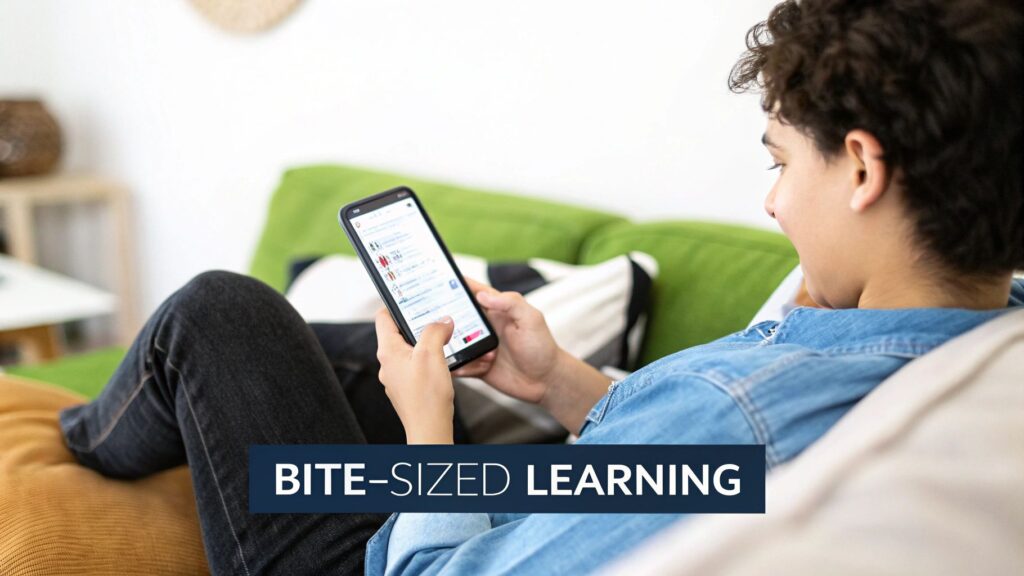
But creating small lessons isn’t enough. To make the knowledge stick, you need to pair microlearning with spaced repetition. This scientifically-backed method involves re-exposing learners to information at increasing intervals over time, moving it from short-term to long-term memory. It directly combats the “forgetting curve” identified by psychologist Hermann Ebbinghaus, making sure your content has a lasting impact.
How to Implement This Strategy
This approach works because it respects the learner’s time and cognitive limits. Platforms like Duolingo master this with their 5-minute language lessons and daily reminder quizzes. LinkedIn Learning also offers thousands of short, skill-focused video modules that professionals can fit into a coffee break.
Here are some actionable steps to get started:
- Single-Objective Modules: Design each micro-lesson around one core concept or skill. If you’re teaching video editing, one module might cover “How to Make a Jump Cut,” and another could focus on “Adding Lower-Thirds Graphics.”
- Automate Review Cycles: Use your Learning Management System (LMS) or email automation to schedule review quizzes or content reminders. A typical schedule might be 1 day, 3 days, 1 week, and then 2 weeks after the initial lesson.
- Quick Knowledge Checks: End each module with a 1-2 question micro-quiz or a simple interactive task. This provides immediate reinforcement and helps the learner confirm they’ve got it.
- Create Visual Aids: Supplement your lessons with infographics, checklists, or one-page summaries that learners can quickly reference. These act as powerful tools for spaced repetition.
By combining these two techniques, you create a powerful, flexible, and highly effective learning experience that fits seamlessly into the modern learner’s lifestyle. To dive deeper into this topic, explore these microlearning best practices on learnstream.io.
2. Interactive and Gamified Learning Elements
Passive learning is a relic of the past. To truly capture and hold a learner’s attention, you need to make them an active participant in their own education. This is where gamification and interactive elements come in.
They transform learning from a one-way broadcast into an engaging, two-way experience by integrating game mechanics like points, badges, and leaderboards directly into your course content.

This strategy uses proven psychological triggers to boost motivation, reinforce knowledge, and create a sense of accomplishment. Interactive quizzes, drag-and-drop exercises, and branching scenarios require learners to think critically and apply what they’ve learned, leading to much higher retention rates. This is one of the most powerful online learning best practices for fighting course fatigue.
How to Implement This Strategy
This approach works by tapping into our natural desire for achievement, competition, and feedback. Platforms like Codecademy excel at this, using a streak system and achievement badges to keep learners coding daily. The quiz-based platform Kahoot! turns classroom reviews into exciting, competitive games, proving that learning can be genuinely fun.
Here are some actionable steps to get started:
- Align Rewards with Outcomes: Don’t add points just for the sake of it. Award badges for mastering a specific skill, like “JavaScript Functions Expert,” not just for watching a video.
- Visualize Progress: Implement progress bars for both individual modules and the overall course. Seeing a course completion percentage tick up from 80% to 90% is a huge motivator.
- Provide Instant Feedback: After a learner completes a quiz or an interactive exercise, give them immediate, constructive feedback. Tell them not only what they got right or wrong, but also why.
- Build Psychological Momentum: Use gamification strategically in your onboarding modules. Awarding the first badge within the first 10 minutes helps build an early habit and a feeling of success.
By thoughtfully integrating these elements, you create a dynamic learning environment that encourages consistent engagement and celebrates every step of the learner’s journey. To see more great examples, check out these strategies for gamification in eLearning on learnstream.io.
3. Foster Community with Social Learning and Peer Interaction
Learning doesn’t happen in a vacuum. One of the most powerful online learning best practices is to build a vibrant community around your content by incorporating social learning.
This approach leverages discussion forums, collaborative projects, and peer-to-peer feedback to transform passive content consumption into an active, shared experience. It’s rooted in the idea that we learn effectively from and with each other.
By facilitating these interactions, you create a supportive ecosystem where learners can ask questions, share insights, and solve problems together. This not only deepens their understanding of the material but also builds valuable relationships and a sense of belonging, which is critical for motivation and retention in an online environment.
How to Implement This Strategy
This strategy humanizes the digital learning experience and creates a powerful network effect. Platforms like Circle.so and Heartbeat Chat build entire businesses around this concept, providing dedicated spaces for member discussions and real-time interaction. Skillshare also encourages social learning through its project galleries, where students can share their work and receive constructive feedback from their peers.
Here are some actionable steps to get started:
- Create Structured Discussion Prompts: Tie specific discussion questions to your lessons to guide the conversation. For example, after a module on marketing, you could ask, “Share one marketing tactic you’ve seen this week and explain why you think it was effective.”
- Establish Clear Guidelines: Post explicit community rules regarding respectful communication, feedback etiquette, and self-promotion. A well-moderated space is a safe and active space.
- Facilitate Peer Feedback: Implement a system for students to review each other’s assignments or projects. Provide simple rubrics or checklists to guide them in giving constructive, helpful feedback.
- Host Live Q&A Sessions: Schedule regular live events where you or other experts can answer questions submitted by the community. This adds immense value and strengthens the student-instructor connection.
By intentionally designing opportunities for interaction, you build a learning community that adds more value than the course content alone. To learn more about building this type of environment, check out these community engagement best practices on learnstream.io.
4. Drip Content and Progressive Disclosure
Dumping an entire course on a learner at once is a recipe for overwhelm. A key strategy among online learning best practices is to use drip content, which strategically releases course materials over a set schedule.
Instead of giving learners access to everything on day one, you deliver modules gradually. This creates a structured and manageable learning path.
This approach maintains engagement momentum by giving learners something to look forward to. Paired with progressive disclosure, which reveals information only after prerequisite concepts are mastered, you guide learners on a logical journey. This prevents them from jumping ahead, getting confused, or feeling paralyzed by the sheer volume of content available.
How to Implement This Strategy
This methodical release schedule paces the learner, improves completion rates, and builds anticipation. Platforms like Kajabi and Teachable have built-in drip features that allow creators to schedule lesson releases by a specific date or based on a student’s enrollment date. Cohort-based course platforms like Maven also rely on this weekly release schedule to keep all students learning in sync.
Here are some actionable steps to get started:
- Create a Logical Schedule: Design your drip schedule based on how long it realistically takes to master each module. If you have beta testers, use their completion data to inform your timing.
- Communicate the Schedule: Be transparent with learners. Provide a course outline or calendar that shows them when new content will become available. This manages expectations and builds excitement.
- Set Completion Prerequisites: Use your LMS to lock future modules until a learner has completed the previous lesson or passed a quiz. This makes sure they build a strong foundation before moving on.
- Synchronize with Email: Align your drip content releases with an automated email sequence. Send a reminder email the day a new module drops to bring learners back into the course platform and keep them on track.
By dripping content, you transform the learning experience from a self-serve buffet into a guided, multi-course meal. It encourages consistent participation and ensures learners absorb information at a pace conducive to long-term retention.
5. Personalized Learning Paths and Adaptive Learning
A one-size-fits-all approach no longer works for the modern digital learner. One of the most impactful online learning best practices is to treat learners as individuals by implementing personalized and adaptive learning paths.
This strategy moves beyond a linear curriculum, allowing learners to follow customized routes based on their existing knowledge, goals, learning pace, and performance.
Adaptive learning takes this a step further by using data and AI to dynamically adjust the content’s difficulty and sequence in real-time. If a learner masters a concept quickly, the system can introduce more advanced topics. If they struggle, it can provide remedial materials or a different style of explanation. This ensures everyone receives the support they need to succeed.
How to Implement This Strategy
This approach works because it meets learners exactly where they are, preventing both boredom and frustration. For example, platforms like Knewton and ALEKS use sophisticated AI to create truly adaptive experiences in subjects like math and science, guiding each student through a unique path to mastery. LinkedIn Learning also suggests relevant courses based on your skills and career goals, personalizing the discovery process.
Here are some actionable steps to get started:
- Start with Simple Branching: You don’t need complex AI from day one. Begin by creating simple pathways. Use a pre-assessment quiz to direct learners to a “beginner,” “intermediate,” or “advanced” track.
- Segment Content by Competency: Organize your course content into modules based on specific skills or competencies, not just broad topics. This makes it easier for an adaptive system to mix and match content to build a custom path.
- Use Data to Trigger Interventions: Monitor learner performance data to identify who is struggling. Use your LMS to automatically trigger an intervention, such as an email with additional resources or a notification to an instructor.
- Preserve Learner Autonomy: While algorithms are powerful, always give learners the option to override suggestions or explore topics outside their recommended path. Choice is a powerful motivator.
By tailoring the educational journey, you make learning more relevant, efficient, and engaging, drastically improving completion rates and knowledge retention. To see how AI is shaping this field, you can explore the work of adaptive learning pioneers like Knewton.
6. Live Instruction and Synchronous Learning Sessions
While self-paced learning offers flexibility, nothing replaces the energy and connection of real-time interaction. One of the most powerful online learning best practices is to integrate live, synchronous sessions into your curriculum.
This includes everything from webinars and Q&A sessions to interactive virtual classrooms where learners can engage directly with you and their peers.
Live instruction transforms a solo learning journey into a shared, community-driven experience. It provides an opportunity for immediate feedback, clarification on complex topics, and the kind of spontaneous discussion that builds lasting relationships and deeper understanding.
How to Implement This Strategy
This approach creates a sense of urgency and accountability that is often missing in purely asynchronous courses. Platforms like Maven and Mighty have built their entire models around cohort-based courses that rely heavily on scheduled live sessions to foster community and drive results. Many creators on Teachable also use its webinar integrations to host live workshops and build excitement for their programs.
Here are some actionable steps to get started:
- Mix in Live Q&A: In addition to formal lessons, host regular, unstructured “office hours” or Q&A sessions where learners can ask questions and get direct support.
- Use Interactive Tools: Don’t just lecture. Use your platform’s features like polls, chat, and breakout rooms to get learners actively involved. A tool like Zoom makes this incredibly simple.
- Record Everything: Always record your live sessions and make the replays easily accessible. This respects learners in different time zones and those with scheduling conflicts, making sure no one misses out.
- Set a Clear Agenda: Before each session, send out a clear agenda with learning objectives. This helps learners come prepared and know what to expect, making the session more productive.
By blending live instruction with self-paced content, you get the best of both worlds: the flexibility of asynchronous learning and the powerful engagement of a real-time classroom. This hybrid model is a key strategy for creating truly transformative online courses.
7. Comprehensive Course Analytics and Learner Data Tracking
Creating a course without tracking learner data is like flying blind. One of the most critical online learning best practices is to use comprehensive course analytics to understand exactly how learners are interacting with your material.
This involves collecting, analyzing, and acting on metrics like completion rates, time spent on lessons, quiz performance, and engagement patterns.
This data-driven approach allows you to move beyond guesswork. You can pinpoint where learners are getting stuck, identify your most engaging content, and make targeted improvements that have a real impact. It’s the key to transforming a good course into an exceptional one by listening to what your learners’ actions are telling you.

How to Implement This Strategy
A data-centric mindset helps you continuously refine the learning journey. Most modern Learning Management Systems (LMS) like Teachable or Thinkific have built-in dashboards showing high-level stats. For deeper insights, tools like Mixpanel can track specific user behaviors, while video platforms like Wistia provide heat maps to show exactly where viewers drop off in your lessons.
Here are some actionable steps to get started:
- Define Success Metrics First: Before you launch, decide what success looks like. Is it a 90% completion rate, a certain average quiz score, or something else tied to your business goals?
- Monitor Engagement Velocity: Don’t just track if someone finished. Look at how long it took them. Are learners binging the content, or are they taking months to complete a short course? This tells you a lot about their motivation and the course’s pacing.
- Analyze Quiz Performance by Question: If a large percentage of learners get the same quiz question wrong, the issue likely isn’t the learners, it’s the lesson. This is a clear signal to revisit and clarify that specific piece of content.
- Set Up Automated Alerts: Configure your system to notify you or a course facilitator when a learner falls behind a critical milestone or fails a key assessment. This allows for timely, proactive intervention before they drop out.
- Use Cohort Analysis: Compare the performance of different groups of learners. Did the cohort that started in May outperform the one from April? Digging into this can reveal the impact of any changes you made to marketing or the course itself.
By embracing analytics, you’re not just guessing what works, you’re building a system for continuous improvement. You empower yourself to make informed decisions that directly enhance learner success and prove the value of your educational content.
8. Build Around Competencies, Objectives, and Assessments
Effective online learning is never a random collection of content. One of the most critical online learning best practices is to build your course backward from what you want learners to be able to do.
This is the core of competency-based design, where every piece of content, every activity, and every quiz is directly tied to a clear, measurable learning objective.
This approach shifts the focus from simple content completion to demonstrated mastery. Learners progress by proving they have acquired specific skills and knowledge, not just by watching videos or clicking “next.” It creates a clear path to a tangible outcome, which is highly motivating for adult learners who are often seeking specific job skills or career advancements.
How to Implement This Strategy
This strategy provides structure and purpose for both the creator and the learner. Think of platforms like Codecademy, where you don’t just learn about Python. You complete skill certification tracks by writing functional code and passing challenges that prove your competency. Similarly, project-based courses on Skillshare often provide detailed rubrics so you know exactly what a “good” final project looks like.
Here are some actionable steps to get started:
- Define Core Competencies: Start by identifying the 3-5 high-level skills or abilities a learner will gain. For a social media marketing course, these could be “Develop a Content Strategy,” “Run Paid Ad Campaigns,” and “Analyze Performance Metrics.”
- Write Action-Oriented Objectives: For each competency, write specific, measurable objectives starting with a verb. For example: “By the end of this module, you will be able to design a one-month content calendar for Instagram.” Use a framework like Bloom’s Taxonomy to ensure you’re targeting different cognitive skills.
- Align Assessments Directly: Every assessment, from a small quiz to a final project, must measure a specific learning objective. If your objective is to teach learners how to create a pivot table, your assessment should require them to build one, not just answer multiple-choice questions about them.
- Use Detailed Rubrics: Create and share rubrics that clearly define the criteria for success at different levels (e.g., Novice, Proficient, Expert). This removes guesswork for learners and makes your grading process fair and transparent.
By designing your course around clear competencies and objectives, you ensure every element has a purpose. This focused approach not only improves learning outcomes but also makes the value of your course immediately obvious to prospective students.
9. Mobile-First Design and Responsive Learning Experiences
In today’s world, learning doesn’t just happen at a desk. Learners are on the go, accessing course content on their phones during a commute, on a tablet on the couch, or on a laptop at a coffee shop.
That’s why a core tenet of modern online learning best practices is to adopt a mobile-first design philosophy. This means designing your learning experience for the smallest screen first and then progressively enhancing it for larger screens.
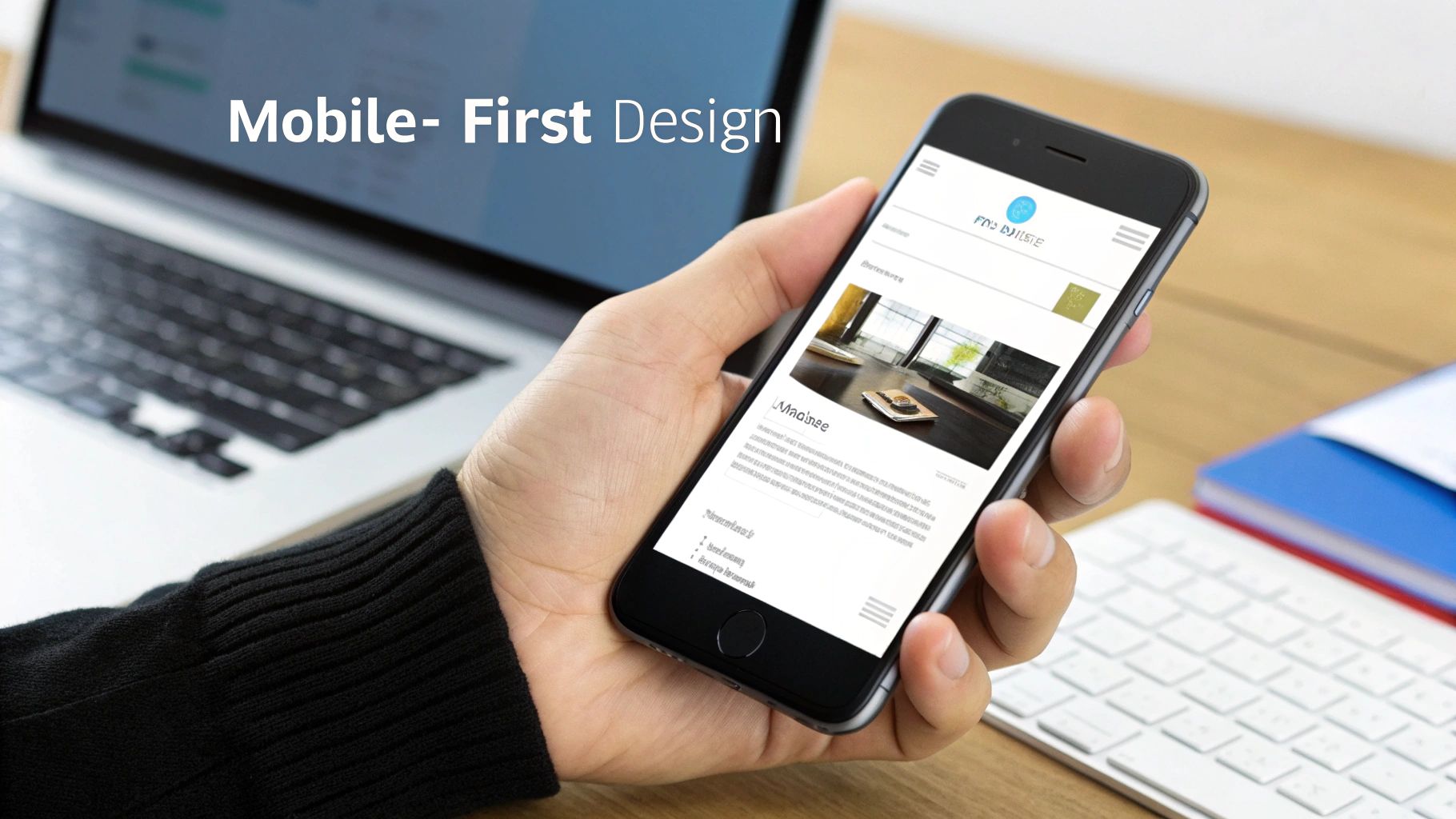
This approach ensures that your content is accessible, functional, and engaging for everyone, regardless of their device. It forces you to prioritize what truly matters, creating a leaner and more focused learning path. Instead of trying to shrink a complex desktop site onto a small screen, you build a solid, streamlined foundation that works brilliantly on mobile and then scales up.
How to Implement This Strategy
This strategy is about meeting your learners where they are. Mobile-first champions like Duolingo built their entire experience around quick, on-the-go interactions. Similarly, platforms like Udemy and Coursera offer robust mobile apps with features like offline viewing, recognizing that reliable internet isn’t always a given. They have simplified navigation and optimized video playback for a seamless mobile experience.
Here are some actionable steps to get started:
- Design for the Thumb: Plan your layout with mobile users in mind. Make sure buttons and key interactive elements are large enough for easy tapping (at least 48px) and are placed within easy reach of a user’s thumb.
- Optimize Your Media: Compress video files for faster loading on mobile networks and always include captions for viewing in sound-sensitive environments. Consider using vertical or square video formats that better fit mobile screens.
- Prioritize Ruthlessly: Mobile screens have limited real estate. Strip away non-essential elements like complex sidebars or decorative graphics. Focus on delivering the core learning content first and foremost.
- Test on Real Devices: Browser emulators are helpful, but nothing beats testing on actual smartphones and tablets. This allows you to check for performance issues, touch accuracy, and how the content feels on different screen sizes and network speeds.
By putting mobile at the forefront of your design process, you create a more flexible, accessible, and user-friendly learning environment that caters to the habits of the modern learner.
10. Multimedia Integration and Multimodal Learning Design
Learners don’t all absorb information in the same way. A core principle for effective online learning is to create engaging content that gets results, making sure learners remain motivated and absorb information effectively.
This is where multimodal learning design comes in, intentionally combining multiple formats like text, video, audio, and interactive elements to cater to different preferences and reinforce concepts.
This approach is one of the most powerful online learning best practices because it enhances understanding by engaging multiple senses. Based on principles like Richard Mayer’s Cognitive Theory of Multimedia Learning, this strategy helps reduce cognitive load by presenting information in complementary ways. It’s not just about adding a video, it’s about thoughtfully designing a cohesive experience where each media type supports the others.
How to Implement This Strategy
This strategy works because it makes learning more dynamic and accessible. Khan Academy excels here, using simple, high-quality videos to explain complex math and science concepts, while MasterClass leverages cinematic production to create an immersive, premium learning experience. They prove that the right media can transform a topic from mundane to memorable.
Here are some actionable steps to get started:
- Prioritize Video for Complexity: Use short, focused videos (under 10-15 minutes) to explain complex processes or demonstrate software. Screen recordings are perfect for procedural “how-to” lessons.
- Use Visuals for Reinforcement: Create infographics, charts, or visual summaries for each module’s key takeaways. These act as quick reference guides that learners can easily review.
- Add Interactive Elements: Go beyond passive viewing. Embed short quizzes, drag-and-drop exercises, or simple simulations directly within your lessons to boost active engagement and knowledge retention.
- Design for Accessibility: Always include captions and provide downloadable transcripts for all video and audio content. This not only serves learners with disabilities but also benefits those who prefer to read or are in a noisy environment.
By combining different media formats, you cater to a wider range of learning styles and create a richer, more effective educational experience that keeps learners hooked from start to finish.
Putting These Practices Into Action
Whew, that was a lot. We’ve journeyed through ten foundational pillars of modern digital education, from the bite-sized power of microlearning to the community-building magic of social learning. You now have a comprehensive playbook filled with some of the most effective online learning best practices available today.
But knowledge is only potential power. The real transformation happens when you start applying these ideas.
Don’t feel overwhelmed by the sheer number of strategies we covered. The goal isn’t to perfectly implement all ten overnight. In fact, trying to do so would likely lead to burnout. Instead, think of this list as a menu of options, each one capable of dramatically improving your students’ experience and outcomes.
The most successful course creators and instructional designers I know started small. They picked one or two areas that resonated most or addressed their biggest pain point and focused on mastering them.
Your First Steps to a Better Online Course
So, where do you begin? The key is to take deliberate, focused action. Let’s make this tangible. I want you to read through the list below and pick just one to work on this month.
- Boost Engagement: Could you add a simple leaderboard or a points system to your next module? Gamification doesn’t have to be complex. A small change can create a huge motivational shift.
- Foster Community: Maybe your first step is creating a dedicated channel in your community platform for peer-to-peer feedback on a specific project. This simple act builds the foundation for powerful social learning.
- Improve Accessibility: Take 30 minutes to go back through your first three video lessons and add accurate, human-reviewed captions. This single action opens your course up to a wider audience and improves the experience for everyone.
- Leverage Data: Log into your course platform’s analytics dashboard. What’s one surprising piece of data you see? Maybe a specific video has a huge drop-off rate. Your first action could be to re-record that video or break it into smaller microlearning segments.
The journey to creating an exceptional online learning environment is a marathon, not a sprint. It’s a continuous cycle of implementing, gathering feedback, analyzing data, and iterating. Each small improvement you make compounds over time, creating a more robust, engaging, and effective learning experience for your students.
The Bigger Picture: Why This Matters
Mastering these online learning best practices is about more than just building a “good” course. It’s about building a transformational experience. When you design for interaction, accessibility, and personalization, you’re not just transferring information.
You are empowering your learners, building their confidence, and helping them achieve real-world results. This is how you build a loyal community, generate incredible testimonials, and create a sustainable business that makes a genuine impact.
Your students aren’t just buying access to videos and PDFs. They are investing in a promise, a potential new future for themselves. By thoughtfully applying these strategies, you honor that investment and deliver on that promise.
So take a deep breath, pick your starting point, and get to work. Experiment, listen to your students, and never stop improving. You have the tools and the knowledge. You’ve got this. And if you ever need more guidance on building out your course or membership, you know where to find us. Now go make something amazing.