Finding the Best LMS for Affiliate Training

When you start looking for the best LMS for affiliate training, you’ll quickly notice that all-in-one platforms with built-in affiliate tools, like Kajabi and Thinkific, often pop up first. But the best choice isn’t that simple. It really boils down to your specific goals. You might need something simple, something with deep WordPress customization like LearnDash, or another option entirely.
Why Your Affiliate Program Needs a Dedicated LMS
Let’s get right to it. You might be wondering if you really need a whole separate platform just for your affiliates. Can’t you just fire off a welcome email with a few links and a PDF guide?
You could, but you’d be leaving a ton of money on the table.
An affiliate program without structured training is like giving someone a fishing rod without showing them how to cast. A few might get lucky, but you won’t build a team of experts who consistently reel in results.
A dedicated Learning Management System (LMS) is what turns your partners from simple link-sharers into genuine brand advocates. It’s where they learn your product inside and out, truly understand your ideal customer, and master the messaging that actually converts.
Beyond the Welcome PDF
A proper LMS automates the entire onboarding and education process. Instead of getting stuck answering the same questions over and over, you can build a scalable system that trains hundreds or thousands of affiliates simultaneously.
This is a huge deal for convenience. It also ensures every single partner gets the same high-quality, on-brand information, which is absolutely critical for building a strong, consistent brand presence through your affiliate channel.
Here are the core benefits you’ll see:
- Boosted Affiliate Performance: Well-trained affiliates are confident. They know how to sell your product effectively, which means more commissions for them and more revenue for you.
- Consistent Brand Messaging: An LMS gives you control over the narrative. It ensures all partners are using the right talking points, logos, and promotional guidelines.
- Reduced Management Time: When training is automated, you’re free to focus on high-level strategy and recruiting your next top-tier partners.
- Scalable Growth: Your LMS grows right alongside your program. You can onboard ten new affiliates just as easily as you can onboard a thousand.
An LMS is a smart expense. Think of it as a strategic investment in creating a high-performing sales channel that works for you 24/7. When your affiliates win, you win.
There’s a reason demand for these platforms is exploding. The global LMS market was valued at $24.05 billion in 2024 and is projected to hit an incredible $70.83 billion by 2030. This growth shows just how vital digital training has become for businesses everywhere.
Ultimately, an LMS is a critical tool within a complete affiliate management program. It equips your partners for success, which directly fuels your company’s growth and profitability. And if you’re curious about the broader impact of these platforms, our article on the general benefits of an LMS is a great place to start.
The Non-Negotiable Features of an Affiliate Training LMS
When you start shopping for an LMS, it’s easy to get lost in a sea of features. But when your goal is to train affiliates, most of those features are just noise. You need a specific set of tools designed to onboard, educate, and motivate your partners because motivated partners are the ones who actually drive sales.
Let’s cut through the fluff. I’ll walk you through the features that genuinely make a difference in running a top-tier affiliate program. Think of this as your must-have checklist.
Affiliate Tracking and Commission Management
First things first: how does the platform handle the money? Does the LMS have its own affiliate system baked in, or are you going to have to duct-tape it to another tool?
Built-In Systems: Platforms like Kajabi or Thinkific offer native affiliate tools right out of the box. This is often the simplest path forward, keeping your courses, user data, and affiliate management all under one roof. It’s a clean, all-in-one solution that just works.
Third-Party Integrations: Other systems, especially WordPress-based ones like LearnDash, are built to connect with specialized affiliate software. This route lets you plug into powerful, dedicated tools like FirstPromoter or Rewardful, which often give you far more advanced commission structures and deeper analytics.
The key here is seamless communication. Your LMS must talk to your affiliate platform automatically. When a partner drives a sale, the commission needs to be tracked instantly and accurately. Trying to do this manually with spreadsheets is a recipe for disaster and will send your best affiliates running for the hills.
Content Control and User Segmentation
Not all affiliates are created equal. You’ll have top-tier “super affiliates” who deserve early access to new material, total beginners who need the basics, and partners who specialize in just one of your products. Your LMS has to be smart enough to handle this.
User segmentation is the magic that lets you group affiliates and assign them to specific training paths. You can create a “New Affiliate Onboarding” course for the rookies and a separate “Advanced SEO Tactics” course that only your VIPs can see. This makes sure everyone gets relevant information without feeling completely overwhelmed.
The other critical piece of this puzzle is content dripping. Instead of hitting a new affiliate with your entire training library on day one, you can release modules on a set schedule. Maybe you unlock the second module three days after they finish the first one. This keeps them engaged and moving forward at a pace that feels manageable, not manic.
A great affiliate LMS doesn’t just host content. It delivers the right content to the right affiliate at the right time, making the learning experience feel personal and effective.
Robust Reporting and Analytics
How do you know if your training is actually making a difference? You need data. A solid LMS provides reports that go way beyond just telling you who signed up.
You need to be able to track crucial metrics like:
- Course Completion Rates: Which of your partners are actually finishing the training?
- Quiz Scores: Are they grasping the key concepts about your product and brand?
- Engagement Levels: How often are they logging in and interacting with the material?
This is where the real insights come from. By connecting this learning data to their sales performance, you can draw some powerful conclusions. For example, you might discover that affiliates who complete your “Advanced Content Marketing” module generate 30% more revenue on average. That’s a game-changing insight that tells you exactly where to focus your training efforts.
Gamification and Motivation Tools
Let’s be honest, your affiliates are busy people. To keep them coming back to your training, you have to make it more engaging than a standard PowerPoint deck. This is where gamification comes in, using game-like elements to make learning feel less like a chore.
Look for simple but effective features like:
- Badges and Certificates: Awarding a digital badge for completing a tough module or a certificate for finishing an entire course provides a real sense of accomplishment.
- Leaderboards: A little friendly competition can go a long way. Displaying who has completed the most training or scored highest on quizzes can be a powerful motivator.
- Progress Tracking: Visual progress bars are surprisingly effective. They show affiliates how far they’ve come and what’s left to do, encouraging them to push through to the finish line.
These elements transform training from a passive requirement into a rewarding experience. This fosters the kind of long-term engagement that builds a truly powerful affiliate program.
Comparing The Top LMS Platforms For Affiliates

Alright, let’s get into the specifics. Picking the right platform can feel like a huge decision, but I’m going to break it down from the perspective of someone who’s actually managed affiliate programs. We’ll look at the big names and see how they really stack up when it comes to the features that matter for training and managing your partners.
Instead of just rattling off features, we’ll examine them through the lens of real-world scenarios.
We’ll weigh the all-in-one convenience of a platform like Kajabi against the complete creative freedom you get with a WordPress plugin like LearnDash. It’s all about finding the tool that fits your unique workflow, not the other way around.
Kajabi: The All-In-One Powerhouse
Kajabi pitches itself as the complete package for online entrepreneurs, and when it comes to affiliate training, it really does live up to the hype.
It has a native affiliate system baked right in, which means you don’t have to stitch together any extra software to get started. Your courses, marketing funnels, website, and affiliate program all live under one clean roof.
This is a massive plus if you value simplicity above all else. You can set up your training courses and immediately generate affiliate links that track sales for any product you sell, not just the courses themselves. The affiliate dashboard is also refreshingly straightforward for your partners, showing them clicks, conversions, and commissions in one spot.
But this simplicity comes with a trade-off. While Kajabi’s system is solid, it isn’t as wildly customizable as some dedicated affiliate tools. You can set a universal commission rate or assign different rates to individual affiliates, but you can’t easily create complex, multi-tiered commission structures without some manual work.
Kajabi is the best choice if your top priority is an integrated, seamless experience. If you want to avoid technical headaches and manage everything in one place, this is your platform.
LearnDash: The WordPress Customization King
If your business already runs on WordPress, LearnDash is an incredibly powerful and flexible option. As a plugin, it transforms your existing website into a full-featured LMS. And because it’s open-source, the customization possibilities are practically endless.
LearnDash doesn’t have its own affiliate system, but that’s actually one of its biggest strengths. It’s built to integrate perfectly with best-in-class WordPress affiliate plugins like AffiliateWP or SliceWP. This means you can build an affiliate program that’s far more advanced and tailored than what most all-in-one platforms can offer.
For example, with the right add-ons, you can easily set up:
- Tiered Commission Rates: Affiliates earn higher percentages as their sales volume grows.
- Lifetime Commissions: A partner gets credit for all future purchases from a customer they referred.
- Custom Creatives: You can upload and manage a library of banners and swipe copy for your partners right inside WordPress.
The catch? This level of flexibility requires more hands-on management. You’re responsible for your own hosting, keeping things updated, and ensuring all your plugins play nicely together. It’s definitely not a plug-and-play solution, but for those who want total control, the power you get is unmatched.
Thinkific: The User-Friendly Course Creator
Thinkific is another major player, often mentioned in the same breath as Kajabi and Teachable. Much like Kajabi, it offers a built-in affiliate program, which makes getting up and running a breeze. The user interface is exceptionally clean and intuitive for both you and your affiliates.
One of Thinkific’s main strengths is its sharp focus on the student experience, which translates beautifully to affiliate training. Its course builder is a joy to use, letting you create engaging training modules with video, quizzes, and downloadable resources. The affiliate dashboard is also crystal clear, giving partners the essential data they need without any clutter.
However, Thinkific’s affiliate tools are a bit more basic than what you’ll find in Kajabi. You can set commission rates and payout periods, but you lack some of the finer controls over individual affiliate settings. It’s a rock-solid system for straightforward programs but might feel a little restrictive as you scale.
You can dig deeper by exploring some of the top choices in our list of the 8 best online course platforms in 2025, which gives a broader view of the market.
Teachable: The Beginner-Friendly Option
Teachable is known for its simplicity and is a fantastic starting point for creators who are just dipping their toes into selling online courses. Its built-in affiliate system is dead simple to set up, allowing you to add affiliates, set a commission rate, and let them start promoting almost immediately.
The platform handles all the payment complexities for you through its “Teachable Payments” gateway, which is a huge relief if you don’t want to mess with manual PayPal or Wise transfers. You can even set course-specific commission rates, giving you some flexibility in how you reward partners for promoting different products.
Where Teachable falls a bit short is in advanced features. The reporting is pretty basic, and there’s no easy way to create different affiliate tiers or provide a centralized portal for marketing assets. It’s an excellent choice for launching your first affiliate training program without getting bogged down in tech.
This infographic breaks down the essential LMS capabilities to look for, from tracking partner progress to automating rewards.
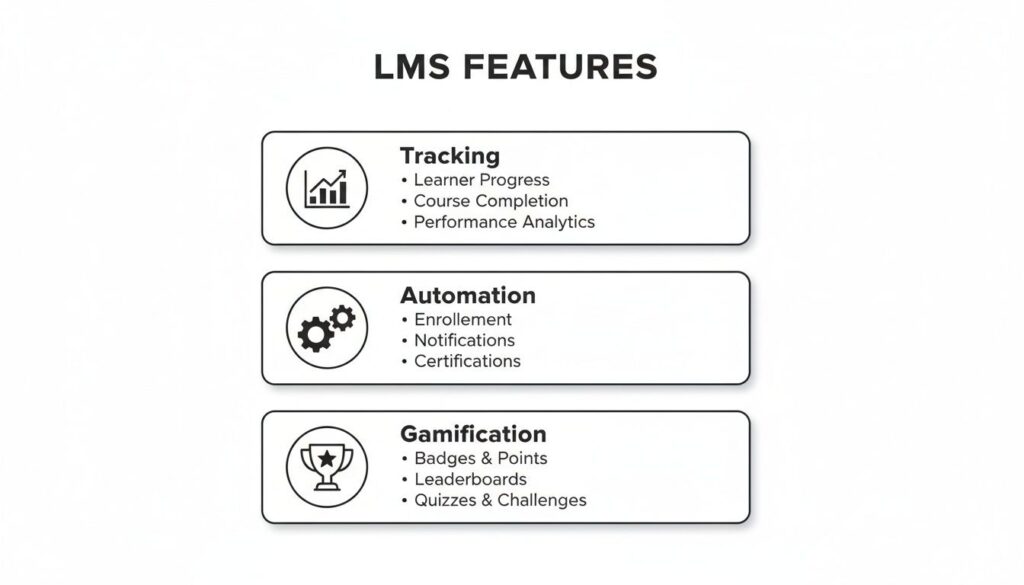
These core pillars are what separate a simple content library from a true performance-driving training system.
Affiliate LMS Feature Comparison
Here’s a quick-glance table to help you see how these platforms stack up on the features that matter most for affiliate management.
| Feature | Thinkific | Kajabi | LearnDash | Teachable |
|---|---|---|---|---|
| Native Affiliate System | Yes, built-in | Yes, built-in and robust | No, requires third-party plugin (e.g., AffiliateWP) | Yes, built-in |
| Customization | Basic commission and link settings | Moderate (per-user rates, link tracking) | Extremely high (via plugins for tiers, creatives, etc.) | Basic (global and per-course rates) |
| Ease of Use for Admin | Very High | High | Moderate (requires WordPress knowledge) | Very High |
| Affiliate Dashboard | Clean & simple | Comprehensive & user-friendly | Varies by plugin, often very detailed | Simple & clear |
| Payout Management | Manual or via Stripe/PayPal | Integrated within Kajabi | Handled by third-party affiliate plugin | Handled by Teachable Payments |
| Ideal User | Course creators focused on the student experience | Entrepreneurs who want an all-in-one, seamless system | WordPress users who demand maximum control and flexibility | Beginners launching their first course and affiliate program |
This table makes it clear that there’s no single “best” platform. It all comes down to your priorities. For total control, LearnDash is the obvious winner. For an elegant, all-in-one solution, Kajabi pulls ahead.
The growing preference for cloud-based systems reflects this need for scalable, accessible training. In fact, by 2025, cloud deployments captured 88.24% of the LMS market share and are expected to keep growing. This trend is driven by the need for platforms that can support global affiliate networks without the hassle of managing servers, and you can discover more insights about the LMS market on Mordor Intelligence.
Choosing the Right LMS for Your Business

Here’s the truth: there’s no single “best” LMS for everyone reading this. The right platform depends entirely on who you are, what you’re building, and where you are in your business journey. What works for a solo creator getting their first course off the ground is worlds away from what a large company needs for a formal partner program.
So, instead of giving you a one-size-fits-all answer, I’m going to give you my direct recommendations based on the most common situations I see. I’ll break down exactly why each platform is a great fit for a specific scenario.
This approach will help you match your actual needs to the right tool. This can save you from the headache of picking something that’s either too basic or way too complicated. Finding the right fit is all about aligning a platform’s strengths with your most important goals.
For the Solo Creator and First-Time Course Seller
When you’re just starting out, your biggest priorities are simplicity, affordability, and speed. You need a platform that won’t get in your way. You want to build your affiliate training, launch it, and start recruiting partners without a massive learning curve.
For this scenario, my top recommendation is Teachable.
- Why it works: Teachable is incredibly user-friendly. Its built-in affiliate system is straightforward to set up, and the platform handles all the tricky payment processing for you. This means you can focus your energy on creating great training content, not wrestling with technology.
- The trade-off: You give up advanced customization. The affiliate features are basic, but they are more than enough to get a powerful and profitable program off the ground.
You need a tool that lets you build momentum. Teachable does exactly that by removing technical roadblocks so you can focus on growing your business and your affiliate team.
For the Established Membership Site Owner
If you’re already running a successful membership or community, your needs are a bit different. Your focus is likely on deep integration, user segmentation, and providing a seamless experience for affiliates who are often active members themselves. You need an LMS that plays nicely with your other tools.
In this case, I’d strongly recommend LearnDash combined with a plugin like AffiliateWP.
- Why it works: This combination gives you total control. LearnDash lets you build a deeply integrated learning experience right inside your WordPress site. AffiliateWP offers incredibly powerful features, like tiered commissions and detailed reporting, that most all-in-one platforms just can’t touch.
- The trade-off: This setup requires more hands-on management. Since it’s self-hosted, you’re responsible for updates, security, and making sure all your plugins work together harmoniously.
For membership owners, the ability to create a completely custom, branded training portal for affiliates is a huge advantage. This powerful WordPress combo lets you build exactly that.
The global demand for flexible learning is massive. In fact, a staggering 73.8 million users engage with LMS platforms worldwide, with features like multi-language support helping to serve diverse audiences. While North America currently leads the market, emerging regions are catching up fast, showing the universal need for quality online training.
For Corporate Partner and Reseller Programs
Once you move into the corporate world, the requirements shift again. For formal partner or reseller programs, you need robust reporting, compliance features, and the ability to issue official certifications. Scalability and security suddenly become top priorities.
For this use case, I suggest looking into a more enterprise-focused solution like Thinkific Plus.
- Why it works: Thinkific’s higher-tier plans are built for scale. It offers advanced features like single sign-on (SSO), detailed audit trails, and the ability to create separate, branded training portals for different partner groups. You can certify partners upon course completion, ensuring they meet your company’s standards.
- The trade-off: This is a premium solution with a price tag to match. It’s an investment best suited for established businesses that need serious compliance and reporting tools to manage a large network effectively.
Ultimately, picking the right LMS is a strategic decision. Take the time to understand your primary goal, whether it’s simplicity, control, or scale, and you’ll find the platform that feels like it was built just for you.
How to Structure Your Affiliate Training Program
An elite LMS is a great start, but it’s the strategy behind your content that turns passive partners into a motivated sales force. The right structure is the difference between affiliates who fizzle out after a week and those who become long-term, high-performing advocates for your brand.

Let’s walk through a practical blueprint for designing an affiliate program that actually gets results. The main idea is to provide clear, valuable information in a way that builds momentum and keeps your partners hooked.
Start with a Foundational Onboarding Module
Your first mission is to kill confusion and build confidence right out of the gate. A new affiliate should never have to guess what to do next. That’s why your program has to begin with a rock-solid onboarding module covering all the essentials.
Think of this as their “quick start” guide. It should give them everything they need to represent your brand accurately and start promoting effectively within their first day.
Here’s what absolutely has to be in that first module:
- Brand Guidelines: This is non-negotiable. Explain how to use your logos, the tone of voice to adopt, and any “do’s and don’ts” for messaging. Be painfully clear about what is and isn’t allowed.
- Product Deep Dive: Don’t just list features. Show them how your product solves real problems for real people. Use video walkthroughs and case studies so they feel the value from a customer’s perspective.
- Ideal Customer Profiles: Who are they selling to? Give them detailed personas so they can tailor their content to the right audience. The more specific you are, the better their marketing will be.
- Commission Structure and Payouts: Be radically transparent about how and when they get paid. This builds trust from the very first interaction.
Your onboarding module sets the entire tone for your affiliate program. Make it clear, concise, and focused on getting them their first win as quickly as possible.
Build Out Advanced Training Paths
Once your affiliates have mastered the basics, you can start turning them into experts. This is where you provide the kind of value that makes them want to promote your products over anyone else’s. Creating advanced modules shows you’re invested in their success, not just your own.
These modules need to focus on specific skills that directly help them generate more sales. You’re not just training them on your product anymore. You’re helping them become better marketers.
Consider creating dedicated modules on topics like:
- SEO for Affiliates: Teach them how to find keywords related to your product and create content that actually ranks on Google.
- Content Marketing Tactics: Show them how to write compelling blog posts, create engaging social media content, or produce high-quality videos that convert.
- Using Your Promotional Materials: Build a library of swipe copy, email templates, and slick graphics. Then, create a short course showing them exactly how to use these assets for maximum impact.
- Paid Advertising Rules: If you allow affiliates to run ads, create a module that details your rules of engagement, like which keywords are completely off-limits.
This level of training empowers your partners. You’re giving them the tools and strategies they need to succeed on a much larger scale. It’s a true win-win.
Implement a Tiered Training Approach
A fantastic way to keep affiliates motivated for the long haul is to use a tiered structure. This approach directly connects their performance to their access to new training and better rewards. It gamifies the experience and gives everyone something to strive for.
It’s a simple but incredibly powerful concept. As affiliates hit certain milestones, like their first ten sales or $1,000 in commissions, they “level up” and unlock new perks.
For example, your structure could look something like this:
- Bronze Tier (0-10 Sales): Gets access to the foundational onboarding module and your standard commission rate.
- Silver Tier (11-50 Sales): Unlocks the advanced content marketing course and a small commission bump.
- Gold Tier (51+ Sales): Gains access to an exclusive “expert” module on advanced strategies, gets a higher commission rate, and receives early access to new product launches.
This kind of structure creates a clear path for growth. It encourages consistent effort and rewards your top performers, turning your affiliate program into a dynamic and highly motivating ecosystem.
Common Questions About Affiliate Training LMS
Even after you’ve compared a dozen platforms and sketched out your master plan, a few nagging questions always seem to pop up. It’s completely normal. Picking the right LMS for your affiliate program is a big commitment, so let’s clear the air on a few of the most common questions I hear from business owners just like you.
My goal here is to give you the straight answers you need to make that final call with total confidence.
Do I Need an LMS With a Built-In Affiliate System?
This is the big one. The answer really boils down to what you value more: simplicity or raw power.
An LMS with a built-in affiliate system, like Kajabi or Teachable, is a dream for simplicity. Everything is in one place, under one login, which makes day-to-day management a breeze. If your goal is an all-in-one setup without juggling a bunch of different subscriptions, this is a fantastic route.
However, dedicated third-party tools like Rewardful or FirstPromoter are in a different league when it comes to features. They are masters of things like tiered commissions, lifetime cookie tracking, and much deeper analytics. If you’re building a truly sophisticated program or using a platform like LearnDash, plugging in a specialized tool is almost always the more powerful, flexible option.
How Much Should I Expect to Pay for an Affiliate LMS?
Pricing can feel like it’s all over the map, but it generally falls into two buckets.
All-in-one platforms like Kajabi or Thinkific typically run on monthly plans, anywhere from around $100 to $400. These subscriptions usually bundle everything you need, including course creation tools, video hosting, marketing features, and, of course, the affiliate system.
A self-hosted solution like LearnDash has a lower upfront cost since you’re just buying the plugin. But you also have to budget for web hosting, an affiliate plugin like AffiliateWP, and maybe a few other add-ons. A realistic starting budget for a solid self-hosted system often lands in the $150-$300 per month range when you add it all up.
When you’re running the numbers, always think about the total cost of your tech stack. Sometimes the “pricier” all-in-one platform is actually cheaper than piecing together multiple “less expensive” tools.
What Is the Best Way to Keep Affiliates Engaged?
Buying the LMS is the easy part. The real challenge is getting your affiliates to actually log in and use it. Engagement is everything.
Here are a few tactics that I’ve seen work wonders:
Use Content Dripping: Don’t throw your entire training library at a new partner on day one. Release modules on a set schedule, say, one per week, to keep them from feeling overwhelmed and to create a steady learning rhythm.
Incorporate Gamification: Simple rewards are powerful motivators. Awarding badges for completing courses or hitting sales milestones gives affiliates a real sense of accomplishment and sparks a little friendly competition.
Create a Community: Your training shouldn’t exist in a vacuum. Build a dedicated space, either inside the LMS or on a platform like Circle.so, where affiliates can connect with each other, ask questions, and share their wins.
The goal is to make your training feel like a valuable, ongoing resource, not just a one-and-done onboarding task. When you invest in your affiliates’ success, they’ll be far more motivated to invest their time in promoting you.