The 12 Best LMS for Small Business in 2026
Finding the best LMS for a small business can feel like a huge task. You’re trying to grow, train your team, sell courses, or build a learning community. The last thing you need is a platform that’s too expensive, overly complicated, or just doesn’t fit your specific goals. You need a solution that simplifies training and content delivery, not one that adds another layer of complexity to your operations.
This guide is designed to cut through the noise. I’ve spent countless hours testing, comparing, and analyzing dozens of platforms to bring you a clear, straightforward list of the top contenders. We’ll dive deep into 12 excellent options, from all-in-one powerhouses to specialized WordPress plugins, so you can make an informed choice without the headache.
Here, you’ll find a detailed breakdown of each LMS, complete with screenshots, pros, cons, and specific use cases. We will explore platforms like TalentLMS, LearnWorlds, Thinkific, and more. This will help you identify which one truly aligns with your business needs, whether that’s internal employee training, creating a membership site, or selling courses online.
When choosing an LMS, it’s also helpful to think about your entire technology stack. For insights into other great productivity and content creation tools that can complement your learning platform, you might want to explore the ultimate toolkit for content creators in 2026. This comprehensive resource covers a wide range of applications that can streamline your workflow. My goal here is to provide all the information you need, in one place, to confidently select the right learning management system and get back to what you do best: running your business.
1. TalentLMS
TalentLMS consistently earns its spot as one of the best LMS for small business. It masterfully balances powerful features with an intuitive, user-friendly interface. It’s designed for teams who need to launch training fast, without getting bogged down in technical complexities. I find its approach perfect for small businesses focused on either internal employee onboarding or external customer education.
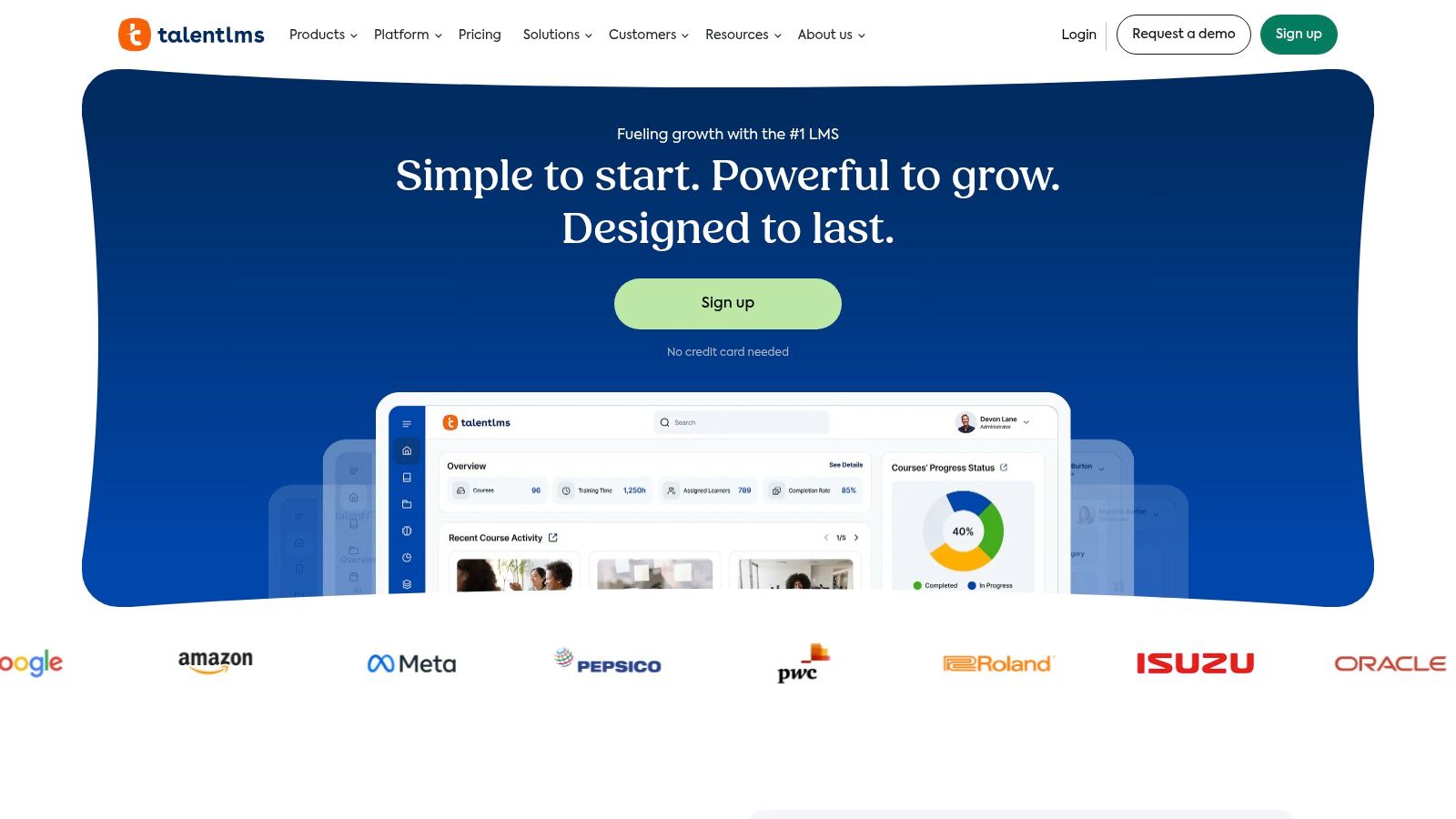
The platform’s setup is refreshingly simple. You can create your first course in minutes using its drag-and-drop builder, which supports a wide range of content types from videos to SCORM files.
For small businesses that serve multiple clients or have distinct departments, the “Branches” feature is a game-changer. It allows you to create separate, branded portals for different user groups, each with its own courses and users, all managed from a single admin account.
Why It Stands Out
What makes TalentLMS special is its generous free-forever plan, which supports up to 5 users and 10 courses. This isn’t just a trial. It’s a fully functional LMS, allowing you to thoroughly test its capabilities before committing.
As you grow, the pricing tiers are straightforward and based on active user brackets, providing predictable costs without surprise fees. The platform also offers robust integration options through its API and native connections with tools like Zapier and BambooHR. This flexibility is a key part of the process when you’re looking for guidance on how to choose an LMS for your specific needs.
- Best For: Companies needing a fast, scalable solution for both internal and external training.
- Pricing: Free plan for up to 5 users. Paid plans start at $69/month (billed annually) for up to 40 active users.
- Standout Feature: “Branches” for creating distinct, sandboxed training portals for different audiences.
2. LearnWorlds
LearnWorlds is a powerful contender for the best lms for small business, especially for entrepreneurs and companies focused on selling online courses. It excels at combining robust learning features with a comprehensive marketing and sales toolkit. I see it as less of a traditional internal LMS and more of a complete platform for building an online school or a profitable training business.
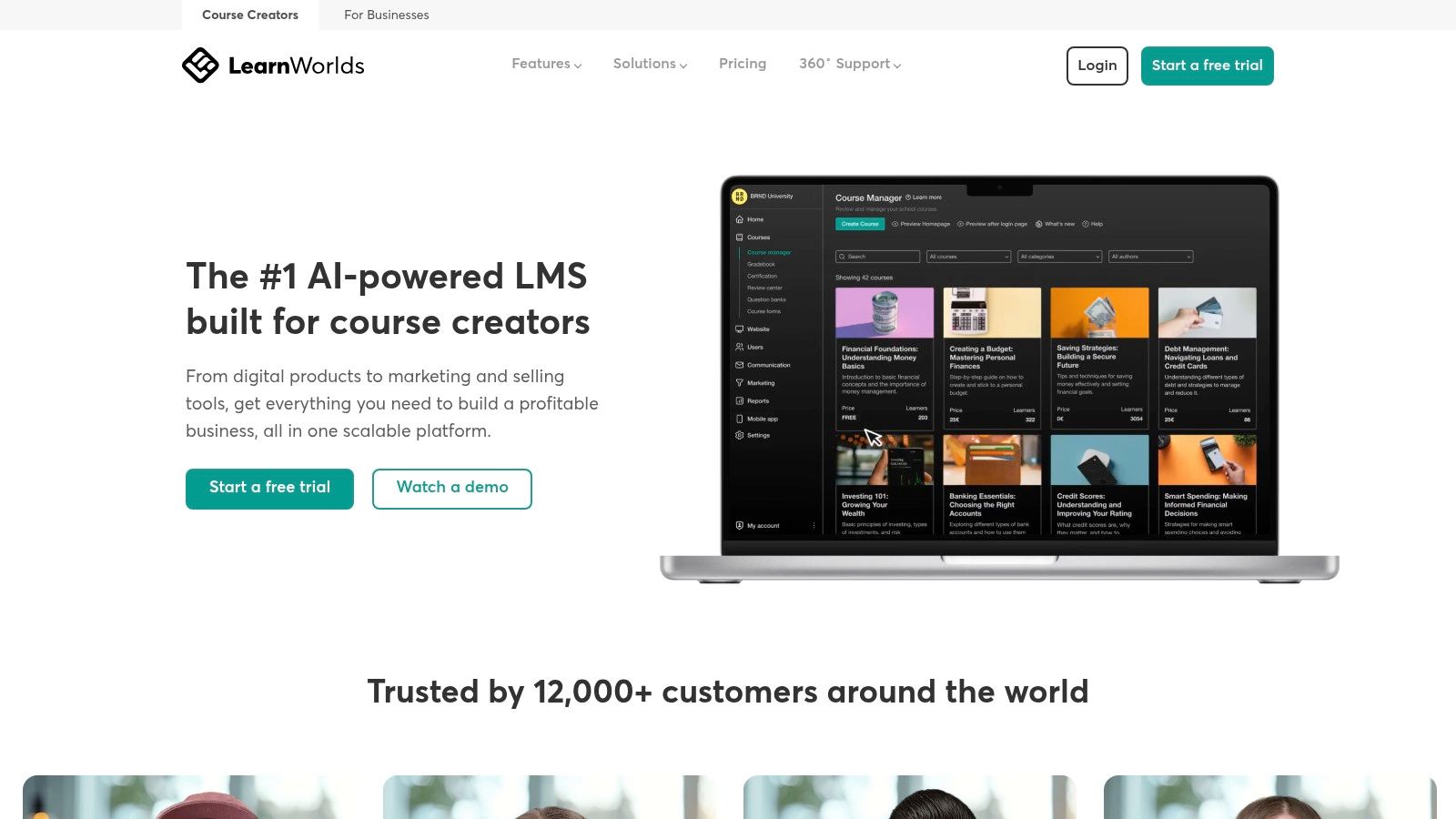
The platform empowers creators with interactive video tools, a full-fledged website builder, and advanced marketing automations. You can create engaging learning experiences with quizzes, certificates, and SCORM files, then package them as subscriptions, bundles, or memberships. The focus on monetization is clear, offering everything from coupons to flexible payment gateways.
Understanding the different learning management system types is useful here, as LearnWorlds firmly fits into the commercial training category.
Why It Stands Out
What makes LearnWorlds a standout is its all-in-one approach to course creation and sales. You’re not just getting an LMS, you’re getting a website builder, a sales funnel creator, and powerful marketing integrations. For small businesses looking to scale their course sales, this integrated system is a huge advantage.
To expand your reach even further, you might explore how to start an affiliate program and turn your students into powerful promoters. While its starter plan has a transaction fee, the higher-tier plans remove this and unlock more advanced e-commerce capabilities.
- Best For: Edupreneurs and businesses building a branded online school to sell courses and memberships.
- Pricing: Starts at $24/month (billed annually) with a $5 per course sale fee. Pro plan at $79/month removes transaction fees.
- Standout Feature: Integrated sales and marketing tools, including a website builder, funnels, and advanced affiliate management.
3. Thinkific
Thinkific positions itself as an all-in-one platform for entrepreneurs and businesses focused on selling online courses and building communities. It’s a strong contender for the best lms for small business if your primary goal is external training and monetization. I’ve always appreciated its straightforward approach to creating, marketing, and selling educational content directly to customers.
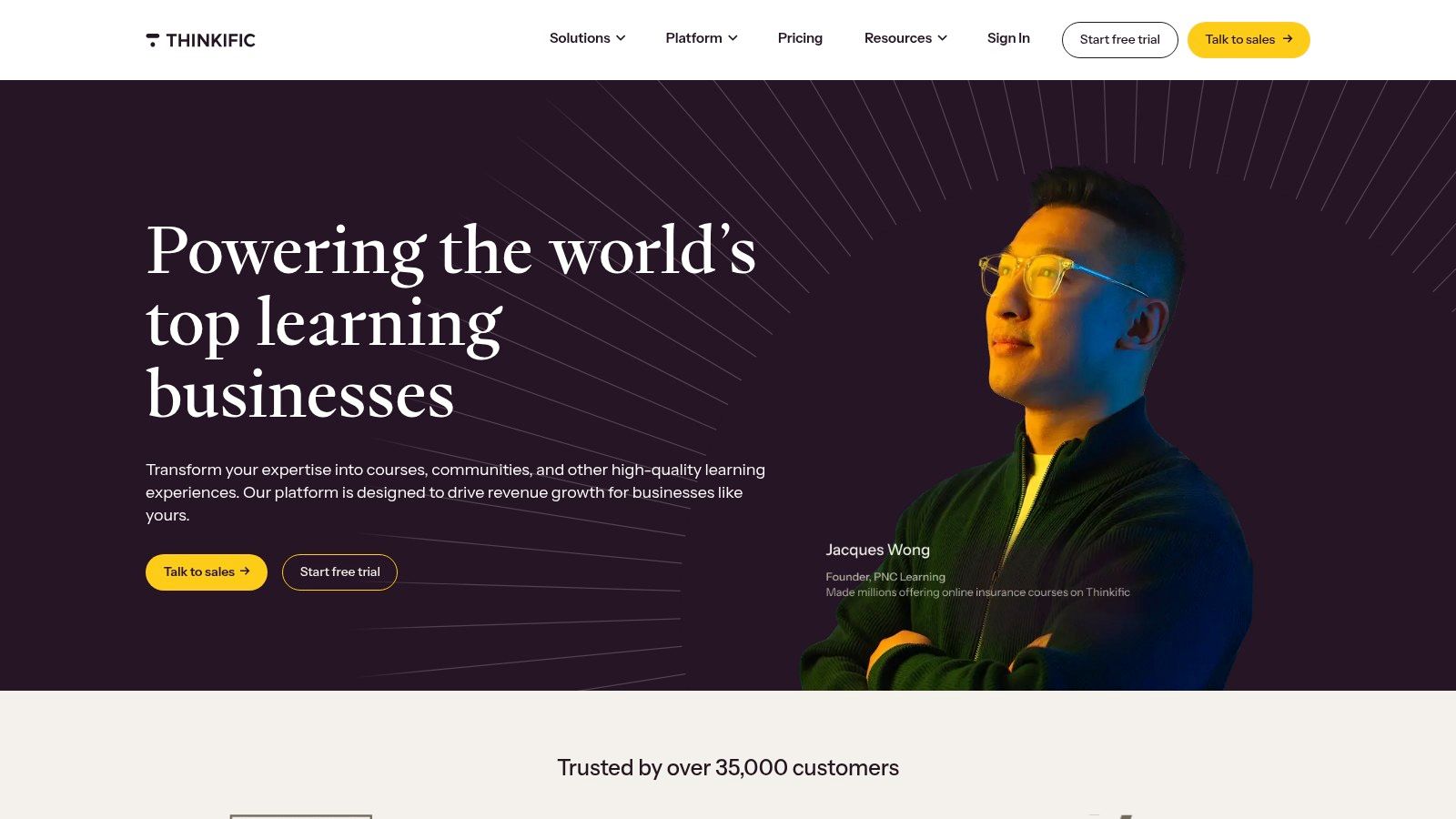
The platform gives you unlimited courses on all paid plans, which is a huge plus. You’re not penalized for creating more content. It also seamlessly integrates features like live lessons via Zoom, community spaces, and diverse payment options including subscriptions, bundles, and coupons. For businesses looking to scale, higher-tier plans provide access to an API and group ordering features, making it adaptable for B2B sales.
Why It Stands Out
What makes Thinkific a great choice is its focus on the course creator’s business needs. The platform charges zero transaction fees on all plans if you use its native Thinkific Payments gateway, helping you keep more of your revenue. Their plans are transparent, clearly outlining which features you get at each level.
Another standout is the option to add a branded mobile app, which can significantly boost student engagement and accessibility. This level of brand control and student-centric design highlights the core benefits of an LMS for customer-facing education.
- Best For: Entrepreneurs and businesses selling courses, memberships, and communities directly to consumers.
- Pricing: Free plan for one course. Paid plans start at $36/month (billed annually) with unlimited courses.
- Standout Feature: The optional branded mobile app, offering a premium, accessible learning experience for your students.
4. Teachable
Teachable is a powerhouse for entrepreneurs and small businesses focused on creating and selling online courses directly to consumers. It stands out as one of the best LMS for small business options when monetization is the primary goal. I see it as less of a corporate training tool and more of a digital storefront for your knowledge. It has built-in e-commerce features that handle the heavy lifting of sales and payments.
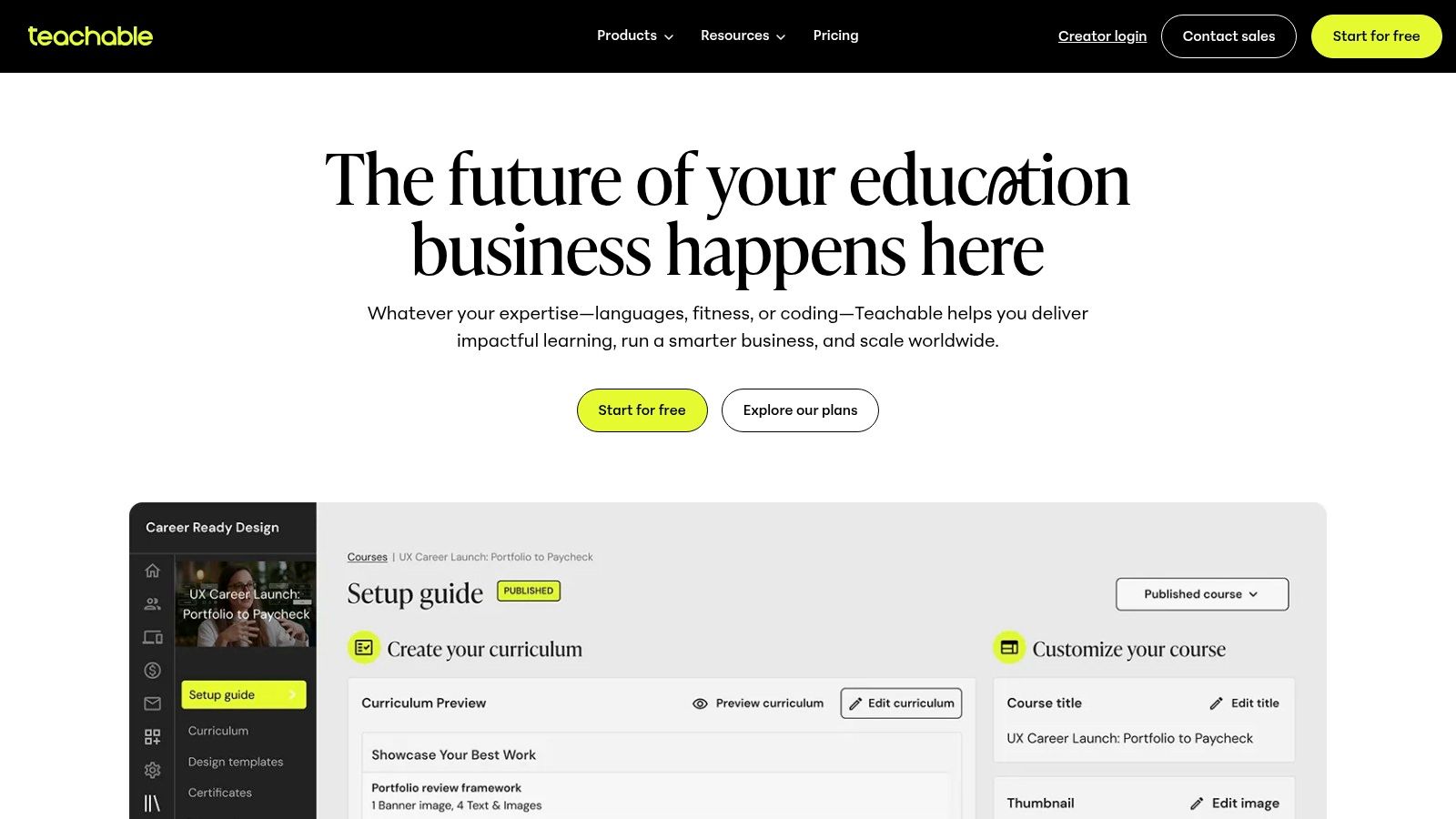
The platform’s core strength is its friction-reduced checkout process. Teachable handles payment processing, student-level tax calculations, and even affiliate payouts. This frees you up to focus on content creation and marketing. You can easily create course bundles, upsells, and subscription-based memberships.
For creators who want to build a loyal community, Teachable offers a straightforward way to turn expertise into a sustainable business without needing deep technical skills.
Why It Stands Out
What makes Teachable a strong contender is its all-in-one approach to course sales. While other platforms may require you to integrate third-party payment gateways and marketing tools, Teachable brings everything under one roof. The built-in payment processor, Teachable:pay, simplifies the entire transaction lifecycle.
For small businesses venturing into e-learning, this removes a significant barrier to entry. Its dedicated iOS app for learners also enhances the student experience, allowing them to access content on the go.
- Best For: Entrepreneurs and course creators who prioritize direct-to-consumer sales and marketing tools.
- Pricing: Free plan with transaction fees. Paid plans start at $39/month (billed annually) with lower transaction fees.
- Standout Feature: Integrated e-commerce tools, including a native payment processor (Teachable:pay), affiliate marketing, and tax handling.
5. Kajabi
Kajabi is far more than just an LMS, it’s a complete online business platform. This makes it a contender for the best lms for small business if your goal is to minimize tool integrations and manage everything under one roof. I see it as the ideal solution for creators and entrepreneurs who sell courses, coaching, memberships, and digital products. It’s great for people who need powerful marketing tools built right in. It handles everything from your website and landing pages to email marketing and payment processing.
While the course creation tools are solid, the platform’s real power comes from its unified ecosystem. You can build entire sales funnels, manage affiliate programs, and foster vibrant student communities without ever leaving the dashboard.
For small businesses looking to scale, this all-in-one approach simplifies operations significantly. It lets you focus on content and customers instead of connecting disparate software. The inclusion of a branded mobile app on higher-tier plans is also a huge value-add for creating a premium learning experience.
Why It Stands Out
What sets Kajabi apart is its deliberate focus on being an all-in-one marketing and business engine, not just a place to host courses. The built-in email automation, sales pipeline builder (Funnels), and integrated checkout are deeply connected. This allows for sophisticated marketing campaigns that are difficult to replicate with separate tools.
While its starting price is higher than many dedicated LMS platforms, the total cost of ownership can often be lower once you factor in the money saved on separate email, website, and funnel-building software. It’s a premium, integrated system for serious business builders.
- Best For: Entrepreneurs and businesses that want to sell courses, memberships, and coaching within a single, powerful marketing ecosystem.
- Pricing: Plans start at $149/month (billed annually) for 3 products and 3 funnels.
- Standout Feature: The all-in-one platform that combines course delivery with a full suite of marketing tools, including email, funnels, and affiliate management.
6. iSpring Learn (iSpring LMS)
iSpring Learn positions itself as one of the best LMS for small business options by focusing heavily on structured corporate training and skills development. It’s a fantastic choice for companies that need to build a comprehensive internal training program, complete with competency tracking and performance assessments. I find its real power comes from its seamless integration with the iSpring Suite authoring tool. This creates a unified ecosystem for creating and delivering high-quality, interactive courses.
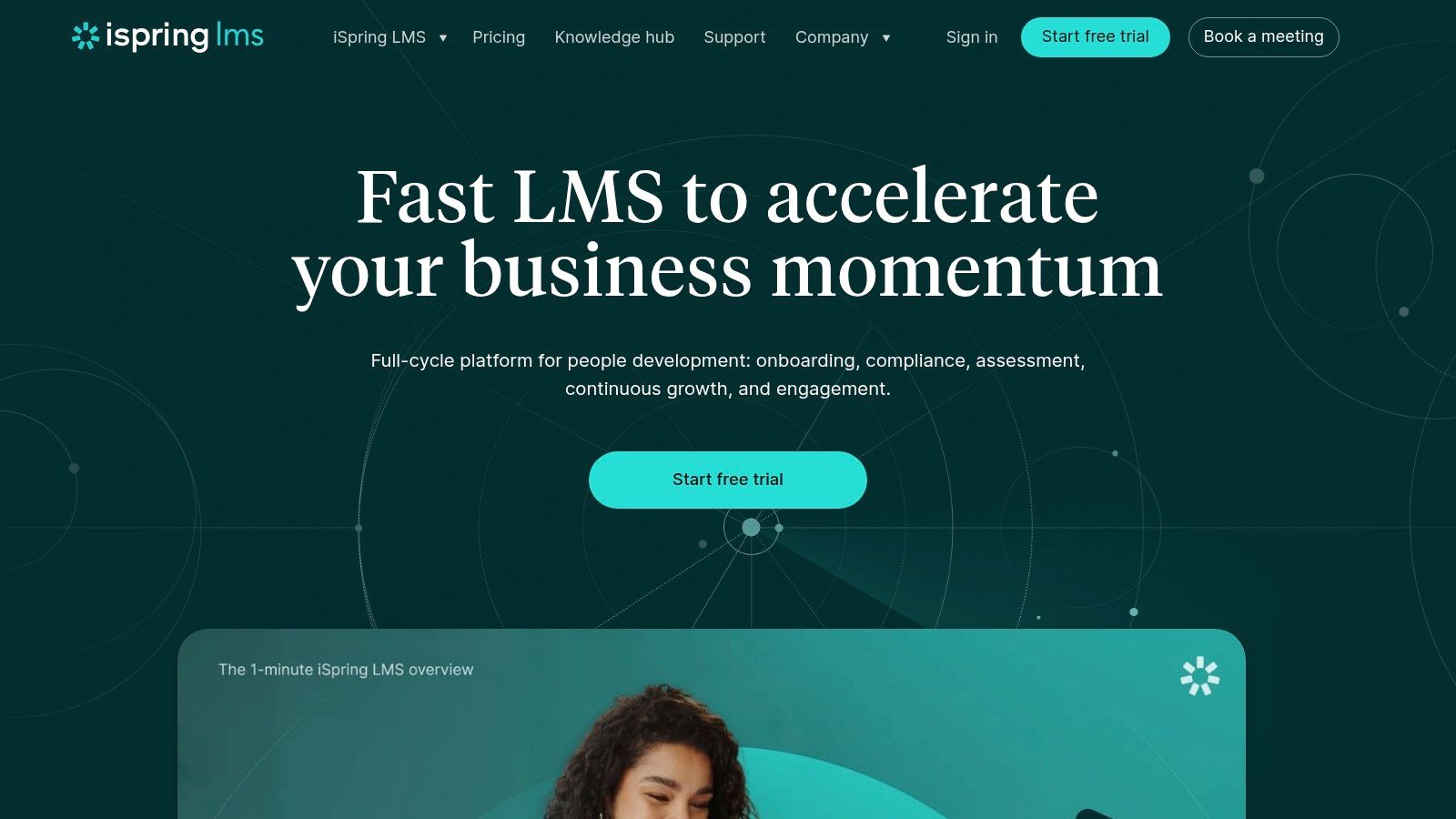
The platform is built around clarity. Admins can easily build learning tracks, automate course assignments based on job roles, and generate detailed reports to monitor progress. For teams on the go, the native mobile apps with offline support are a huge plus. This ensures employees can complete training anytime, anywhere. This focus on structured, accessible learning makes it ideal for compliance training, onboarding, and continuous professional development.
Why It Stands Out
What truly sets iSpring Learn apart is its powerful authoring capabilities when combined with iSpring Suite. This allows you to create engaging content like role-play simulations and interactive quizzes that go far beyond standard video or text-based lessons. Its pay-per-active-user pricing model is also a major benefit for businesses with cyclical training needs. You only pay for employees who actually log in during a billing period.
While some advanced features require the separate Suite subscription, the core LMS is a robust, business-focused platform supported by award-winning 24/7 customer service.
- Best For: Small to mid-sized businesses focused on structured employee onboarding, skills development, and compliance training.
- Pricing: Starts at $2.99 per user/month (billed annually) for up to 300 active users. Custom quotes are available for larger teams.
- Standout Feature: The deep integration with the iSpring Suite authoring tool, enabling the creation of advanced simulations and interactive content.
7. LearnDash
For small businesses already comfortable with WordPress, LearnDash is a powerhouse plugin that transforms your existing site into a full-featured learning management system. It’s an excellent choice for entrepreneurs and companies that want complete ownership and customization over their training platform. I’ve found it strikes a great balance. It offers sophisticated features like advanced quizzing and drip-feed content while integrating seamlessly into the familiar WordPress dashboard.
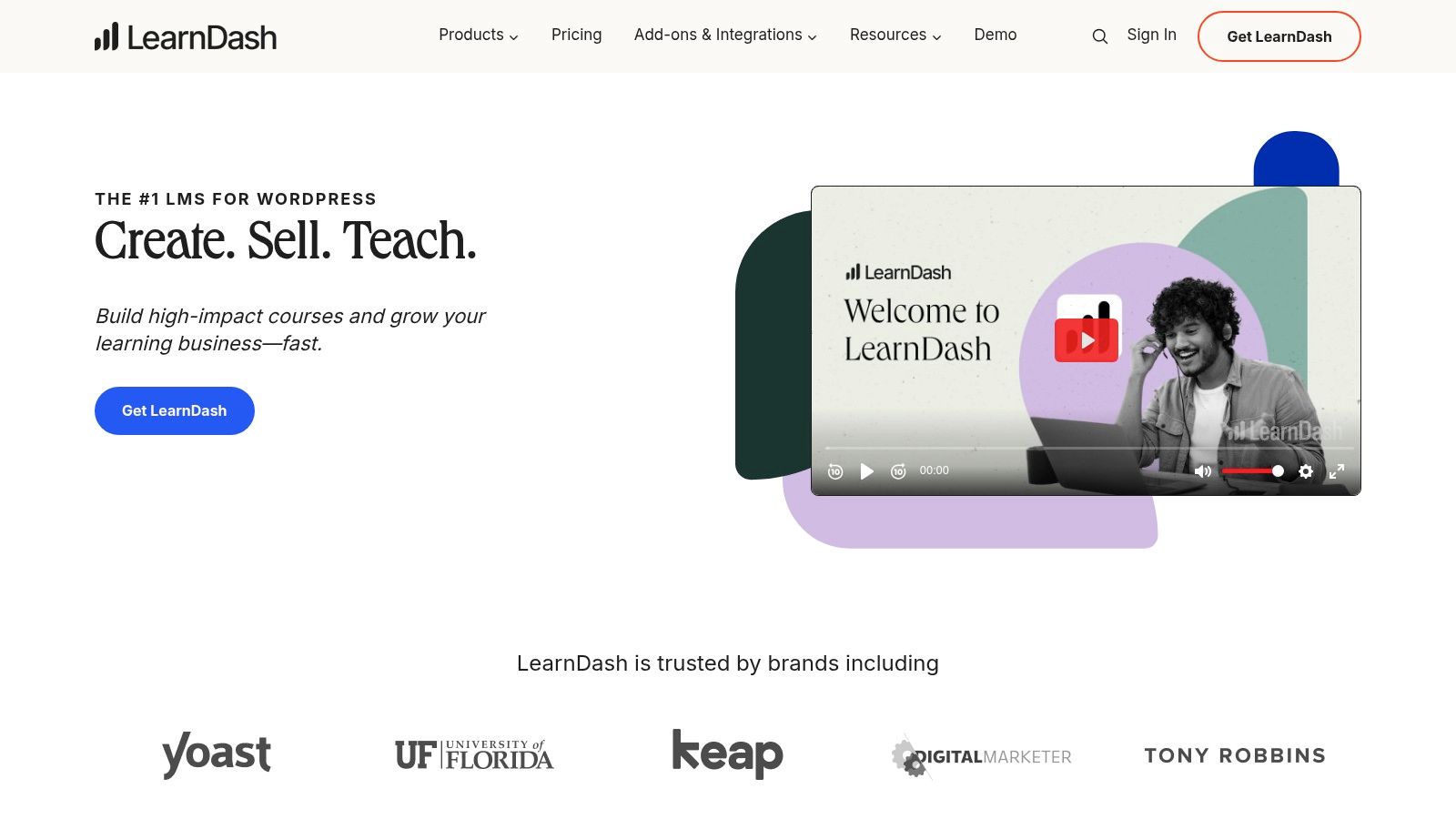
The platform gives you granular control over the learning experience. Its drag-and-drop course builder is intuitive, and features like Focus Mode help eliminate distractions for learners. You can easily monetize your courses by connecting to payment gateways like Stripe or WooCommerce.
For those who want the power of LearnDash without the technical setup, the LearnDash Cloud option provides a hosted, ready-to-go solution. This makes it a versatile contender for the best lms for small business.
Why It Stands Out
What truly sets LearnDash apart is its extensibility and the principle of data ownership. Because it’s a WordPress plugin, you have endless customization possibilities through a massive ecosystem of themes and add-ons. You control your user data, content, and branding without being locked into a proprietary platform.
While this approach can require more hands-on management, the trade-off is unparalleled flexibility to build the exact learning environment you envision. The new cloud option successfully bridges the gap for those who prefer a more managed service.
- Best For: WordPress users who want full control, ownership, and customization for selling courses or internal training.
- Pricing: The plugin starts at $199/year for a single site. LearnDash Cloud (hosted solution) starts at $29/month.
- Standout Feature: Deep integration with the WordPress ecosystem, allowing for limitless customization through third-party add-ons and themes.
8. LifterLMS
For small businesses already comfortable within the WordPress ecosystem, LifterLMS is a powerful and flexible choice. It’s a plugin that transforms your existing WordPress site into a full-featured learning platform. It gives you complete control over your branding, data, and user experience. I often recommend it to entrepreneurs and course creators who want to build a deeply integrated learning community without being tied to a third-party platform’s rules.
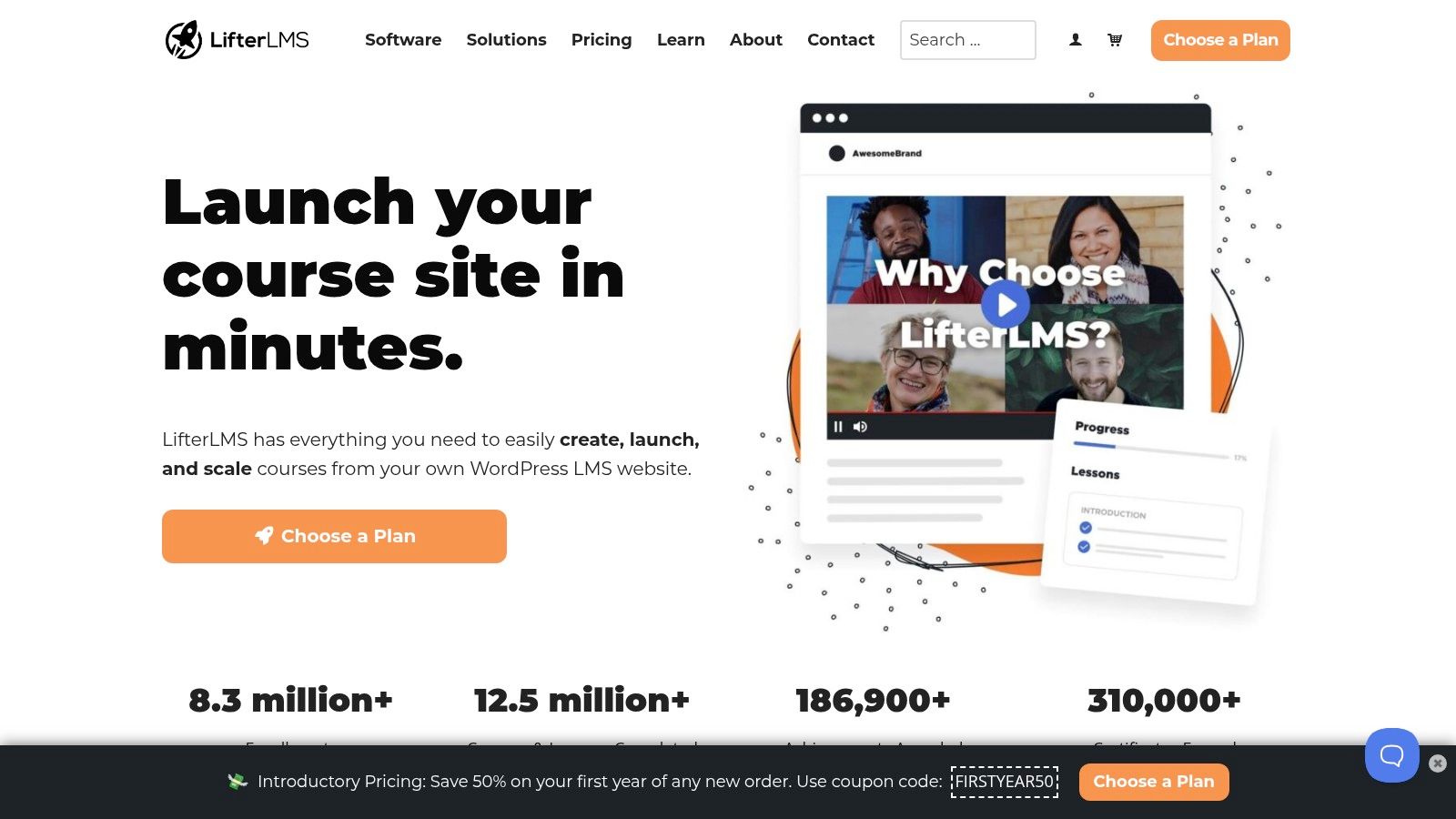
The platform operates on a modular “add-on” model. The core plugin is free, allowing you to create and deliver courses right away. As your needs grow, you can purchase individual add-ons for things like payment gateways, email marketing integrations, or advanced quizzing. This approach keeps initial costs low and prevents you from paying for features you don’t use. Its engagement tools, like achievement badges and certificates, are excellent for keeping learners motivated and tracking their progress.
Why It Stands Out
What makes LifterLMS one of the best lms for small business options is its ownership-centric model. Since it’s a plugin on your site, you own all your content and user data outright. The free core plugin provides substantial functionality, allowing you to build and launch courses without an initial investment.
For those who need more, the paid bundles offer a cost-effective way to unlock advanced capabilities like private coaching areas and group memberships. This balance of a free entry point with scalable, premium features is perfect for budget-conscious businesses that value control and customizability.
- Best For: WordPress users who want to own their platform and scale features as they grow.
- Pricing: Core plugin is free. Individual add-ons start at $120+/year. Bundles start at $199/year.
- Standout Feature: The modular add-on system allows you to pay only for the specific functionality you need.
9. MoodleCloud
Moodle is one of the most powerful open-source learning platforms in the world, but managing your own server can be a headache. MoodleCloud solves this problem by offering a fully hosted, ready-to-go version straight from Moodle’s creators. This makes it an excellent choice for small businesses that want the robust feature set of Moodle without the technical overhead of self-hosting. I see it as the perfect entry point into a highly customizable learning ecosystem.
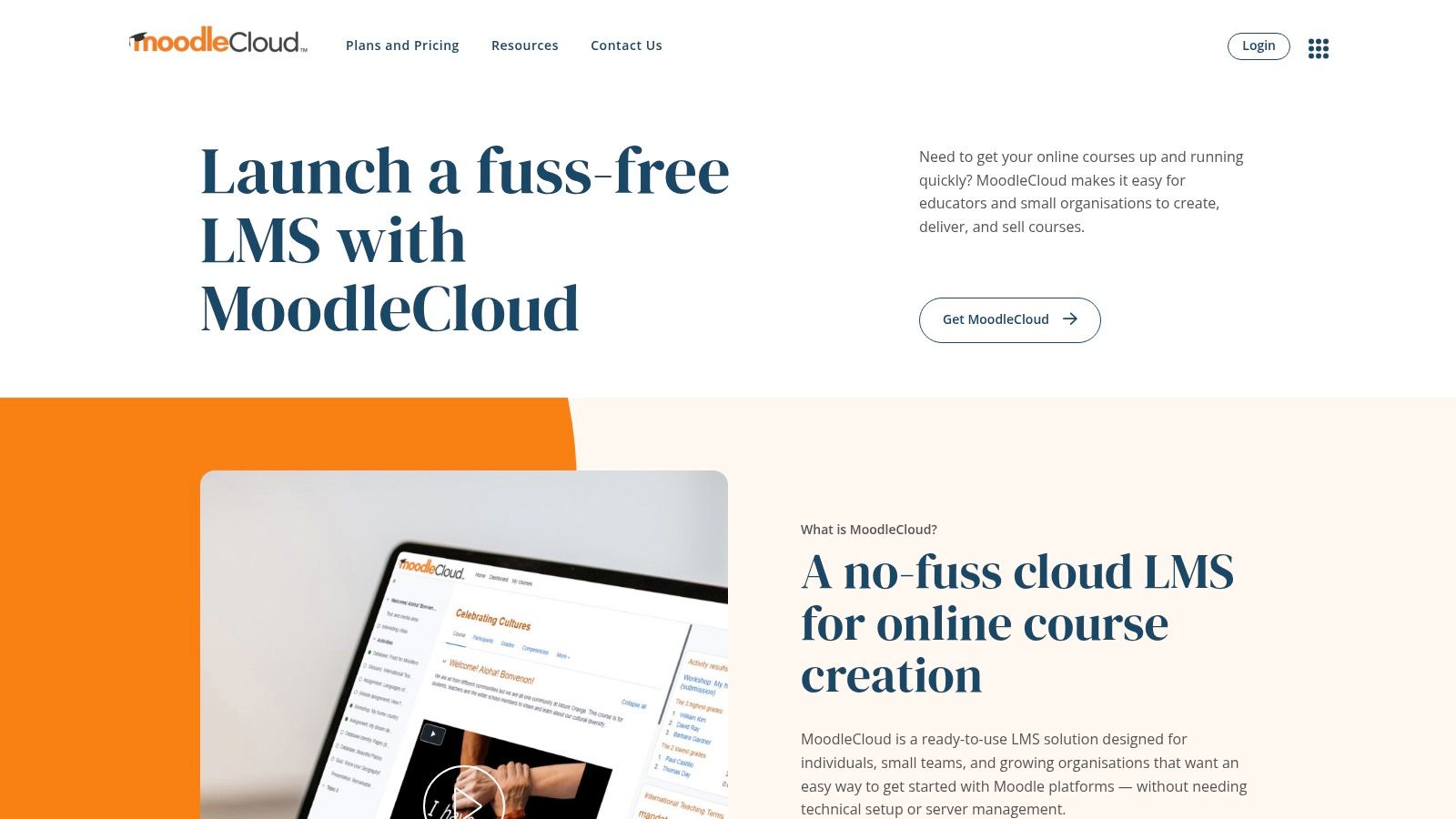
The platform gives you unlimited courses and activities, a mobile app with premium features, and built-in BigBlueButton for live video conferencing. Since Moodle HQ handles all the updates and maintenance, you can focus entirely on creating great learning content. Its predictable annual pricing based on user and storage limits makes budgeting simple, removing the fear of unexpected server costs. For a small team, this reliability is a huge plus.
Why It Stands Out
MoodleCloud’s biggest advantage is providing the authentic, full-featured Moodle experience without requiring any IT expertise. While self-hosted Moodle offers infinite customization, it can be overwhelming. MoodleCloud streamlines this by pre-configuring the essentials and managing the backend for you.
One major limitation to be aware of is that standard plans don’t allow you to install custom third-party plugins. This restricts some of Moodle’s legendary flexibility. However, for many businesses, the core functionality is more than enough to build a comprehensive training program.
- Best For: Organizations that want the power of Moodle without the technical burden of server management.
- Pricing: Plans start at $120/year for up to 50 users and 250MB storage. A 28-day free trial is available.
- Standout Feature: A fully managed Moodle environment backed by Moodle HQ, ensuring stability and security.
10. 360Learning
360Learning positions itself as a collaborative learning platform. This makes it one of the best lms for small business teams that want to build courses from the ground up, together. Its core philosophy is peer-driven learning, empowering subject matter experts within your company to quickly create and share knowledge. I think this approach is fantastic for dynamic small businesses where expertise is spread across the team, not just siloed in an L&D department.
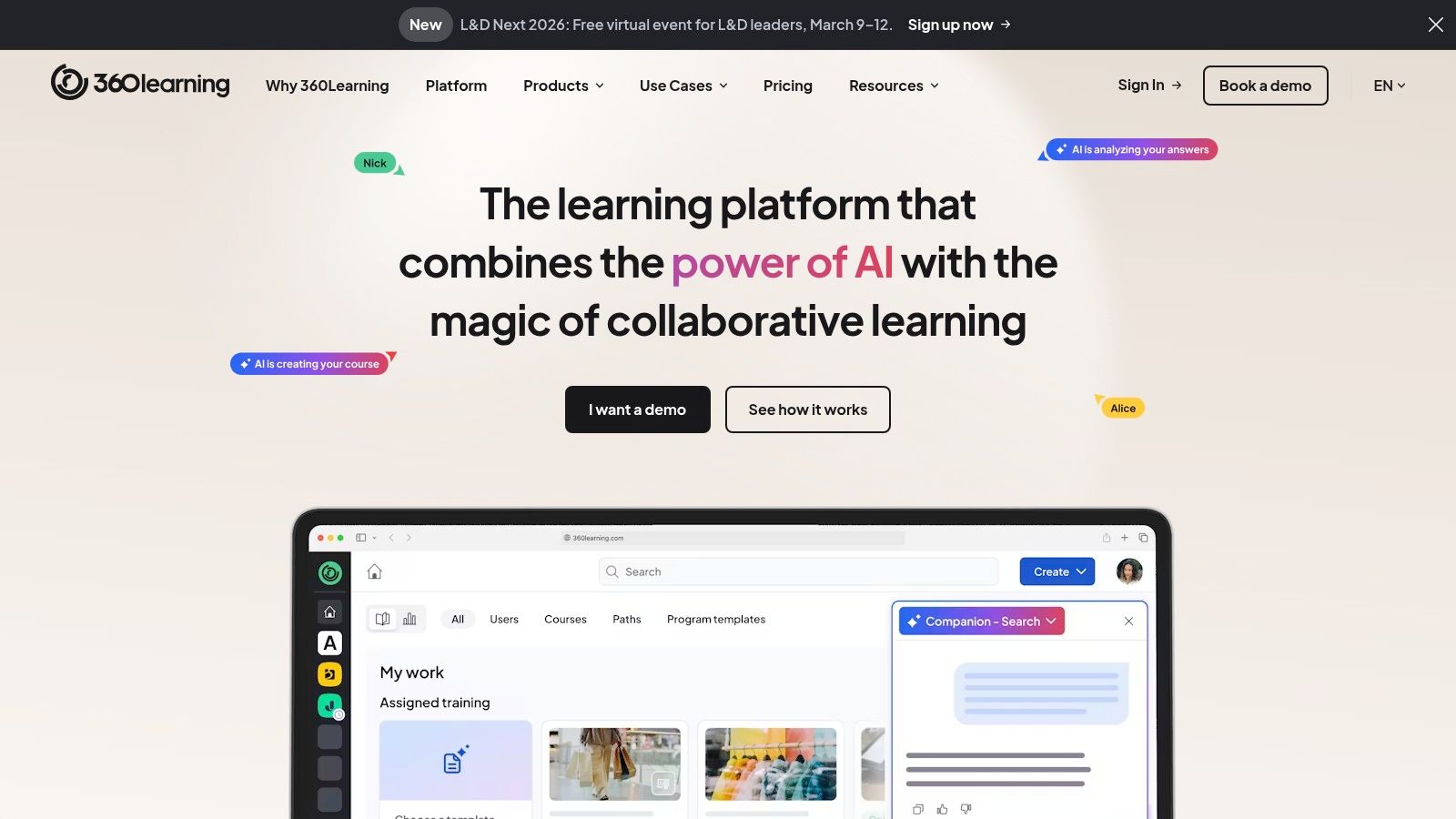
The platform’s built-in authoring tools are designed for speed and simplicity. They allow anyone to create a course in minutes, not hours. It also has strong social features like discussion forums and collaborative editing, which foster engagement and ensure training content stays relevant. This is ideal for just-in-time training needs where you have to get new information out to the team quickly.
Why It Stands Out
What truly makes 360Learning a great fit for smaller teams is its dedicated “Team” plan. This plan provides clear, per-user pricing and is specifically designed for companies with up to 100 employees. This avoids the complex enterprise-level negotiations. It gives you access to the core collaborative authoring tools, analytics dashboards, and mobile apps. While the most advanced features are reserved for higher tiers, the Team plan offers more than enough power to build a vibrant, internal learning culture.
- Best For: Small businesses focused on creating a collaborative, peer-driven internal training program.
- Pricing: The Team plan starts at $8 per user/month for up to 100 users.
- Standout Feature: A powerful collaborative authoring tool that enables any team member to become a course creator.
11. Litmos
Litmos is a veteran in the corporate training space, and its platform feels mature and robust. This makes it a contender for the best lms for small business with specific compliance or e-commerce needs. It’s a powerful engine designed for structured corporate learning, covering everything from employee onboarding and compliance training to selling courses externally. I’ve found it’s best suited for businesses that have outgrown simpler platforms and need a more comprehensive, all-in-one training solution.
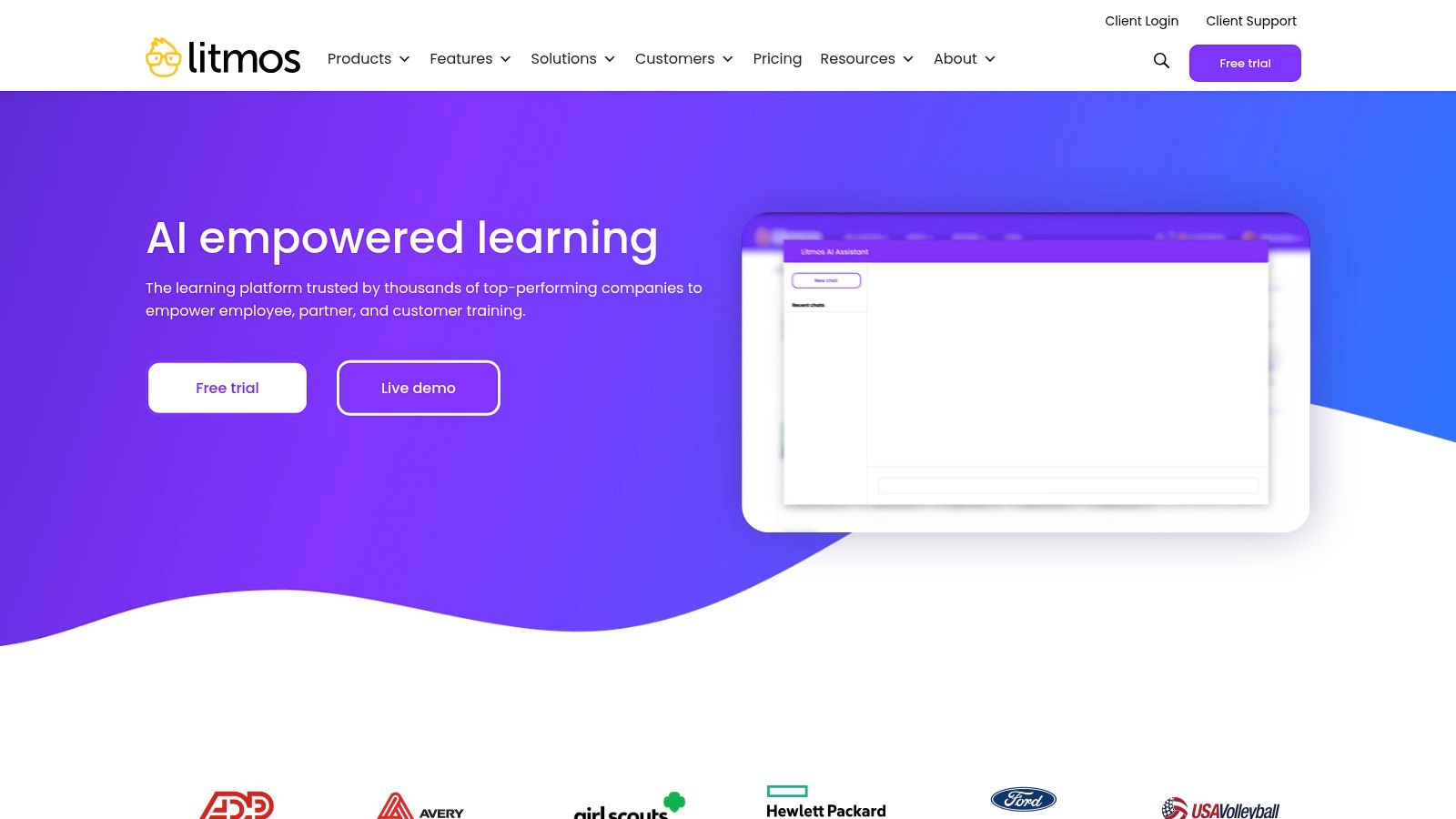
The platform supports a deep set of features right out of the box, including instructor-led training (ILT) management, detailed learning paths, and strong e-commerce capabilities. You can build courses with its integrated content authoring tool or upload existing SCORM and xAPI files. Its mobile-first design is also a huge plus, ensuring that learners can access training materials anytime, anywhere. This is crucial for teams that aren’t always at a desk.
Why It Stands Out
What makes Litmos a strong choice is its focus on enterprise-grade features scaled down for growing businesses. The reporting and dashboard capabilities are extensive, giving you clear insights into learner progress and compliance tracking. For companies operating globally, its multi-language support is a significant advantage.
The main drawback is its pricing model, which requires you to contact their sales team for a quote. This makes it less transparent than competitors with public pricing tiers. However, for a business needing a proven, reliable system with a strong compliance backbone, Litmos delivers.
- Best For: Businesses prioritizing compliance, mobile accessibility, and selling courses.
- Pricing: Available upon request by contacting sales.
- Standout Feature: A mature, all-in-one feature set that includes robust ILT management and built-in e-commerce.
12. Tovuti LMS
Tovuti LMS positions itself as a comprehensive, all-in-one platform that adapts to your business needs, not the other way around. It’s a powerful contender for the best lms for small business that requires more than just basic course delivery. I see it as a great fit for organizations that want to build a full-fledged learning ecosystem with e-commerce, virtual classrooms, and interactive content, all under one roof.
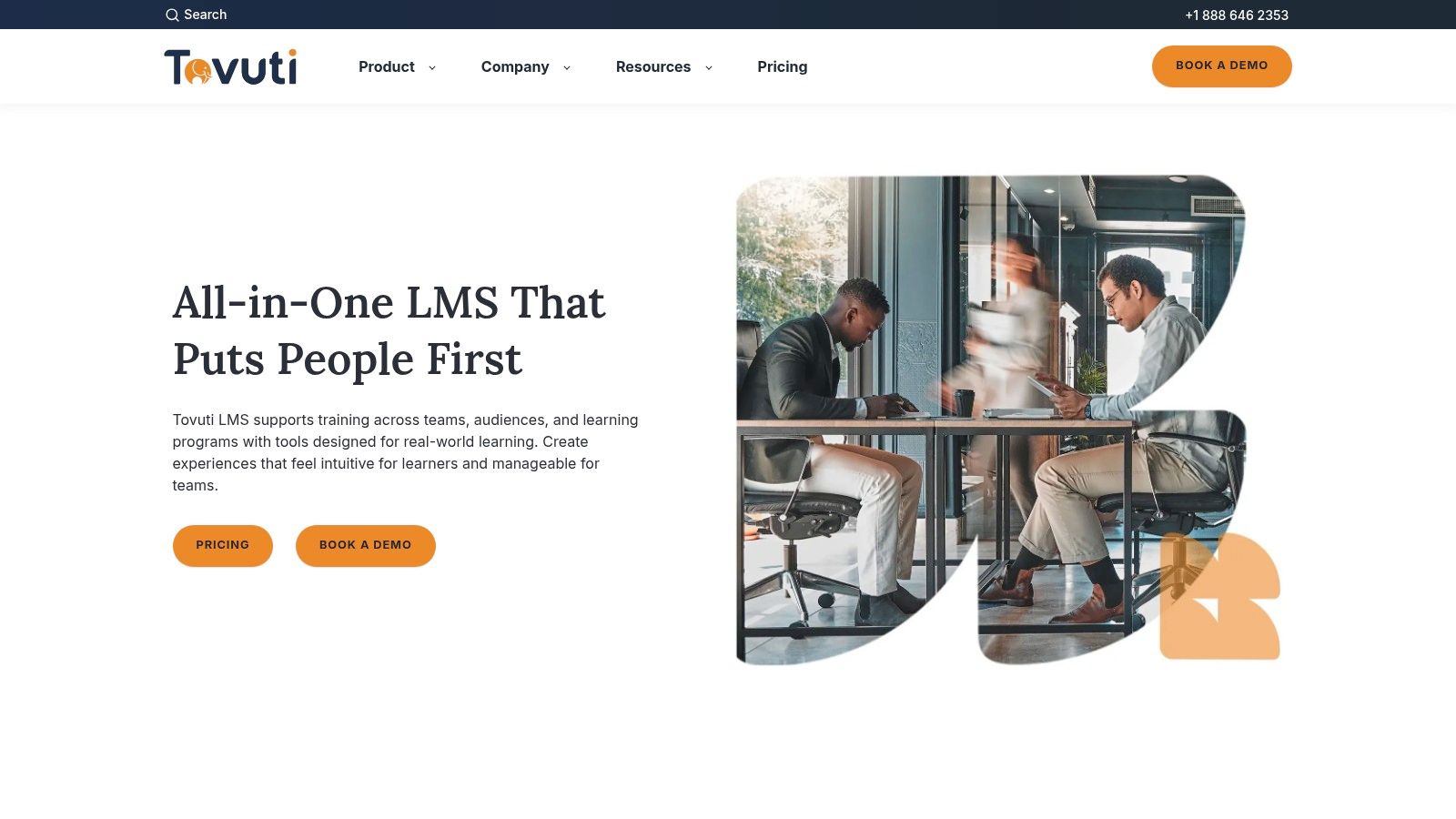
The platform is packed with features. It includes an intuitive course authoring tool that allows you to create engaging, interactive lessons without needing external software. It also has a built-in event management system and robust e-commerce capabilities for selling courses or memberships directly. This makes it ideal for businesses looking to monetize their training content. Its reporting and analytics are also quite detailed, giving you deep insights into learner progress and engagement.
Why It Stands Out
What makes Tovuti unique is its consultative approach to pricing and packaging. Instead of forcing small businesses into rigid, one-size-fits-all tiers, they work with you to build a package based on your specific use case and needs. While this means you have to request a quote, it also ensures you aren’t paying for features you’ll never use. Users frequently praise its modern interface and the quality of its customer support, which is crucial when you’re managing a feature-rich platform.
- Best For: Businesses wanting a highly customizable, feature-rich platform for selling courses or managing complex training programs.
- Pricing: Custom pricing based on a discovery call; you must request a quote.
- Standout Feature: The combination of a built-in interactive course authoring tool and a full-featured e-commerce engine.
Top 12 LMS for Small Business — Feature Comparison
| Platform | Core features | User experience & support | Pricing & value | Best for / Target audience |
|---|---|---|---|---|
| TalentLMS | Cloud LMS; unlimited courses, branches (portals), SSO, API | Fast setup, easy to use; generous free plan | Free tier (no time limit); predictable tiered pricing; per-file limits on low plans | Small teams, client portals, SMBs needing simple setup |
| LearnWorlds | Creator-focused; interactive video, subscriptions, bundles, SCORM | Rich sales/marketing tools; priority onboarding on higher tiers | Strong commerce stack; no txn fees on Pro+; starter has per-enrollment fee | Edupreneurs and course sellers focused on monetization |
| Thinkific | All-in-one courses + communities, live events, subscriptions, APIs | Strong student UX; clear plan tables; branded mobile app add-on | Zero platform fees with Thinkific Payments; some features gated to higher tiers | Course businesses running communities/events |
| Teachable | Built-in checkout/tax, upsells, affiliates, iOS app | Smooth checkout and monetization; frequent promos/trials | Built-in payments; transaction/processing fees vary by plan/method | Creators who want simple monetization workflows |
| Kajabi | All-in-one: courses, funnels, email, communities, affiliates | Deep marketing & community features; fewer integrations needed | Premium pricing; reduces tool sprawl; payment fees may apply | SMBs/creators wanting integrated marketing stack |
| iSpring Learn | Business LMS; mobile apps (offline), competencies, API | Strong reporting and 24/7 support; good authoring with iSpring Suite | Pay-per-active-user model; predictable for cyclical training; Suite may be extra | Internal training teams, HR/ops in SMBs |
| LearnDash | WordPress LMS plugin/cloud option; quizzes, drip, integrations | Full ownership and extensibility; cloud simplifies setup | Plugin licensing; add-ons can raise total cost; more admin upkeep | WordPress users wanting control and customization |
| LifterLMS | Modular WordPress LMS; free core plugin, paid add-ons/bundles | Low entry cost; strong community resources; DIY maintenance | Free core + pay-for add-ons; bundles for full features | Budget-conscious WP creators and DIY builders |
| MoodleCloud | Hosted Moodle; standard Moodle activities, BigBlueButton, mobile app | No server management; upgrades by Moodle HQ; trial available | Predictable annual pricing by user tier; limited plugin install on standard plans | Orgs wanting Moodle without hosting overhead |
| 360Learning | Collaborative authoring; social learning, analytics, integrations | Peer-driven, fast course creation; mobile apps | Clear Team pricing (caps apply); enterprise features require Business plan | SMEs focused on collaborative, peer-led L&D |
| Litmos | Corporate LMS; SCORM/xAPI, ILT/vILT, e‑commerce, SSO | Mature feature set; mobile-first and multi‑language support | Contact-sales pricing; advanced analytics/AI gated to high tiers | Companies needing compliance, formal training, enterprise features |
| Tovuti LMS | Interactive content, branded portals, e‑commerce, SSO | Positive UI and support; customizable portals | Custom pricing via quote; packaging tailored to use case | SMBs needing branded portals and tailored packages |
Final Thoughts
Whew, that was a lot of information to take in. We’ve journeyed through twelve of the top learning management systems. It’s clear there is no single “best” LMS for every small business. The right choice truly depends on your specific goals, your budget, and the kind of learning experience you want to create.
The sheer number of options can feel overwhelming, but that’s actually a good thing. It means there’s a perfect platform out there that aligns with what you’re trying to build, whether that’s a polished internal training hub or a thriving online course empire.
Key Takeaways and Your Next Steps
Let’s distill everything we’ve covered into some actionable advice. As you move forward, keep these core principles at the forefront of your decision making process.
1. Define Your “Why” Before Your “What”: Before you get lost in feature comparison charts, get crystal clear on your primary objective.
- Are you training internal employees to improve performance and compliance? Look at platforms like TalentLMS or iSpring Learn that excel at corporate training.
- Are you selling online courses directly to consumers? Your focus should be on marketing and sales tools, making platforms like Kajabi or Thinkific strong contenders.
- Are you building a learning community or membership site? A solution like LearnWorlds or a WordPress plugin like LearnDash might offer the right blend of content and engagement features.
2. Budget for More Than Just the Subscription: Your total cost of ownership goes beyond the monthly or annual fee. Factor in potential expenses like:
- Transaction fees on course sales.
- Costs for third party integrations or plugins (especially with WordPress solutions).
- The time and resources needed for setup, content creation, and ongoing administration.
3. Always Start with a Free Trial or Demo: I can’t stress this enough. Reading reviews is one thing, but actually using the software is another. Sign up for the free trials of your top two or three choices. Upload a test video, create a sample quiz, and click through the student and admin dashboards. This hands on experience will reveal more about a platform’s usability than any article ever could.
Making the Final Call
Choosing the best LMS for your small business is a significant investment of both time and money. Don’t rush it. Use this guide as your starting point. Revisit the pros and cons, check out their pricing pages for the most current details, and dive into those free trials.
Your goal is to find a platform that not only meets your needs today but can also grow with you tomorrow. Think about where you want your business to be in a year or two. Will your chosen LMS support that growth, or will it hold you back?
Ultimately, the right LMS should feel like a partner in your success. It should empower you to deliver amazing learning experiences without creating technical headaches. You’ve got this. Take what you’ve learned here, trust your gut during the trial period, and you’ll find the perfect platform to bring your vision to life.