
Best white label LMS platforms for agencies and resellers

Tired of juggling client training across a dozen different platforms?
That’s the spot a lot of agencies and resellers end up in. One client wants a clean onboarding portal. Another needs compliance training under their own brand. A third wants to sell partner education and expects checkout, certificates, and reporting to work without a pile of manual fixes. Before long, your team is buried in login resets, enrollments, branding requests, and support tickets.
A proper white-label LMS can clean that up fast. You get one backend, cleaner client separation, and a setup that feels like your agency built the whole thing. That matters if you’re selling training as a service, packaging learning into retainers, or trying to make client education less custom and more repeatable.
If you’re still deciding what a white label solution is, think of it as renting the engine and painting the whole car in your client’s brand. The best systems go beyond colors and logos. They let you isolate portals, hand off limited admin access, control billing workflows, and keep reporting organized across accounts.
That’s the lens I’m using here.
This isn’t a generic list of LMS tools with “great for businesses of all sizes” fluff. I’m looking at the best white label LMS platforms for agencies and resellers based on the stuff that affects delivery. Multi-tenancy. Portal management. Monetization. Delegated admin. How painful the setup is. Where the hidden cost tends to show up.
Some of these tools are better for high-volume client portals. Some are better for premium branded academies. Some are excellent products, but awkward fits for reseller models.
If you need to choose a platform you can build services around for years, start here.
1. LearnWorlds
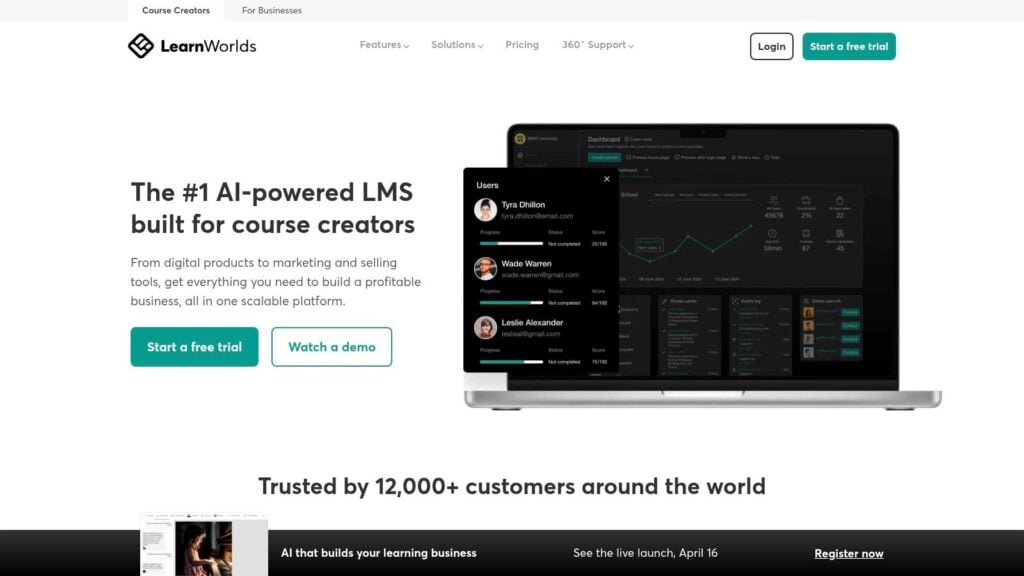
LearnWorlds is one of the first platforms I’d look at if your agency sells polished, client-facing education products and cares a lot about presentation.
It has a creator-friendly feel, which is both its strength and its limitation. For the right agency, that’s great. You can launch branded schools, control the front-end experience, build strong storefronts, and create learning products that don’t look like generic corporate training.
Where it fits agency work
LearnWorlds works well when your service model includes revenue generation, not just internal training delivery.
If a client wants subscriptions, bundles, payment plans, coupons, interactive content, and a premium-looking academy, LearnWorlds is easier to shape into that experience than an enterprise-first LMS. I’ve found that matters for agencies serving coaches, associations, niche education brands, and businesses turning expertise into paid training.
A few things stand out:
- Brand control: You can white-label the site, domain, and learner-facing experience.
- Commerce options: Bundles, subscriptions, and payment flexibility help if your client wants to monetize rather than just train.
- Automation potential: APIs and integrations help once you start connecting enrollments and client workflows to your broader stack.
If you’re still comparing platform fit, this guide on how to choose an LMS is a useful companion.
LearnWorlds is strongest when the LMS also needs to act like a storefront and brand asset, not just a content locker.
The trade-off
The premium look can come with premium complexity.
Branded mobile apps are attractive if you want to give a client a high-end package, but those extras can change the economics of your offer fast. The other thing to watch is scale across many separate client environments. If your model is dozens of lightweight portals rather than a smaller number of polished academies, a more portal-native platform may provide a smoother operational experience.
For agencies selling “academy as a service,” it is a strong contender.
2. TalentLMS
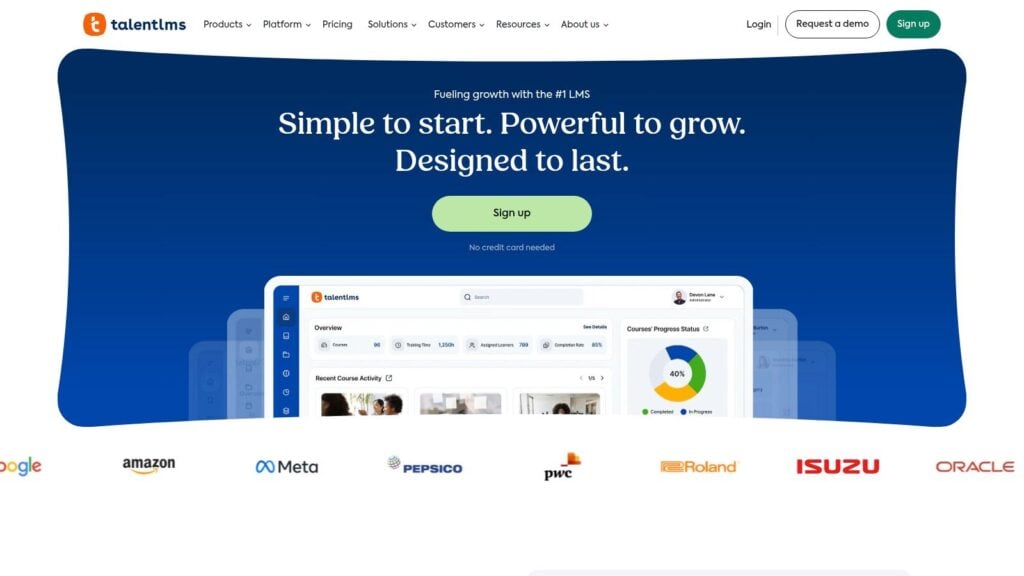
An agency signs three new training clients in the same month. None of them wants a long implementation. They want their own logo, their own URL, a clear admin handoff, and a system staff can use without calling support every week. That is the kind of account where TalentLMS does well.
For agencies and resellers serving small to midsize businesses, TalentLMS is the operationally sensible choice. It is built for getting portals live quickly, keeping admin work manageable, and avoiding the heavy setup that can erode margin on fixed-fee client deals.
What makes it useful from a reseller perspective is not flashy design. It is repeatability. You can standardize your setup process, create a reliable onboarding motion for clients, and hand over day-to-day administration without exposing them to a complicated backend. If your offer looks more like packaged rollout services than custom learning builds, that matters. Teams comparing options for channel or client training should also review this guide to LMS platforms for reseller education.
Why it fits agency economics
TalentLMS works best when your business model depends on speed and consistency across multiple client accounts.
I’ve found that agencies make money on platforms like this in two ways. First, they reduce setup time. Second, they limit the amount of ongoing support a client needs after launch. TalentLMS supports both. The interface is easy for non-specialists to manage, which lowers the risk that every content edit or user import comes back to your team as billable but annoying maintenance.
A few strengths stand out:
- Best for: Agencies managing a portfolio of SMB training portals
- Strong point: Fast deployment and simpler client handoff
- Works well for: Onboarding, compliance, partner enablement, and other repeatable training use cases
- Watch for: Clients that expect highly customized front ends or more advanced multi-tenant controls
The trade-off
TalentLMS is not the platform agencies choose to win a pitch based on a premium learner experience alone.
It is stronger as a practical delivery engine than as a highly differentiated brand environment. If a client wants every academy to feel custom-built, with deeper storefront behavior, more layered permissions, or complex enterprise governance, you may hit the edge of what makes TalentLMS attractive in the first place.
This is a key decision. If your offer is built around efficient launches, predictable support, and solid recurring revenue across many smaller portals, TalentLMS is a strong candidate. If your clients are paying for a more bespoke academy product, the savings in setup time may not outweigh the limits in presentation and control.
3. Thinkific Plus
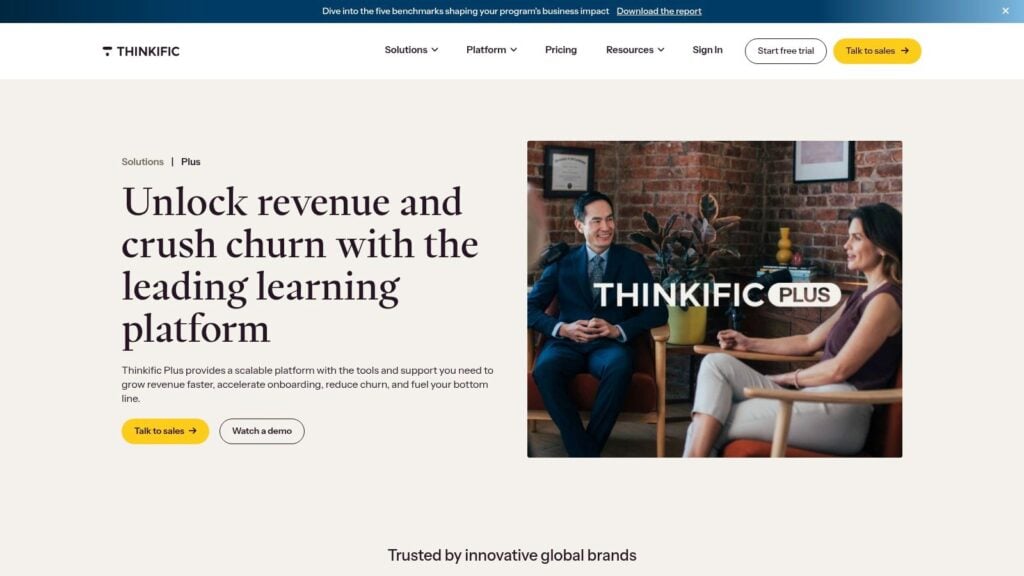
Thinkific Plus sits in an interesting middle ground: it isn’t the most enterprise-heavy option on this list, and it isn’t a lightweight creator tool either.
Thinkific Plus makes sense for agencies that want multiple branded sites under one commercial relationship, especially when the client offer includes memberships, digital products, or customer education with a strong sales layer.
A familiar front end with more grown-up controls
A lot of teams like Thinkific because the interface feels approachable, and that has real value when your agency needs to onboard client stakeholders who are not LMS people and never will be.
The Plus tier is where it becomes more relevant for reseller and agency use. Multiple sites, centralized oversight, bulk enrollment options, APIs, and stronger security controls make it more viable for agencies that are scaling beyond one-off course launches.
I’d look at it if your client work overlaps with:
- Membership businesses: Ongoing access models fit.
- Course sales: Checkout and storefront experiences matter here
- Client academies: Separate branded sites can be easier to position in proposals
For agencies building packaged education services, this article on LMS for reseller education is worth reading alongside your shortlist.
The main catch
Thinkific Plus is strongest when the business model is commercial education, brand-led learning, or a client academy that acts partly like a media product.
If the client needs dense partner hierarchies, deep compliance controls, or classic extended enterprise complexity, I’d lean elsewhere. Pricing is also custom, meaning it can drift out of the comfort zone that makes standard Thinkific attractive in the first place.
For agencies that want a cleaner blend of ecommerce, memberships, and branded education properties, it’s a serious option.
4. Docebo
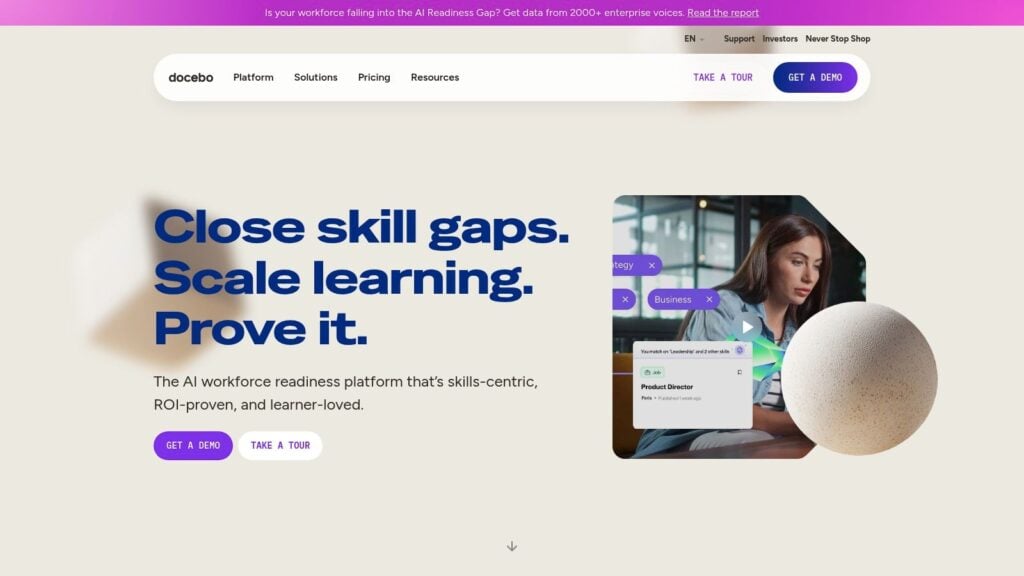
An agency feels the need for Docebo after a few messy client setups. One client wants customer education, another needs partner onboarding, a third wants their own branding and admin access, and suddenly a simple white-label portal is not enough.
Docebo earns its place higher up the market because it is built for that kind of complexity. I’d put it on the shortlist for agencies serving enterprise clients that expect separate audiences, strict control over permissions, and an LMS that can plug into a broader tech stack instead of sitting off to the side.
Why it fits reseller and agency models
Its main selling point is account structure.
Docebo’s Extended Enterprise model is designed to create distinct branded environments for different audiences or client groups, while the parent account keeps central oversight. For resellers, that matters more than flashy course features. It affects how cleanly you can onboard clients, hand off limited control, and still protect your team from becoming the admin desk for every portal change.
Docebo also supports custom branding, domain configuration, and delegated administration, as described on its Extended Enterprise product page. That combination is useful when your commercial model depends on packaging training as a managed service rather than selling one shared academy to everyone.
A few places where agencies get value:
- Client separation: Better fit for agencies managing multiple customer or partner academies under one commercial umbrella
- Delegated admin control: Lets client teams handle day-to-day tasks without giving away the keys to the full system
- Embedded learning options: Helpful if your delivery model includes customer portals, partner hubs, or product-connected training
If your team is selling training as part of a broader service line, these business benefits of an LMS for growing programs become more important once each client expects a different setup, permission model, and reporting view.
The trade-off
Docebo makes sense when contract value can support a heavier platform.
Implementation takes more planning than simpler mid-market tools. Agencies need a clear view of tenant structure, admin boundaries, reporting ownership, and integration scope before rollout. If your typical client is an SMB buying a modest branded portal, that overhead can eat into margin fast.
The upside is longevity. Agencies working with larger accounts choose Docebo because it gives them room to standardize delivery, keep governance at the parent level, and support more complex client demands without switching platforms a year later.
5. Absorb LMS
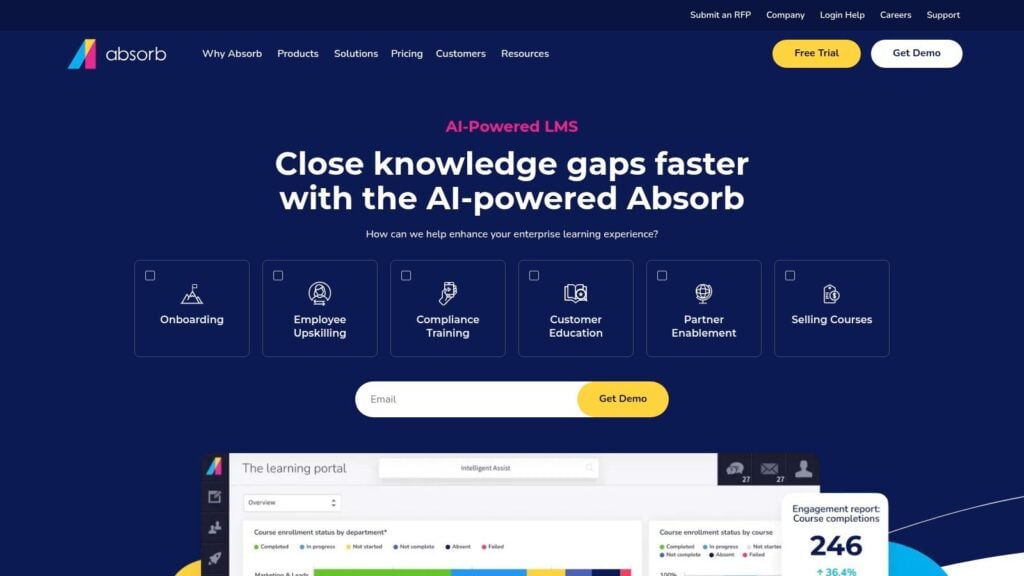
A common agency problem looks like this. One client wants a polished customer academy tied to paid training. Another wants partner enablement with strict brand control. Your team wants one platform that can support both without turning every new account into a custom build.
Absorb LMS is a credible option for that kind of business. It fits agencies and resellers that need a polished external learning experience, stronger commerce options than many mid-market tools, and enough administrative control to package training as a repeatable service.
What stands out is the balance. Absorb appeals to teams that have outgrown creator-first platforms but do not want a clunky enterprise system that needs heavy internal support to look client-ready.
Why agencies keep it on the shortlist
For reseller models, a fundamental question is not whether an LMS can deliver courses. Most of them can. The harder question is whether you can standardize delivery across clients without making every account an operational exception.
Absorb works well when your commercial model depends on branded client environments, paid access, and controlled handoff. Agencies can use it to keep the parent relationship intact while still giving clients enough ownership to manage learners, review results, or handle routine admin tasks. That matters once you move from one-off implementations to recurring accounts.
I also like it for teams selling training as a product, not just an add-on. E-commerce and customer education are part of Absorb’s positioning, which makes it easier to price packaged academies, certification programs, or revenue-linked onboarding offers in a way clients understand.
If you are mapping the broader business benefits of an LMS for scalable training programs, Absorb makes the strongest case when training is tied directly to client retention, partner performance, or paid education.
The trade-off
Absorb can be a strong long-term fit, but agencies need to price carefully.
Costs are easier to justify on accounts where training is tied to revenue, compliance, or customer adoption. If your average client only needs a small branded portal with basic reporting, Absorb can feel heavier than necessary, and that extra platform cost cuts into margin fast. The module-based approach can also push total ownership higher as requirements expand.
For mid-market and enterprise client work, though, Absorb lands in the practical middle. It presents well, supports a more commercial training model, and gives agencies room to grow without forcing a platform change the moment clients ask for more structure.
6. LearnUpon
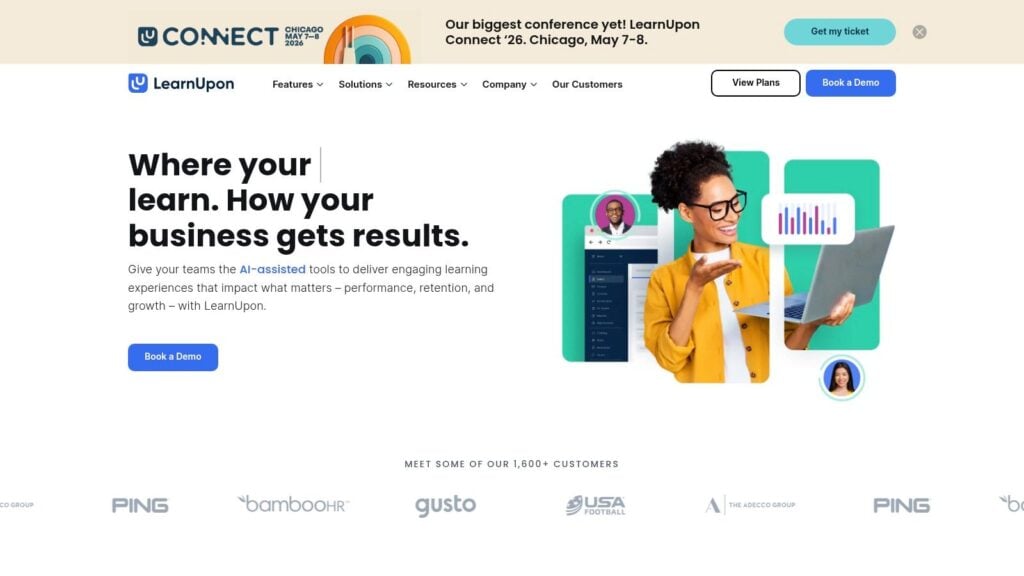
LearnUpon has a reputation for being easier to live with than some enterprise LMS platforms, and that’s a big part of its appeal.
LearnUpon is built around portals, a feature that makes it relevant for agencies and resellers. If your delivery model includes separate client environments, parent and child relationships, delegated administration, and centralized oversight, this structure makes sense fast.
A portal-first setup that aligns with agency operations
What I like about LearnUpon’s positioning is that it doesn’t try to pretend every training use case is the same.
Agencies serve employees, partners, customers, and channel audiences across different accounts. LearnUpon’s multi-portal approach matches that reality. You can keep client spaces separate while maintaining enough central control to avoid operational chaos. That gives it a practical edge in situations such as these:
- You manage multiple external audiences: Different portals help maintain clean separation
- Clients need some admin access: Delegated controls are more manageable than all-or-nothing access
- Reporting needs to roll up centrally: Parent-level visibility matters when your team owns delivery
Where it shines and where it doesn’t
LearnUpon is a good fit if you want a mature multi-portal model without diving straight into the heaviest enterprise category.
The trade-off is on the commercial side. Pricing is quote-based, and depending on how the account is structured, costs can climb as you add portals, add-ons, or large external audiences. That doesn’t make it a bad option; it means agencies should test the economics before locking in a packaging strategy.
If your team is tired of duct-taping separate client academies together, LearnUpon offers one of the cleaner operational resets.
I’d put it high on the shortlist for agencies focused on customer education, partner enablement, and external training programs that need a stable home.
7. Thought Industries
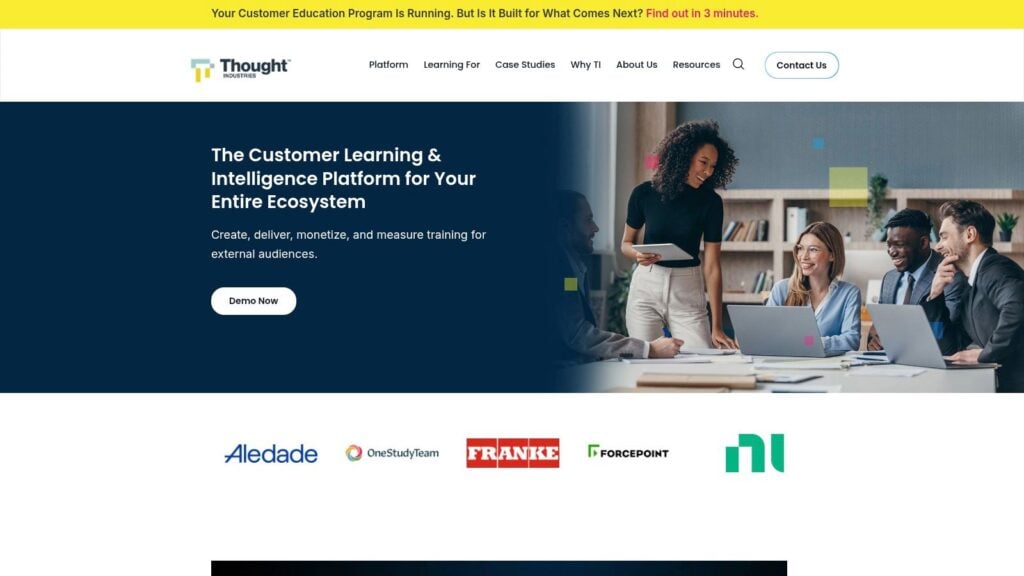
Thought Industries is the platform I think about when the agency business model is B2B education at scale.
Not casual course hosting. Not internal-only learning. I mean real customer academies, partner training ecosystems, sublicensing, and multi-tenant commercial learning where the LMS is part of the product you sell, and Thought Industries leans hard into that world.
Built for licensing and client hierarchy
Its Panorama multi-tenancy model is a strong signal of where the platform wants to play. Agencies managing branded portals for multiple business clients can use that structure to keep accounts separate while updating content centrally, a huge operational win when one program powers many client environments.
A few scenarios where it fits:
- Sublicensed training programs: One core library, many branded client versions
- B2B subscriptions: Group purchasing and account-level delivery matter
- Partner and customer academies: More complex than simple course sales
This is one of the few platforms where the monetization story feels native to the product, not bolted on later.
Why some agencies still won’t want it
Thought Industries makes more sense for larger deals and more established delivery operations; the implementation effort is heavier, pricing is custom, and the platform rewards teams that already know their business model.
If your agency is still validating demand for white-label training services, it may be too much platform too soon.
If you’ve already proven that clients want branded academies, recurring training access, and structured B2B licensing, it becomes a much stronger fit. In that setting, the extra complexity can be justified because the software aligns with the revenue model instead of fighting it.
8. SAP Litmos
SAP Litmos is the “safe pair of hands” option.
It’s recognized, stable, and broad enough to support both internal and external training use cases. For agencies, that can be useful when clients want a platform name their procurement team won’t side-eye, and your delivery team won’t have to reinvent around.
SAP Litmos offers multiple branding experiences, white-label theme options, eCommerce capability, SSO support, and mobile learning; that mix gives agencies enough room to standardize client delivery across several account types.
A solid fit for standardization
Litmos makes the most sense when your agency wants one platform that can cover a lot of common training scenarios without chasing extreme customization.
You may not get the most extensive white-label flexibility on every plan, but you do get a mature feature set that can support branded experiences across internal enablement, customer training, and partner learning.
That’s useful if your service model depends on consistency.
- Good fit: Agencies standardizing repeatable training packages
- Helpful strength: Recognizable platform with brandable experiences
- Possible issue: White-label depth and pricing depend on plan level
My read on the trade-off
Litmos isn’t the platform agencies choose because it feels exciting. They choose it because it feels dependable.
That’s not a criticism; in reseller work, dependable can be valuable.
Where I’d be cautious is if your offer depends on highly customized front-end experiences or a thoroughly differentiated branded feel for every client. Litmos can cover a lot of ground, but some agencies will find its flexibility less impressive than the strongest players in the white-label category.
For broad training programs where reliability and recognizable enterprise credibility matter, it stays in the conversation.
9. Tovuti LMS
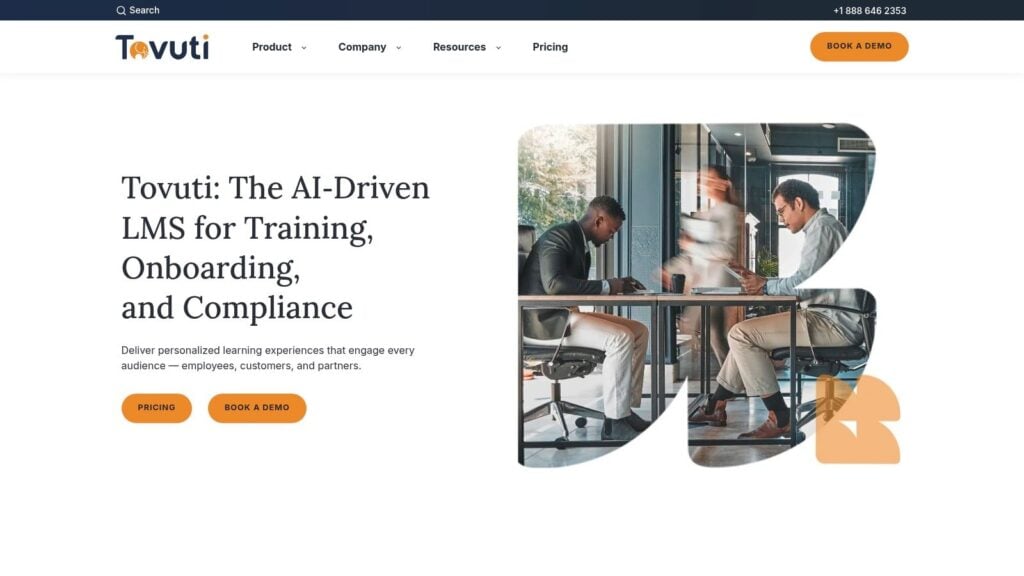
Tovuti is an interesting choice for agencies that want more control over the front end without leaning too heavily on outside site builders.
Tovuti LMS combines LMS functionality with CMS-style tools, user portal customization, and more extensive branding controls than many platforms in its tier; if your clients care about localized storefronts, different brand variants, or a more designed learner experience, that can make Tovuti attractive.
Why some agencies like the built-in CMS angle
A lot of white-label LMS setups still require stitching together the learning platform and a separate web layer. Tovuti can reduce some of that dependency. That can help in practical ways:
- Less front-end sprawl: Your team may not need to maintain as many external pages
- Better localization: Multi-currency brand support is helpful for regional offers
- Client-facing design control: WYSIWYG tools make it easier to shape pages without a full dev workflow
For agencies serving clients across regions or brands, that flexibility can simplify delivery.
A platform with its own CMS can save time, but only if your team is willing to standardize how client sites are built inside it.
Where to be careful
Tovuti’s challenge is clarity.
Some capabilities appear to require sales conversations or specific access, which can make it harder to scope confidently from the outside. That’s not unusual in LMS software, but it does slow down evaluation if your agency wants to compare options cleanly.
I’d consider Tovuti when your projects involve branded learner portals that need more visual shaping than a basic LMS portal allows. I’d be more cautious if your priority is simple, repeatable deployment across many clients with minimal variation.
10. Academy Of Mine
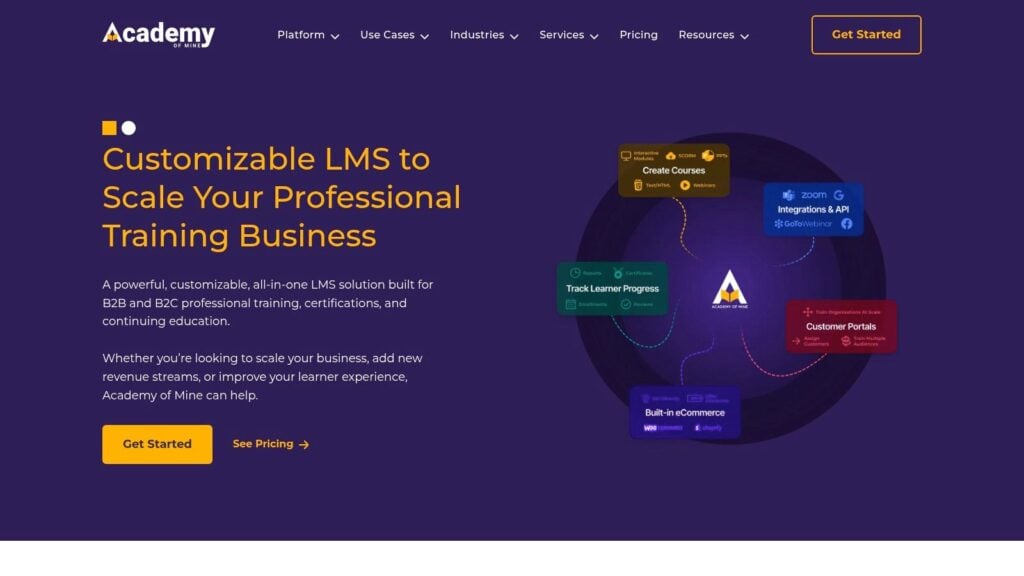
Academy Of Mine doesn’t get mentioned in the same breath as the bigger enterprise names, but for some agencies that’s exactly why it’s worth a look, and Academy Of Mine is aimed at B2B training businesses. That focus shows up in the multi-tenant client portal story, the white-label setup, the ecommerce support, and the availability of implementation and migration services.
A practical option for training companies selling to organizations
Some platforms feel like they started with solo creators and later added B2B features. Academy Of Mine feels more aligned with organizations selling training to other organizations, and that can make it easier to package as a service.
The appeal is straightforward:
- Multi-tenant client portals: Important for agency and reseller delivery
- Custom domain white-labeling: Helps your offer look owned, not rented
- Services support: Useful if you need migrations, setup help, or instructional design backup
- Published entry pricing: Better for budgeting than pure quote-only platforms
If you’re trying to build a commercial training operation without jumping to a large enterprise platform, that middle ground can be useful.
The trade-off behind the promise
The more advanced your use case becomes, the more likely you are to move into custom territory.
That isn’t a flaw by itself; plenty of agencies want a provider that can grow with them through services and deeper customization. But it does mean the easiest way into the platform may not be the same as the long-term operating model.
For B2B training firms and agencies with a strong organizational client base, though, Academy Of Mine can be a sensible fit.
Top 10 White-Label LMS Platforms for Agencies & Resellers
| Platform | Core features | Target audience | Unique selling point | Pricing & cost notes |
|---|---|---|---|---|
| LearnWorlds | Full white-label, branded mobile apps (add‑on), e‑commerce, interactive video, APIs | Agencies/resellers creating separate schools for clients | Deep white‑label + optional fully branded mobile apps | Mobile apps & advanced features cost extra; higher tiers for multi‑school |
| TalentLMS | Branches (multi‑portal), custom domain/branding, native mobile apps | Agencies needing fast setup and many client portals | Quick multi‑portal rollout with clear pricing | Published plans; full de‑branding on Pro/Enterprise (higher tier) |
| Thinkific Plus | Multiple branded sites under one agreement, memberships, bulk enrollments, APIs | Agencies running client academies at enterprise scale | Familiar Thinkific creator UX with enterprise controls | Custom/Plus pricing; typically above SMB plans |
| Docebo (Extended Enterprise) | Multi‑domain portals, AI features, enterprise integrations, analytics | Global agencies and large partner/customer training programs | Mature extended‑enterprise model with strong analytics | Quote‑based enterprise pricing; can be expensive for small portals |
| Absorb LMS | True portal multi‑tenancy, e‑commerce for seats/licenses, modular add‑ons | Agencies selling/licensing courses at scale | Flexible module approach and solid monetization workflows | Enterprise pricing, add‑ons increase total cost of ownership |
| LearnUpon | Parent/child portals, delegated admin, consolidated reporting, white‑label | Client training, resellers, extended enterprise deployments | Centralized management and reporting across portals | Quote‑based; costs grow with portals, add‑ons and MAU models |
| Thought Industries (Panorama) | Panorama multi‑tenancy, sublicensing, auto‑create client portals, centralized updates | Agencies running customer/partner academies and B2B marketplaces | Built‑in licensing/monetization suited to reseller models | Enterprise pricing only; custom quotes |
| SAP Litmos | Multiple branded experiences, e‑commerce, SSO, mobile learning | Enterprises and agencies standardizing client training | Recognized stable platform with broad feature set | Typically enterprise‑tier pricing; not publicly listed |
| Tovuti LMS | Brand Manager, multi‑currency/localization, built‑in CMS, WYSIWYG pages | Agencies needing localized storefronts and branded portals | Built‑in CMS + extensive localization and brand controls | Custom pricing; requires sales engagement |
| Academy Of Mine | White‑label multi‑tenant portals, e‑commerce, implementation & ID services | B2B training companies and agencies selling training | Services arm for customizations, migrations and instructional design | Published entry pricing available; enterprise features custom quoted |
Making Your Pick It’s About Partnership, Not Just a Platform
There’s no perfect LMS for every agency.
There’s the one that fits how you sell, how you deliver, and how much operational mess your team can tolerate.
That’s why I’d avoid choosing purely on feature volume. Most platforms can check the obvious boxes. White-labeling, integrations, mobile access, reporting, ecommerce. The better question is whether those features support your business model without creating hidden labor on the back end.
If you serve SMB clients and need to launch branded portals quickly, a platform like TalentLMS will make more commercial sense than a heavyweight enterprise system. If you’re building premium academies with monetization baked in, LearnWorlds or Thinkific Plus may fit better. If your agency sells customer education, partner enablement, or complex external training for larger organizations, Docebo, Absorb, LearnUpon, or Thought Industries start to look more compelling.
That’s the part people skip. The LMS isn’t just a tool choice. It shapes your service packaging; it affects how fast you can onboard a new client; it influences whether delegated admin is safe to hand over or a disaster waiting to happen; it changes how easy it is to duplicate a successful setup across accounts, and it affects margins.
When I look at the best white label LMS platforms for agencies and resellers, I keep coming back to four practical filters:
- Client separation: Can you create distinct portals, permissions, and branding without hacks?
- Monetization fit: Does the platform support the way you plan to bill, sell, or license training?
- Admin reality: Will your team be able to manage multiple client accounts without drowning in manual work?
- Growth headroom: Can the platform still support you when your agency lands larger, more demanding clients?
Those questions will tell you more than a giant feature checklist.
I’d also pay close attention to the demo process. Don’t just ask for a tour. Ask them to show how a new client portal gets created. Ask what delegated admins can and can’t touch. Ask how reporting works when one parent account manages many client environments. Ask what branding changes require support. Ask how ecommerce behaves when multiple clients need separate commercial rules. Ask what breaks first when the account structure gets complicated.
Those answers are where key differences show up.
A shiny learner interface can be persuasive, but agencies live in the backend. That’s where profitability, scalability, and support burden are decided.
If you’re narrowing your list, pick two or three platforms that match your delivery model, then pressure-test them against your current client roster. Not your dream client. Your actual one. The compliance-heavy client. The low-budget client with lots of admins. The premium client who wants everything branded. The client who says they need “just a few courses” and then asks for storefronts, cohorts, certificates, and partner access three months later.
That exercise makes the right choice clearer.
The best platform is the one that helps you standardize what should be standard, customize what clients will pay for, and keep your team out of avoidable admin chaos, and that’s the partner worth signing up with.