Build Your Platform: A Creator’s Guide to Building a Membership Website
So, you have an idea for a membership site. That’s the easy part.
The real work, the part that separates flash-in-the-pan ideas from sustainable businesses, is turning that spark into a solid plan. Before you even think about which platform to use or what your logo should look like, you need to map out your core idea, get laser-focused on who you’re serving, and most importantly, make sure people will actually pay for it.
This isn’t about writing a stuffy, 50-page business plan. It’s about asking a few critical questions upfront to make sure you’re building something people genuinely want and need.
Find Your Unique Niche
Let’s get one thing straight: trying to serve everyone serves no one. The most successful membership sites are built for a specific, well-defined niche. A smaller, passionate audience will always be more valuable than a massive, indifferent one.
Think about what specific problem you can solve or what unique community you can build.
For instance, a “fitness membership” is way too broad. It gets lost in the noise. But a “fitness membership for new moms over 30 who need quick, at-home workouts”? Now you’ve got something. That specificity makes your marketing a thousand times easier and ensures every piece of content you create hits home.
The secret to a successful membership site is creating a space where a specific group of people feels completely understood. When members feel like you’ve built something just for them, they are much more likely to stick around for the long haul.
This whole planning process really boils down to three key phases that build on each other.
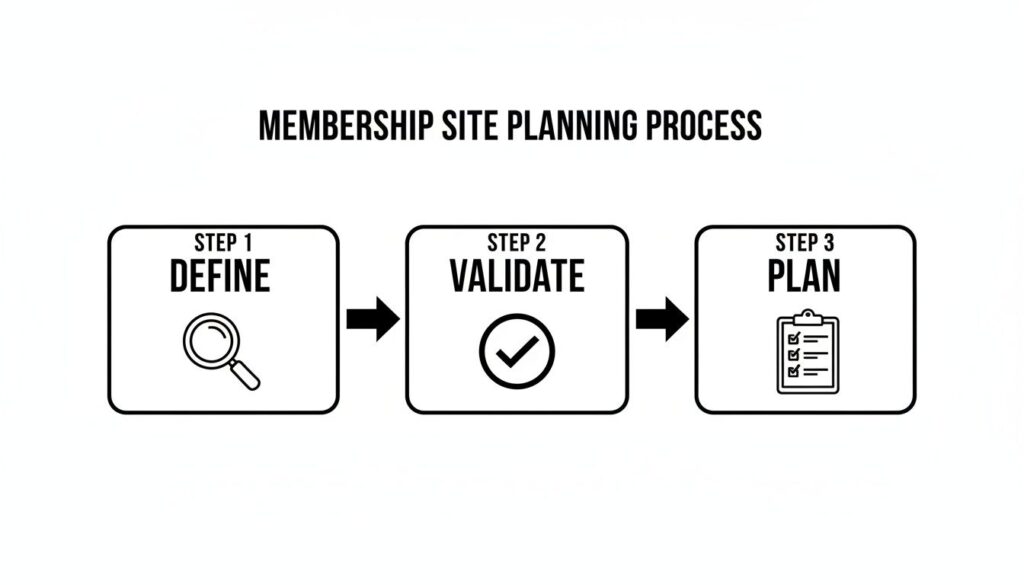
As you can see, you define your idea, you test it in the real world, and then you start planning the nuts and bolts.
Define Your Core Value Proposition
What transformation are you actually selling? People don’t buy access to a library of videos, they buy a result. Your value proposition is the promise you make to every single member. Will you help them land a promotion, learn a new skill, or finally connect with peers who get it?
To nail this down, I’d ask myself:
- What’s the problem? Get specific about the pain point your members are experiencing right now.
- What’s the outcome? Describe the “after” state they’ll achieve by being part of your community.
- Why you? What’s your unique experience or expertise that makes you the right person to guide them?
The subscription economy is absolutely booming for a reason. People are more than willing to pay for valuable digital experiences. The global subscription ecommerce market was valued at $199.41 billion in 2023 and is on track to hit a staggering $2.2 trillion by 2028. This isn’t a fad. It’s a massive shift in how people consume content and seek out specialized knowledge.
Validate Your Idea Before You Build
If you take only one piece of advice from this guide, let it be this: validate your idea before you write a single line of code or record a single video. So many aspiring creators spend months building something in a vacuum, only to launch to the sound of crickets.
Don’t assume you know what your audience wants. Ask them. You can dive deeper into this process by exploring our complete guide on how to build a membership site.
Here are a few simple ways I’ve seen work to see if your idea has legs:
- Run a survey: Ask your potential audience about their biggest challenges related to your topic. What are they stuck on? What have they tried that didn’t work?
- Launch a presale: Offer a “founding members” discount to a small group to see if they’ll buy in before the site is even built. Money talks.
- Create a waitlist: Set up a simple landing page and see if you can get people to sign up. A growing email list is one of the strongest indicators of real demand.
By validating first, you move from hoping your idea will work to knowing you’re building something the market is ready and willing to pay for.
Choosing Your Tech Stack and Building the Foundation
Alright, let’s get into the guts of your operation: the technology. Picking the right tools is easily one of the most critical decisions you’ll make when building a membership site. This is the foundation of your entire business, so you need a platform that works for you, not against you.
This part can feel a bit overwhelming, especially if you’re not a “tech person,” but I’ll break down the main paths you can take. You absolutely do not need to be a coding wizard to get this done. Promise.

All-in-One Platforms vs. WordPress Plugins
Your first big fork in the road is deciding between an all-in-one platform and the classic WordPress plus a membership plugin combo. There’s no single “best” answer here. It really boils down to your technical comfort level, budget, and where you see this business going long-term.
An all-in-one solution like Kajabi or Mighty Networks handles pretty much everything for you: hosting, payments, themes, and all the membership features. Think of it like renting a fully furnished apartment where the utilities are included. The huge win here is simplicity. You can get up and running incredibly fast without getting bogged down in technical details.
The trade-off? You give up a fair bit of control and flexibility. You’re building on someone else’s land, and the monthly costs can add up quickly.
On the other side of the coin, using WordPress gives you complete ownership and nearly endless customization. With over 60% of the CMS market, WordPress is a powerhouse for a reason. You start with the core WordPress software (which is free) and then layer on a specialized membership plugin like MemberPress to handle all the member-specific functions.
This route gives you total freedom, but it also means you’re responsible for things like web hosting, security, and updates. It’s like owning your own house. You have more freedom, but you also have to handle the maintenance yourself.
For most creators who are just starting out, I believe the WordPress and plugin combination offers the best balance of power, cost, and scalability. You maintain full control over your brand and content without being locked into a single platform’s ecosystem.
Key Players in the Membership Space
To help you get a clearer picture of what’s out there, let’s look at a few of the most popular options. Each one is built for a slightly different type of creator.
Here’s a quick rundown of some leading platforms to help you choose the right tools for your new membership website.
Membership Platform Feature Showdown
| Platform | Type | Ideal User | Pricing Starts At |
|---|---|---|---|
| MemberPress | WordPress Plugin | Creators who want maximum control and flexibility on their own site. | $179.50/year |
| Kajabi | All-in-One | Course creators who want a seamless, integrated teaching experience. | $119/month (billed annually) |
| Mighty Networks | All-in-One | Community-first creators who want a private social network feel. | $33/month (billed annually) |
| WordPress | CMS | The foundational software for self-hosted websites. | Free (requires hosting) |
As you can see, the options vary quite a bit in both function and cost. The right choice depends entirely on what’s most important to you. Is it the all-in-one convenience of Kajabi, the deep community features of Mighty Networks, or the total freedom of MemberPress on WordPress?
There are many more tools out there, of course, but these three represent the main categories you’ll be choosing from. Selecting the right tech is a massive step, and if you want to go deeper, check out our guide on the best tech stack for a $10 membership site to see how different tools stack up.
Getting the Essentials in Place
No matter which platform path you choose, there are a few foundational pieces you’ll need to lock down before you can really start building.
- A Domain Name: This is your website’s address on the internet (e.g., myawesomemembership.com). Try to pick something memorable, easy to spell, and relevant to what you’re offering.
- Web Hosting: If you go the WordPress route, you’ll need a web host. This is where your website’s files actually live online. Don’t cheap out here. Reliable hosting is absolutely crucial for site speed and security.
- A Payment Gateway: This is the service that processes credit card payments from your members. The two most common and reliable options are Stripe and PayPal. Your membership platform or plugin will connect directly to your chosen gateway to handle all the transactions securely.
Getting these basics sorted out early will make the entire building process so much smoother. Think of it as preparing your worksite before you start laying the bricks.
Creating Content That Keeps Members Engaged
Let’s be honest: your content is the absolute heart of your membership. It’s the reason people pull out their credit cards in the first place, and it’s the deciding factor for whether they stick around month after month. So, how do you create amazing stuff that delivers real value without burning yourself out?
It all starts with a plan. You really can’t just wing it and hope for the best. A simple content calendar, even just a basic spreadsheet, will quickly become your best friend. It helps you map out topics, stay consistent, and make sure you’re always providing something fresh and valuable.
Choosing Your Content Formats
There’s no single “best” type of content. The right format depends entirely on your audience and what you’re teaching or offering. The real key is to play to your strengths and pick formats your members will genuinely enjoy.
Here are a few popular options you can mix and match:
- Video Lessons or Courses: This is perfect for visual topics where you need to show, not just tell. Think software tutorials, a cooking class, or a fitness routine. Video has a high perceived value and often feels more personal.
- Written Guides and Articles: Fantastic for in-depth, referenceable content. We’re talking detailed checklists, standard operating procedures (SOPs), or deep-dive articles that members can save and come back to again and again.
- Live Calls and Q&A Sessions: This is one of the best ways to build community and provide direct, tangible value. Members get to ask you questions in real-time, which is a huge perk they can’t get from a blog post or a YouTube video.
- Resource Libraries: A curated collection of templates, tools, or swipe files can be an absolute goldmine for your members. You’re saving them time, which is something pretty much everyone is willing to pay for.
The goal isn’t to do everything at once. I’d recommend starting with one or two core formats you know you can produce consistently and well. You can always add more variety later on as you get feedback from your community.
All-Access vs. Drip Content Delivery
Next up, you have to decide how you’ll deliver all this great content. This is a crucial piece of the puzzle that shapes your membership structure and manages member expectations. You basically have two main paths to choose from.
Giving members all-access (sometimes called the “Netflix model”) means they get the keys to the kingdom the moment they sign up. This is great for making new members feel like they’ve hit the jackpot, and it lets them learn at their own pace. The potential downside? Some people might binge everything they need and then cancel.
The other approach is a drip schedule. With this model, you release content to members over time, like one new module per week or a new resource pack on the first of the month. This method is amazing for preventing overwhelm and guiding members down a specific learning path. It also gives them a compelling reason to stay subscribed, since new content is always just around the corner.
A drip content strategy can significantly improve long-term retention. It creates a sense of anticipation and ensures members consistently receive new value, making it harder for them to justify canceling their subscription.
Designing Your Membership Tiers
As your membership grows, you might want to create different tiers to serve members with different needs and budgets. This is a powerful way to increase your revenue without having to constantly find a ton of new customers. A great first step is understanding content personalization and how it can make each tier feel uniquely valuable.
When you’re planning your tiers, it helps to think in terms of “good, better, best.”
- The Basic Tier: This is your entry-level offer. It needs to provide solid core value, like access to your main content library or the community forum.
- The Mid-Tier: This is often the most popular option. It should include everything from the basic tier plus something extra, like access to monthly live Q&A calls or a special resource library.
- The Premium Tier: This is your high-ticket offer. It includes everything from the other tiers, plus a high-touch element like personal coaching, direct feedback on their work, or small group mastermind sessions.
Structuring your tiers this way gives people a clear path to upgrade as they get more invested in your community and start seeing results. It makes your membership accessible to a wider audience while creating opportunities for deeper, more profitable engagement.
Alright, let’s talk about the part that turns your passion project into a real business: getting paid.
Figuring out what to charge can feel like a huge, intimidating decision, but it doesn’t have to be. Your price is simply a reflection of the value and transformation you’re offering your members. You want to find that sweet spot where potential members see your fee as a total bargain for the results they’ll get, while you feel fairly compensated for all your hard work.

Choosing Your Pricing Structure
Most successful membership sites don’t just slap one price on everything. They use a flexible model that gives people options, catering to different budgets and levels of commitment. It’s a smart way to broaden your appeal.
Here are the most common pricing strategies I’ve seen work time and time again:
- Monthly Subscription: This is the classic for a reason. It’s a low barrier to entry for new members and creates that predictable, recurring revenue that makes a business sustainable.
- Annual Subscription: Offering a yearly plan at a discount (think “get two months free”) is a fantastic way to improve your cash flow and reward your most dedicated members.
- Lifetime Deal (LTD): This one-time payment for lifetime access can be a goldmine for generating a quick cash injection, especially during a launch. Just use it carefully so you don’t devalue your ongoing membership down the road.
If you want to go deeper, you can explore these options and more by reading about different subscription pricing models to see what feels right for your community. For most creators, starting with a combination of monthly and annual plans is the perfect launchpad.
Your pricing isn’t set in stone. You can, and absolutely should, adjust it over time as you add more value. A great strategy is to reward your early adopters with a lower price for life, creating powerful loyalty from day one.
Integrating a Payment Gateway
Once you’ve landed on your pricing, you need a secure and reliable way to actually process those payments. This is where a payment gateway comes in. Think of it as the digital version of a credit card terminal in a store.
For anyone building a membership website today, the two biggest and most trusted names in the game are Stripe and PayPal. The good news is that nearly all modern membership plugins and platforms are built to integrate with them seamlessly.
Most creators I know lean towards Stripe because of its clean, simple interface for managing payments. It just makes the financial side of your business much less stressful.
To really make this work without pulling your hair out, you’ll need robust subscription management services. These systems are crucial because they automate the entire billing process. They handle recurring charges, chase down failed payments (a process called dunning), and manage member access without you having to lift a finger. This kind of automation is a lifesaver.
Handling Trials, Refunds, and Failed Payments
Running a membership involves more than just collecting money. You need a solid plan for a few common scenarios that will inevitably pop up.
- Free or Paid Trials: Offering a trial (like 7 days for free or 14 days for $1) can be an amazing way to get people in the door. It lowers the risk for them and shows you’re confident in the value you provide. Don’t underestimate this, trials can boost sign-ups dramatically.
- Refund Policy: Have a clear, simple refund policy. Whether you offer a 14-day or 30-day money-back guarantee, state it plainly on your sales page. A fair refund policy doesn’t just handle disputes. It builds trust with potential members before they even click “buy.”
- Failed Payments: They will happen. Credit cards expire, get declined, you name it. Your payment gateway or membership plugin should have a system to automatically retry the charge and email the member asking them to update their payment info. This one simple feature can save a surprising amount of your monthly revenue.
Getting these financial systems dialed in from the start will save you countless headaches and set you up to build a sustainable, profitable membership business.
Launching Your Site and Building Community
The big day is almost here. All the planning, building, and late-night content sessions have led to this moment. Launching your membership isn’t like flipping a light switch and hoping someone notices. It’s a strategic process designed to build excitement and welcome your first wave of enthusiastic members.
Let’s talk about how to get your site off the ground, whether you’re planning a big public reveal or a quieter “beta” launch for a select group of founding members.
Crafting Your Launch Strategy
Your launch sets the tone for everything that follows. A strong start creates momentum that can carry you for months. You generally have two paths to choose from, and the right one really depends on your audience and how much buzz you want to create beforehand.
The Beta Launch: This is a fantastic, low-pressure way to begin. You open the doors to a small, handpicked group of “founding members,” often at a significant lifetime discount. Their job is to use the site, find the inevitable bugs, and give you brutally honest feedback. This approach helps you iron out the kinks and build a core group of loyal advocates before you open up to everyone.
The Public Launch: This is the big event. You’ll spend weeks building hype through your email list, social media, and maybe a few webinars or live events. The whole point is to get a rush of sign-ups on day one. It requires more careful planning but can deliver a massive initial boost in members and revenue.
For most people I work with, a beta launch is the perfect first step. It validates your idea with real, paying customers and gives you priceless feedback that will make your public launch far more successful.
The Power of Onboarding New Members
Getting someone to sign up is only the first hurdle. Now the real work begins: making them feel welcome and showing them exactly how to get the value they just paid for. This is your onboarding process, and frankly, it’s one of the most critical parts of your entire membership.
A great onboarding experience doesn’t just reduce confusion, it makes new members feel smart and confident. You want them to have an “aha!” moment during their very first session, a moment where they find a piece of content or a community connection that makes them think, “Yes, this was absolutely worth it.”
The first few days of a new membership are make-or-break. A clear, welcoming onboarding process can dramatically increase the chances that a new member will stick around for the long haul. Your goal is to eliminate buyer’s remorse and replace it with genuine excitement.
A simple but incredibly effective onboarding sequence could look something like this:
- Welcome Email: Send an immediate email that celebrates their decision, provides their login details, and tells them the single most important first step to take.
- Getting Started Guide: Inside the membership, have an obvious “Start Here” page or video. This should give them a quick tour, show them where to find key resources, and explain how to introduce themselves to the community.
- Encourage a Quick Win: Prompt them to complete a small, valuable action right away. This could be downloading a popular template, watching a foundational video, or asking their first question in the forum.
Building a Thriving Community
Your content might be what attracts members, but your community is what will make them stay. When people build real relationships, with you and with each other, your site transforms from a simple product into an indispensable part of their lives.
This is where the magic really happens. A forum or chat space is a great start, but a true community is built on active engagement.
- Host Member-Only Events: Regular live Q&A calls, expert workshops, or even casual virtual “coffee chats” give members a reason to log in and interact with real people.
- Encourage Member-to-Member Connection: Actively facilitate introductions. You can create threads for members to share their wins, ask for feedback on projects, or find accountability partners.
- Send Regular Engagement Emails: A weekly newsletter that highlights new content, gives shout-outs to active members, and promotes upcoming events keeps your membership top-of-mind.
Focusing on keeping your members is just smart business. Acquiring a new member can cost roughly five times more than retaining an existing one, so keeping your community happy directly impacts your bottom line. Data shows that associations with clear value have a median renewal rate of about 84%, proving that engaged members stick around. You can explore the findings from the 2025 Membership Marketing Benchmarking Report for more details on these benchmarks.
By nailing your launch, creating a seamless onboarding experience, and actively fostering a strong community, you’re not just getting customers. You’re building a loyal tribe that will grow with you for years to come.
A Few Common Questions You’re Probably Asking

As you start sketching out your membership site, a bunch of questions are going to pop into your head. That’s a totally normal part of the process, and trust me, I’ve heard them all.
These are the big questions that can sometimes feel like roadblocks, but they’re much easier to work through than you might think. Let’s tackle a few of the most common ones I hear.
How Much Does It Cost to Build a Membership Website?
This is the big one, and the honest answer is: it depends. The cost can swing wildly based on the path you choose.
If you’re comfortable finding your way around WordPress, you can get something solid up and running for just a few hundred dollars. Your main costs will be a quality plugin like MemberPress, your yearly web hosting, and maybe a premium theme.
On the other end of the spectrum, all-in-one platforms like Kajabi start at around $150 per month, but they take care of all the tech headaches for you. And if you were to hire a developer for a completely custom-coded site? That could easily run into the thousands, or even tens of thousands.
My advice? Start lean. Pick an affordable option that lets you prove your concept and start bringing in revenue. You can always pour more money into the site as your community grows. Don’t let a massive upfront budget stop you from just getting started.
How Do I Get My First 100 Members?
Landing those first members can feel like the hardest part of the entire journey. But they will almost always come from the people who already know you. Your existing audience, the people who already know, like, and trust you, are your lowest-hanging fruit.
Start by telling your email list and social media followers what you’re building. Make them feel like insiders who are getting in on the ground floor before anyone else.
A few tactics work exceptionally well for this initial push:
- Offer a “Founding Member” Discount: Create a special, one-time-only price to reward your early adopters. The urgency and exclusivity of a founder’s rate can be a powerful motivator.
- Run Partner Promotions: Team up with another creator in a similar niche. A joint webinar or a promotional swap to their audience can introduce your membership to a warm, relevant group of people.
Above all, focus on giving these first members an incredible experience. If you knock their socks off, they’ll become your most powerful marketing asset, spreading the word for you organically.
What Is the Biggest Mistake to Avoid?
The single biggest mistake I see creators make is building their entire membership in a vacuum. They spend months, sometimes even years, perfecting every tiny detail without ever asking their potential members what they actually want or need.
It’s a heartbreaking but common scenario. You pour a year of your life into creating the “perfect” product, only to launch to the sound of crickets.
Instead, build a simple version of your idea first. It’s often called a Minimum Viable Product (MVP). Get feedback from a small group of beta testers or founding members. Let their real-world needs guide what you build next. It is so much better to launch an imperfect site that people are clamoring for than a perfect one that nobody asked for.