Forming a Community People Want to Join

Building a community starts with one simple question: Why does this need to exist?
A powerful community is always built on a clear, compelling purpose. It’s the glue that attracts the right people and gives them a real reason to connect, contribute, and stick around.
Without that solid foundation, even the most exciting idea can fizzle out before it ever really gets going.
Why Most Communities Fail Before They Start
I’ve seen this happen more times than I can count. Someone has a fantastic idea for a group, maybe for local hikers, freelance writers, or new parents. They quickly spin up a Facebook Group or a Discord server, invite a wave of people, and then… crickets.
That initial buzz fades fast, and the space becomes a digital ghost town. Why? Because the founder skipped the most critical step of all. They never stopped to truly define the community’s core purpose.
A community isn’t just a container to hold people. It’s a shared space built around a common goal, a mutual interest, or a collective identity. Without that central pillar, members have no reason to engage or feel like they truly belong.
The Power of a Clear Mission

Think about the online groups you’re actually active in. The ones that thrive have a distinct mission, right? Maybe it’s a space for local entrepreneurs to swap leads and advice, or a forum for fans of a niche video game to share strategies. The purpose is obvious from the moment you join.
This clarity does two crucial things for you:
- It acts as a filter. It helps the right people find you and immediately understand what the group is about and how it benefits them. They self-select in.
- It guides your content and activities. When you know your community’s “why,” planning discussions, events, and resources that actually serve that mission becomes infinitely easier.
Your community’s purpose is its North Star. It’s the reason people show up on day one and the reason they stay for the long haul. It transforms a simple group chat into a meaningful collective.
Defining Your Community’s Core “Why”
So, how do you nail down this all-important purpose? It starts with asking yourself a few direct questions. Don’t overthink it, just get your initial thoughts down.
- Who is this for? Be specific. “Everyone” is never the right answer. Is it for beginner gardeners in urban apartments? Or experienced software developers working with Python?
- What problem are we solving? People join communities to find solutions. Are you helping them overcome loneliness, learn a new skill, or navigate a career change?
- What transformation do we offer? What will members be able to do or feel after being part of your community? Will they be more confident, more skilled, or more connected?
The need for strong, purposeful communities is more critical than ever. The World Social Report 2025 highlights that with declining trust in major institutions and a majority of the global population facing struggles, grassroots communities focused on mutual support are essential for social well-being.
Answering these questions gives you the raw material for a powerful mission statement. I find that mapping it out in a simple table can bring incredible clarity before you write a single welcome post.
Community Purpose Planning Canvas
This simple framework helps you define the core elements of your community before you start building.
| Core Question | Your Community’s Answer | Example (A Gardening Community) |
|---|---|---|
| Who is this for? | [Describe your ideal member] | Urban dwellers with little-to-no gardening space. |
| What problem do we solve? | [Identify their main pain point] | They want to grow food but feel limited by their small apartments. |
| What is our shared goal? | [State the collective mission] | To help each other successfully grow edible plants indoors and on balconies. |
| What is the transformation? | [Describe the outcome for members] | Members will go from feeling frustrated to confidently harvesting their own food. |
Putting your thoughts into a structure like this makes your purpose tangible. It moves from a vague idea in your head to a concrete plan you can build on.
To lay a strong foundation and avoid common pitfalls, understanding effective tips for how to build an online community is crucial. A well-defined purpose is so important. It’s the engine that will drive every decision you make while building a community that truly lasts.
Finding Your People Where They Already Are
You’ve nailed down your “why,” which is a huge first step. Now, let’s talk about the “who.”
Building a community is a lot like planning a great dinner party. You can’t just send a blanket invitation to everyone you know and hope for the best.
The magic happens when you thoughtfully consider who you’re inviting to the table. The right mix of people, all there for a similar reason, is what sparks incredible conversations and real connections. Honestly, a community built for everyone ends up being a community for no one.
So, who is your ideal member? We need to get specific here, moving beyond simple demographics like age or location. Think about what makes them tick. What are their biggest passions, their most pressing problems, or the goals they’re trying to achieve?
Crafting Your Ideal Member Persona
I always recommend creating a simple “member persona.” This isn’t some complex marketing exercise. It’s about sketching out a single, real-feeling person who would absolutely thrive in the community you’re building.
Give this person a name, a job, and a bit of a backstory. What does their day look like? What podcasts are they listening to, or which blogs are they reading? The more detailed you get, the easier it becomes to figure out how to find and speak to them.
Let’s imagine you’re starting a community for freelance illustrators. Your persona might be:
- Name: Alex, a talented illustrator who’s two years into their freelance career.
- Challenge: Alex struggles with pricing their work and often feels isolated working from home.
- Goal: They want to connect with other illustrators to share business tips and feel less alone on their journey.
With a clear picture of Alex in your mind, you can start thinking about where people like Alex already hang out online. It’s so much easier to gather people from places they already frequent than to convince them to go somewhere totally new.
Choosing the Right Home for Your Community
Once you have a clear picture of your “who,” the next logical step is figuring out the “where.” The platform you choose to host your community is more than just a technical decision. It sets the entire tone and culture for your group.

The goal is simple: pick a place where your ideal members already feel comfortable. If Alex the illustrator spends all day on Instagram and Behance, trying to drag them into a formal LinkedIn group is going to be an uphill battle.
The best platform for your community is the one your members will actually use. Don’t chase the trendiest new app. Go where your people already are and build your home there.
There are tons of great options out there, each with its own vibe and set of features. There’s no single “best” choice, only the best choice for your specific group of people.
Let’s break down a few of the most popular ones.
Comparing Popular Community Platforms
The platform you pick will seriously influence how your community grows and interacts. A casual, chat-based platform like Discord encourages a totally different kind of interaction than a more structured, forum-style one.
This screenshot of the Discord interface, for example, shows how it organizes communities into “servers” with distinct text and voice channels. This structure is key to its appeal. It lets you have broad announcements and super-niche conversations happening all at once without getting messy.
The layout immediately tells you it’s built for real-time, dynamic conversation, which is perfect for communities built around shared activities like gaming, creative projects, or live events.
Here’s a quick comparison to help you think through the options.
| Platform | Best For… | Key Strengths | Potential Drawbacks |
|---|---|---|---|
| Discord | Highly engaged, real-time communities. Gamers, hobbyists, and tech-focused groups thrive here. | Excellent voice and text chat, high customizability with roles and bots, great for active conversations. | Can feel chaotic for new users, notifications can be overwhelming. |
| Facebook Groups | Broad-interest communities where discoverability is important. Local groups and hobbyists do well. | Massive user base, easy for most people to join, familiar interface. | Distractions from the main Facebook feed, limited customization, privacy concerns. |
| Slack | Professional or project-based communities. Often used for masterminds, courses, and business networks. | Clean, organized interface, powerful integrations with other work tools, great for focused discussions. | Free plan has message history limitations, can feel too much like “work” for some users. |
| Circle.so | Course creators, coaches, and brands who want a dedicated, all-in-one platform. | Combines forums, events, courses, and chat in one place. White-label and brandable. | It is a paid platform, so there’s a cost barrier to entry. |
Choosing your platform is a foundational step in forming a community that actually lasts. Take your time, think about your ideal member persona, and pick the digital space where they will feel most at home. This decision will shape the conversations, connections, and overall culture of the space you’re building from day one.
Creating a Welcoming and Safe Space
Think of your new community like a party you’re hosting. You wouldn’t just unlock the door and walk away, right? You’d be there to set the tone, greet people, and make sure everyone feels like they belong.
This is all about laying down those foundational guidelines that help people feel safe, respected, and ready to jump in. A little planning here prevents massive headaches down the road.
When members feel secure, they’re far more likely to open up, share their real thoughts, and build genuine connections. This is the bedrock of any community that lasts.
This simple infographic breaks down the three key steps we’ll cover to create that welcoming vibe.
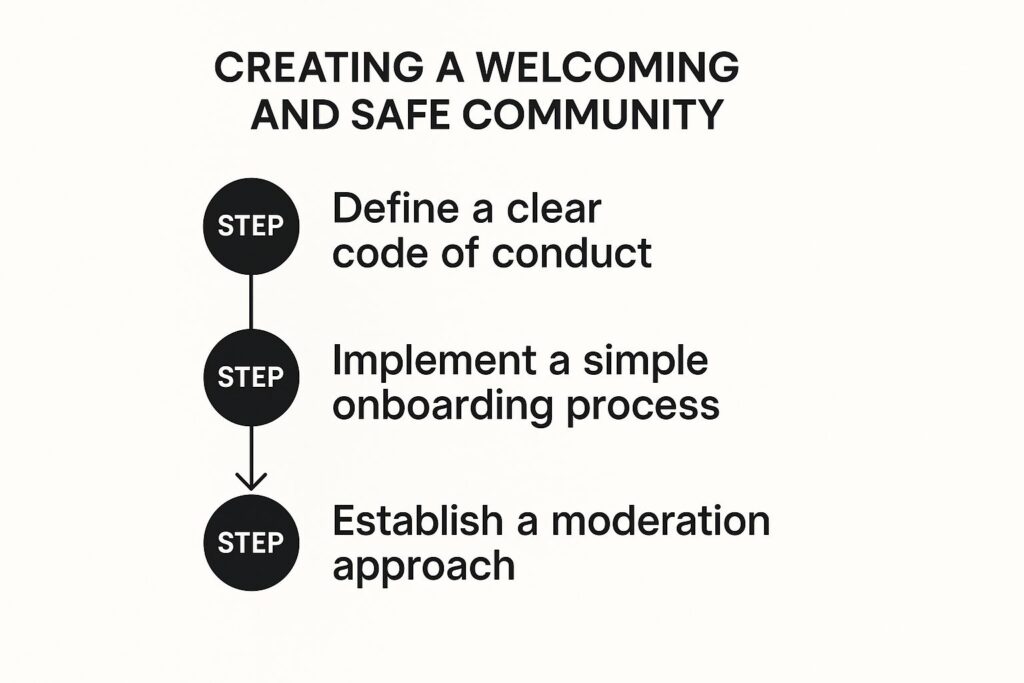
As you can see, the process is pretty logical. It builds on itself, starting with clear rules and moving toward consistent, human-centered moderation.
Start with a Simple Code of Conduct
Your first move? Write down the rules of the road. This doesn’t need to be a long, intimidating legal document. A straightforward code of conduct sets clear expectations for behavior right from day one.
I always recommend keeping it positive and focused on the kind of interactions you want to see. Instead of a long list of “don’ts,” try framing your rules around “do’s.” For example, “Be respectful of differing opinions” is a lot more inviting than “Don’t attack other members.” A positive frame encourages the right behavior instead of just punishing the wrong kind.
Here are a few core principles I always make sure to include:
- Be Kind and Courteous: We’re all in this together to create a welcoming environment. Let’s treat everyone with respect.
- No Hate Speech or Bullying: Make it crystal clear that bullying of any kind isn’t allowed. Degrading comments about things like race, religion, culture, sexual orientation, gender, or identity simply won’t be tolerated.
- No Promotions or Spam: This is a community, not a marketplace. Self-promotion and spammy links need to be kept in check, or maybe in a designated channel if you allow it at all.
- Respect Everyone’s Privacy: Being part of a group requires mutual trust. Authentic discussions can get personal, so what’s shared in the group should stay in the group.
Your code of conduct is your community’s constitution. It should be easy to find, simple to understand, and consistently enforced for everyone, including yourself.
Having clear rules is just one piece of the puzzle. For a deeper dive, check out our guide on the essential rules of the community that help foster a positive atmosphere.
Create a Smooth Onboarding Process
How you welcome new members in their first few hours and days is incredibly important. A good onboarding process makes people feel seen and guides them toward their first meaningful interaction. A confusing or silent welcome, on the other hand, makes them feel lost and more likely to disengage for good.
Your onboarding doesn’t have to be complicated. It can be as simple as a pinned welcome post that explains the community’s purpose, links to the code of conduct, and encourages new members to introduce themselves.
I’ve found that a three-step welcome process works wonders:
- Automated Welcome Message: Most platforms let you set up an automatic message for new members. Use it to say hi, link to the rules, and point them to an introductions thread.
- A Personal Shout-Out: Once a day or every few days, personally welcome the newest members in a public channel. Tagging them by name makes them feel recognized and prompts existing members to chime in with a hello.
- A First Easy Action: Give them something simple and fun to do right away. Ask them to share a picture of their workspace, answer a silly icebreaker question, or vote in a poll.
This gentle guidance helps new members get over that initial shyness and get involved from the get-go.
Decide on Your Moderation Style
Finally, you need a plan for how you’ll uphold your community’s values. Moderation is less about being a cop and more about nurturing a positive culture. You are tending the garden, not just pulling weeds.
There’s no single “right” way to do it. Your approach can range from very hands-on to more relaxed, depending on your community’s topic and tone. A support group for a sensitive health issue will naturally require more active moderation than a casual group for fantasy football fans.
The key is to be consistent and transparent. When you have to remove a post or mute a member, briefly and politely explain which rule was violated. This reinforces your guidelines for everyone and shows that you’re committed to keeping the space safe and productive.
How to Launch and Get Your First 100 Members

Alright, let’s talk about the launch. This is where the anxiety usually kicks in, but I promise it doesn’t have to be some huge, stressful event. A quiet, thoughtful rollout is almost always better than a big, loud one that falls flat.
The goal isn’t to get a thousand members overnight. You want to get your first members genuinely engaged and excited. That’s what sets the tone and creates a magnetic culture that pulls everyone else in. Quality over quantity is the name of the game here, especially in the early days.
Start with a Soft Launch
Before you throw the doors wide open, I always recommend a “soft launch” with a small, handpicked group. Think of these people as your founding members, the pioneers.
This initial crew should be a mix of friends, loyal customers, or trusted colleagues who already get what you do. I usually aim for about 10-20 people for this phase. The idea is to create a safe space where you can test your onboarding, get brutally honest feedback, and work out all the awkward kinks before a wider audience shows up.
This small group helps you build that crucial initial momentum. When new members eventually join, they’ll walk into a space that already has conversations flowing, which feels a thousand times more welcoming than an empty room.
Who to Invite First
So, where do you find these pioneers? Start with the people already in your corner.
- Your Email List: Send a personal invitation to a small segment of your most engaged subscribers. You know, the ones who always open and click.
- Social Media Followers: Look for the people who consistently comment on your posts and share your content. They’re already invested.
- Past Clients or Customers: These folks already trust you and understand the value you provide, making them perfect candidates.
- Your Personal Network: Don’t underestimate friends or peers who genuinely fit your ideal member profile.
When you reach out, don’t send a generic blast. Make it personal. Explain that you’re building something new and that you specifically value their opinion. This makes them feel special and more invested right from the start.
A soft launch is more than a trial run. It’s a co-creation process. Your founding members will help you shape the community into something truly valuable, and their early energy is contagious.
Crafting an Irresistible Invitation
Once your founding members have helped you sand down the rough edges, it’s time to think bigger. Getting to your first 100 members is a huge milestone, and the way you invite people plays a massive role.
A great invitation creates a sense of excitement and exclusivity. It has to clearly communicate that “why” we talked about earlier. People need to know exactly what’s in it for them.
Here’s a simple structure I like to use that just works:
- Hook them with the “Why”: Kick off with the community’s purpose and who it’s for.
- Highlight the Benefits: What will they get? Mention specific things like expert Q&As, networking with peers, or exclusive content.
- Create a Little Urgency (Optional): Mentioning that you’re only accepting a limited number of “founding members” can be a great motivator.
- Give a Clear Call to Action: Tell them exactly what to do next with a direct link to join.
The challenges of bringing people together are universal. The Global Cooperation Barometer 2025 shows that even on a global scale, cooperation has hit a plateau in recent years. This makes small, focused efforts at forming a community even more vital, as they create the spaces where genuine connection can actually grow. You can discover more insights about these global trends and how they impact community building in the full report.
As you grow, especially if your community is built around exclusive content or courses, you’ll need a way to manage access. For a deeper dive into structuring this, check out our guide on how to build a membership site. It’s packed with practical advice for creating a private, value-driven space for your members.
Keeping Your Community Active and Engaged

You did it. You launched your community, and people are actually showing up. That initial buzz is incredible, but a new challenge is right around the corner: keeping that energy alive. An empty, silent community can fade away faster than you’d think. The real work of forming a community starts now.
The secret is to create a predictable rhythm of activity. You want members to know that whenever they log in, there’s something interesting to see or a conversation they can jump into. You’re building habits and giving people a reason to keep coming back.
Sparking Daily and Weekly Conversations
Consistency is your absolute best friend when it comes to engagement. You don’t need to orchestrate massive events every single day. In fact, simple, repeatable prompts are often the most powerful way to get people talking and sharing.
Think about creating a lightweight content calendar with easy, low-effort “rituals” that members can look forward to. The goal here is to make participation feel effortless and rewarding.
Here are a few ideas I’ve seen work wonders in different communities:
- Monday Motivation: Start the week by asking members to share a goal they’re focused on. It’s a simple, supportive way to kick things off.
- Wins Wednesday: Create a dedicated space for people to post any win, big or small. This builds an incredible culture of celebration.
- Feedback Friday: Ask for opinions on a specific topic related to your community’s purpose. People love feeling like their voice is heard.
- Simple Icebreakers: Questions like, “What’s the best thing you ate this week?” or “Share a picture of your desk setup” are fun, non-intrusive, and get the ball rolling.
Creating a rhythm of simple, recurring content is like setting a heartbeat for your community. It provides a steady pulse of activity that keeps the space feeling alive and welcoming.
This consistent interaction is key. For a deeper dive, check out our guide on community engagement best practices here: https://learnstream.io/blog/community-engagement-best-practices/
Going Deeper with Events and Recognition
While daily prompts keep the community ticking, you’ll want to sprinkle in some more substantial events to forge deeper bonds and provide massive value. These don’t have to be a ton of work, but they should be planned with your members’ interests at heart.
A fantastic way to do this is by shining a spotlight on the people inside your community. Everyone wants to feel seen and valued. Simple recognition goes a long way in making members feel like they truly belong.
Try implementing one of these ideas each month:
- Member Spotlights: Interview an active member and share their story. This highlights their expertise and helps others get to know them on a personal level.
- Expert Q&As: Invite an industry expert (or even a knowledgeable member from within the group) to host a live “ask me anything” session.
- Casual Virtual Hangouts: Schedule a low-key video call with no agenda other than to chat and connect. Think of it as a virtual coffee break.
The Role of Technology in Scaling Engagement
As your community grows, managing all this activity can feel like a full-time job. This is where you can be smart about using tools to help you without losing that essential human touch. Let automation handle the repetitive stuff so you can focus on genuine interaction.
For example, you can schedule your weekly prompts ahead of time using a simple scheduling tool. Some community platforms even have bots that can automatically welcome new members or post those daily conversation starters for you.
Looking ahead, technology’s role will only get bigger. By 2025, the impact of artificial intelligence is expected to accelerate, changing how we all interact and collaborate online. For community leaders, this means learning to adapt and use these new tools to strengthen social connections, not replace them.
To make sure your community remains a vibrant place where members stay involved, it’s crucial to have strong engagement strategies. You can explore these best practices for employee engagement, as many of the principles for keeping a team motivated apply directly to keeping community members active and happy. The key is to blend consistent, low-effort activities with high-value events and thoughtful recognition. This is how you create a dynamic, supportive environment where people don’t just visit, they belong.
Got Questions About Building Your Community? Let’s Talk.
As you start piecing your community together, a few nagging questions are bound to pop up. I know they did for me. Let’s tackle some of the most common ones I hear from other builders so you can sidestep those early hurdles and make smarter calls right from the start.
“Honestly, How Much Time Does This Really Take?”
This is always the first question, and the honest-to-goodness answer is: it depends.
In the very beginning, you should probably budget a few solid hours each week. This is your setup phase. You’re creating the space, writing your first few pieces of content, and personally reaching out to invite your founding members. That first month is always the most hands-on.
Once you hit a good rhythm and have a core group of about 50-100 engaged members, things change. You might find that 30-60 minutes a day is all you need to keep the fire going. This time is spent dropping a conversation starter, replying to comments, and doing some light moderation. Before you know it, the community itself starts to generate its own energy, which takes a lot of the weight off your shoulders.
“What if I Launch and It’s Just… Crickets?”
First thing’s first: take a deep breath and don’t panic. Almost every single community ever created has started with a bit of awkward silence. It’s completely normal, and it’s precisely why I’m such a big fan of a “soft launch” with a small, trusted group. They can be your conversational kindling.
The single biggest mistake I see is people giving up too soon. Your energy sets the tone. If you consistently show up with interesting questions and celebrate every tiny interaction, people will eventually feel comfortable joining in. It just takes patience.
If the silence feels like it’s dragging on, here are a few things you can try right now:
- Ask ridiculously specific questions. Instead of a broad “What’s on your mind?” try something like, “What’s one tool under $50 that has completely changed your workflow?” Specificity is easier to answer.
- Gently tag people. If you know Sarah in your community just finished a big project related to the topic you’re posting about, tag her! A simple, “@Sarah, would love to get your take on this” makes people feel seen and valued, often nudging them to chime in.
- Be the first to get real. Share a small struggle you’re facing or a recent lesson you learned the hard way. A little bit of vulnerability from you gives everyone else permission to be human, too.
“When Can I Start Charging for This?”
This is a delicate one. If you jump to monetization too early, the whole thing can feel transactional and hollow out the sense of community you’re trying to build.
My personal rule of thumb is to focus 100% on value and engagement first. Don’t even let the word “monetization” enter your brain for a while.
Wait until you have a thriving core group of active members who are clearly getting something meaningful out of the space. They are the ones who will literally tell you what they’d pay for. You’ll start hearing things like, “I’d pay for a workshop on that,” or “Could we do a private channel for more advanced discussion?”
Listen to those signals.
Before you ever ask for a single dollar, make sure your community is a place people genuinely want to hang out. A strong, engaged group is the only foundation that can support a monetization strategy later on. That trust is the most valuable asset you’ll build.