A Guide to Using a Gamification Learning Platform to Boost Engagement

So, what exactly is a gamification learning platform? In short, it’s a tool that sprinkles game-like elements like points, badges, and leaderboards into online courses and training. The goal is to make them stickier and a lot more fun.
It shifts the whole experience from feeling like a static textbook to more of an interactive quest, which is a game-changer for keeping learners motivated.
What a Gamification Learning Platform Really Is
Let’s get real for a minute. If you’ve ever poured your heart and soul into creating an online course, you know the single biggest hurdle isn’t creating great content. It’s getting people to actually finish it.
They sign up with the best of intentions, but then life happens, and that half-finished course gathers digital dust.
A gamification learning platform is designed to solve that exact problem. This is about borrowing the psychological triggers that make games so addictive and weaving them into your educational material. It’s much smarter than just turning your content into a video game.
Think about a typical online course. It’s usually a playlist of videos and a stack of PDFs. The information might be fantastic, but the experience is incredibly passive.
Now, picture that same course on a gamified platform:
- Completing a lesson is about earning experience points (XP).
- Mastering a tough concept is recognized with a shiny new badge you can show off.
- Finishing a module unlocks the next “level” of your course, creating a real sense of forward momentum.
All of a sudden, your student is a player on a journey. They’re not just a passive consumer of information. This simple shift taps directly into our built-in human desires for achievement, competition, and a sense of community.
Moving Beyond Just Points and Badges
At its core, a well-designed gamified system provides structure and immediate feedback.
In a standard course, a student might not get any validation until a big quiz at the end of a module. With gamification, every small step forward gets a nod of acknowledgment. This constant feedback loop is incredibly powerful for building momentum and keeping people hooked.
For me as a course creator, this translates directly into better business results. Higher engagement leads to higher completion rates. Higher completion rates create more success stories and powerful testimonials. In a membership, it means people stick around longer because they can clearly see their progress and feel like they belong.
This idea is closely related to bigger trends in education. To really get what these platforms are about, it helps to understand the concept of immersive learning, which aims to create deeply engaging educational experiences. While not every gamified platform uses VR or AR, they all share that same core goal: turning passive learning into an active, hands-on process.
A well-designed gamification learning platform makes learners feel a sense of ownership over their progress. When students can see their achievements visually represented, they become more invested in the outcome and are more likely to see the course through to the end.
Ultimately, it’s about creating a learning environment that pulls people forward, instead of one they have to constantly push themselves through. That simple change can make all the difference for your students and your business.
The Core Features That Drive Learner Motivation
So, what’s actually under the hood of a gamification learning platform? When you strip it all down, you’ll find a handful of core mechanics expertly designed to tap into human psychology. These are the building blocks that transform a passive learning experience into an active, rewarding journey.
Getting a handle on these elements is the first step to figuring out what kind of system will truly resonate with your audience. Let’s dive into the most common features you’ll find and explore why they’re so effective at keeping learners coming back for more.
Points, Progress, and Immediate Feedback
At the most basic level, nearly every gamified system uses points. Think of them as the currency of progress.
When a student completes a lesson, nails a quiz question, or contributes to a discussion, they earn points. It’s a simple, immediate reward that says, “Hey, you did something right.”
This instant feedback is incredibly powerful. It provides a constant stream of small wins that build momentum and keep learners engaged. Without it, a student could slog through an entire module feeling like they’re shouting into the void, unsure if they’re on the right track. Points make progress tangible and visible, right from the start.
This concept map breaks down the shift from the old way of learning to a more active, quest-based approach.
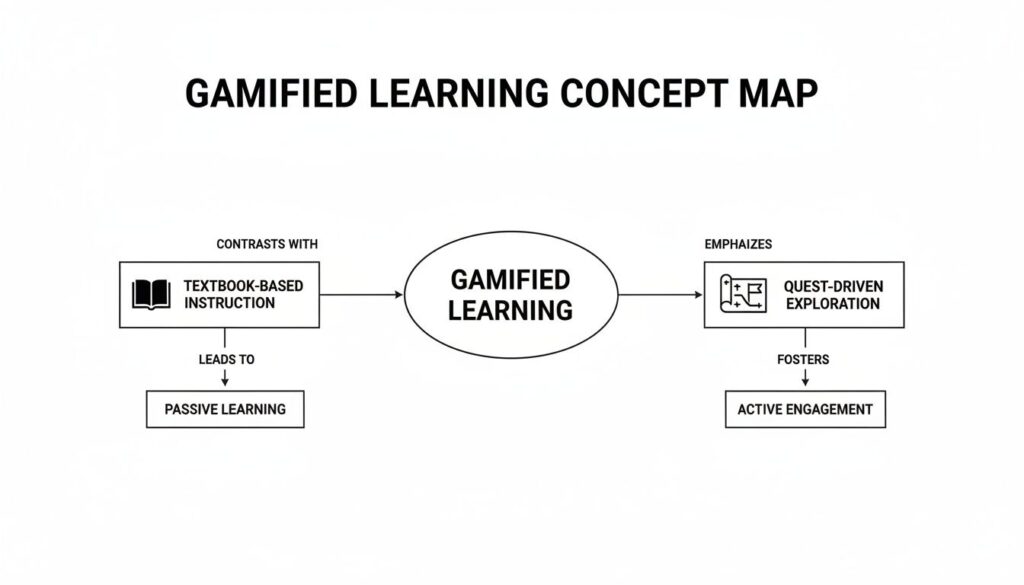
It really highlights how gamification transforms a one-way information dump into a two-way, interactive experience for the learner.
Badges, Leaderboards, and Social Recognition
While points are great for that moment-to-moment feedback, badges and achievements serve a different purpose entirely. These are visual markers of significant accomplishments.
A student might earn a “Module Master” badge for completing a tough section or a “Community Contributor” badge for helping a fellow student.
Badges tap directly into our innate desire for recognition and status. They are digital trophies that learners can collect and display, giving them a sense of pride that goes far beyond a simple point score.
Leaderboards take this social element a step further by introducing a little friendly competition. For some learners, seeing their name climb a list can be a massive motivator. It creates a social context for learning, making students feel like they are part of a community working toward a common goal.
It’s important to design leaderboards carefully. They work best when they foster a sense of healthy competition and community, rather than making some learners feel discouraged or left behind.
The power of these features is becoming undeniable. In fact, research shows that over 71% of eLearning providers integrated gamification modules by 2023. This shift resulted in 34% higher course completion rates compared to traditional methods, proving these mechanics drive real results. You can read the full research on the gamified education market to see just how widely this approach has been adopted.
Unlocking Content and Virtual Rewards
Another popular feature is the concept of unlocking content. Instead of giving students access to everything at once and overwhelming them, you can set up your course so that completing one module “unlocks” the next. This creates a clear, structured path forward and adds an element of discovery and anticipation.
This approach transforms your course from a simple content library into a journey with distinct stages. It helps prevent overwhelm and gives learners a very clear sense of what they need to do next.
On top of that, you can offer virtual rewards. These could be anything from exclusive bonus content and downloadable resources to special access to a Q&A session. Tying these rewards to specific achievements makes them feel earned and valuable, adding another layer of motivation for your students to dig deeper into the material.
To tie all these ideas together, here’s a quick breakdown of how these core mechanics function in the real world.
Core Gamification Mechanics and Their Purpose
| Mechanic | Psychological Driver | Practical Application Example |
|---|---|---|
| Point System | Instant Gratification | Award 10 points for watching a video and 50 points for passing a quiz. |
| Badges | Achievement & Status | Grant a “Pioneer” badge to the first 50 students who complete the course. |
| Leaderboards | Competition & Social Proof | Create a weekly leaderboard showing the most active members in your community forum. |
| Progress Bars | Goal Visualization | Show a visual bar that fills up as a student moves through a course module. |
| Unlocked Content | Curiosity & Discovery | Require students to pass a test in Module 1 before they can access Module 2. |
As you can see, each mechanic serves a specific psychological purpose. When combined thoughtfully, they create a powerful and motivating learning environment that keeps students engaged from start to finish.
Why Gamification Boosts Learner Engagement

So, we’ve covered what a gamification learning platform is and the features that make it tick. Now we get to the question that really matters for any course creator or membership owner: Why should I actually care?
The answer is simple. It all comes down to engagement.
Gamification transforms learning from a passive chore into an active, exciting adventure. It plugs directly into the core psychological drivers that make us want to achieve, compete, and connect with others.
When a learner feels a real sense of progress and accomplishment, they are far more likely to stick with your course. This directly impacts your bottom line through higher completion rates, glowing testimonials, and lower churn in your membership.
Tapping into Intrinsic Motivation
Think about what really motivates people. It’s about feeling competent, seeing yourself make progress, and having a sense of control over your own journey. A gamification learning platform is purpose-built to deliver on these needs.
Clear goals and instant feedback are the heart of this. When a student earns points for a lesson or unlocks a badge for mastering a new skill, they get an immediate dose of positive reinforcement. This creates a powerful feedback loop that makes them want to keep going.
This approach helps build what psychologists call intrinsic motivation. This is the desire to do something because it’s inherently satisfying. You’re not just pushing them through content. You’re creating an environment that pulls them forward naturally. For a deeper dive, check out our guide on applying gamification for eLearning.
Improving Knowledge Retention Through Action
We all know that just listening to a lecture is one of the least effective ways to learn. Real knowledge retention comes from doing. Gamification makes learning an active process by design.
Instead of just watching a video, students might complete a short quiz, participate in a challenge, or work through a scenario to earn points. These small, repeatable actions are what etch the material into their long-term memory.
By making practice a core part of the experience, a gamified system ensures that learners aren’t just memorizing facts for a test. They’re building real, lasting skills through repeated application.
This hands-on approach also helps them see the practical value of what they’re learning right away. It connects the dots between theory and practice, making the entire educational experience more meaningful and effective.
Fostering a Stronger Community
Learning can feel like a lonely journey, but it doesn’t have to be. A gamification learning platform is brilliant at building a sense of community and friendly competition.
Leaderboards, for example, can inspire members to engage more deeply with the material and with each other. When students see their peers making progress, it often lights a fire under them to step up their own efforts.
This social element is a game-changer for memberships. It turns a collection of individual learners into a supportive community where people can collaborate, share wins, and feel like they’re part of something bigger.
This increased sense of belonging is a powerful driver of retention. When people feel connected to a community, they are much more likely to remain a paying member, month after month. The data backs this up, too. Gamified platforms have delivered a stunning 34% boost in course completion rates over standard eLearning. That single stat is changing how creators think about their content and business models.
Ultimately, gamification helps you deliver better results for your students, which in turn builds a healthier, more sustainable business for you.
Real World Examples of Gamification in Action
Theory and mechanics are one thing, but seeing how a gamification learning platform works in the real world is where the magic really happens. We’re actually surrounded by gamification every day, often without even realizing it. These examples aren’t just for big tech companies. They hold powerful lessons for any course creator or membership owner.
Let’s break down a few popular apps to see how they expertly weave game mechanics into their user experience. By looking at what makes them so sticky, we can borrow their best ideas.
Duolingo: The Power of Streaks and Leagues
If you’ve ever tried to learn a new language, you’ve almost certainly bumped into Duolingo. Its success is built on brilliant gamification that keeps millions of users coming back daily.
The “streak” is the hero here. It’s a simple counter showing how many days in a row you’ve completed a lesson. The fear of breaking that streak is a ridiculously effective motivator, tapping directly into our desire for consistency and our aversion to loss.
Then there are the leaderboards, which Duolingo cleverly frames as “Leagues.” Each week, you compete with a small group of other learners to earn the most XP. Do well, and you get promoted to a higher league. This creates a simple, repeatable cycle of friendly competition that encourages daily practice.
Duolingo’s genius is in making the act of learning the game itself. The points, streaks, and leagues are all directly tied to educational progress, ensuring the gamification supports the core goal instead of distracting from it.
Fitness Apps: Turning Exercise into a Challenge
Fitness apps like Strava or Fitbit are absolute masters of gamification. They take something that can feel like a chore, like exercise, and transform it into a rewarding and social experience.
Badges are a huge part of this. You might earn a badge for your first 5k, for hitting a new personal record, or for working out three days in a row. These digital trophies provide a tangible sense of accomplishment that fuels continued effort.
Challenges are another key feature. You can join a monthly running challenge or compete with friends to see who can take the most steps in a week. This adds a social layer that creates accountability and makes fitness feel like a team sport. Many of these apps also build habits by focusing on micro-actions. You can see how these small, repeatable tasks create big results by exploring some powerful examples of micro-learning.
Applying These Ideas to Your Online Course
So, how does this translate to your online course or membership? Let’s imagine you run a course on digital marketing.
You could implement a system like this:
- Daily Streaks: Reward students for logging in and completing a small task each day, like watching a short video or answering one quiz question.
- Achievement Badges: Create badges for key milestones. A “SEO Rookie” badge for finishing the first module, or an “AdWords Ace” badge for scoring above 90% on a tough quiz.
- Team Projects: Group students into small teams to complete a project, with the winning team earning bonus points or a special reward. This encourages collaboration and peer-to-peer learning.
These examples show that gamification means thoughtfully designing a system that makes progress visible, rewards effort, and fosters a sense of community. For more inspiration, you can explore these 10 Gamification in Learning Examples That Build Real Agency to see a wide range of applications.
How to Choose the Right Gamification Learning Platform
So, you’ve seen what gamification can do and you’re fired up to bring that energy into your own course or membership. That’s a fantastic move. But it leads to the big, sometimes overwhelming question: which platform is the right one for you?
It can feel like a massive decision, with a sea of options all claiming to be the best. I’m here to help you cut through the noise and break it down into simple, manageable steps. The goal is to find a tool that not only fits your budget but also clicks perfectly with your business goals and what your students actually need.
Start with Your Why, Not Your Wallet
Before you even glance at a pricing page, hit pause. Ask yourself one critical question: what specific behaviors am I trying to encourage? Getting crystal clear on your goals is the single most important part of this whole process.
Are you trying to…
- Get people logging in daily? A platform with killer streak and daily challenge features might be your best bet.
- Boost quiz completion rates? Look for tools that offer points and instant feedback on assessments.
- Encourage members to help each other? A system with community-based leaderboards or team challenges would be perfect.
- Guide students down a specific learning path? You’ll want a platform that excels at unlocking content sequentially as they progress.
Jot down your top three goals. This list is your new north star. It will guide every other decision you make from here on out. Without this clarity, it’s way too easy to get distracted by flashy features you don’t actually need.
All-in-One Platform vs. a Simple Plugin
Next up, you need to decide what kind of solution makes the most sense for your current setup. Your options generally fall into two camps: all-in-one platforms or add-on plugins.
An all-in-one gamification learning platform is pretty much what it sounds like. It’s a complete system that hosts your course content and has all the gamification bells and whistles built right in. This is often a great choice if you’re starting from scratch because everything is designed to work together seamlessly.
On the other hand, a plugin or add-on bolts onto your existing setup, like your WordPress site or current Learning Management System (LMS). This is a fantastic option if you love the platform you already use but just want to sprinkle in some gamified elements to spice things up. If that sounds like you, our guide on how to choose an LMS has some foundational insights that are still super relevant here.
Key Features to Look For
Once you know your goals and your preferred setup, it’s time to dig into the features. But don’t just look for the platform with the longest list. Focus on the quality and flexibility of the tools that actually matter for achieving your goals.
A Checklist for Your Search
- Customization: Can you change the look and feel of badges, points, and notifications to match your brand? A generic-looking system can feel clunky and disconnected from your course.
- Integration: Does it play nicely with the other tools you rely on, like your email marketing service or community platform?
- Reporting and Analytics: Can you easily track what’s working? You need to see which features are driving engagement and which ones are being completely ignored.
- User Experience: Is it intuitive for both you and your students? If it’s a pain for you to set up or confusing for learners to use, it’s going to fail. Period.
The demand for these kinds of engaging tools is absolutely exploding. The global game-based learning market was valued at USD 6.23 billion in 2025 and is projected to hit a massive USD 17.82 billion by 2030. You can discover more insights about these market trends to see just how fast this space is growing. Choosing a platform that is actively evolving will ensure you stay ahead of the curve.
Common Mistakes to Avoid When Implementing Gamification

Rolling out a gamification learning platform can feel like you’ve just discovered a cheat code for student engagement. The potential is massive, but it’s not a magic button. I’ve watched plenty of well-meaning creators stumble into a few common traps that, unfortunately, end up doing more harm than good.
The biggest mistake I see is what I call “points for the sake of points.” This is what happens when the excitement over badges, leaderboards, and rewards overshadows why you’re adding them in the first place. You end up with a system that feels tacked on, confusing, and totally disconnected from the real learning goals.
Your gamification should always serve the educational journey. It shouldn’t become a distraction. If earning a badge doesn’t line up with a real, meaningful achievement in your course, it quickly becomes an empty gimmick that your students will see right through.
Forgetting the Learning Objectives
Everything you gamify must tie directly back to a specific learning outcome. Before you even think about adding a single point or leaderboard, stop and ask yourself: what do I want my students to do?
Do you want them to master a tricky concept? Reward them for acing a tough quiz. Want them to practice a new skill? Build a fun challenge around it.
Here’s how to keep your focus laser-sharp:
- Tie rewards to mastery. Instead of giving points just for watching a video, award them for correctly applying the information in a short quiz that follows.
- Make badges meaningful. A badge for “Finishing Module 3” is okay, but one for “Mastering the Core Concepts of SEO” feels way more substantial and motivating.
- Use leaderboards for positive behaviors. Track progress on key assignments or helpful community contributions, not just who logs in the most often.
When the game mechanics directly support learning, students feel a genuine sense of accomplishment. They know their progress is real because it’s linked to actual skill development.
Creating an Unfair or Overly Complex System
Another huge pitfall is designing a system that’s either too complicated or just feels unfair. If your rules for earning points are a jumbled mess, or if the leaderboard only ever celebrates the same top few students, you risk demotivating the very people you’re trying to fire up.
A gamified system should feel like an encouraging guide, not an exclusive club. If learners feel they can never catch up or that the rules are stacked against them, they will simply check out.
The best systems are simple to understand and offer multiple paths to success. This is about rewarding effort and personal improvement, not just crowning the top performer.
For example, you could award badges for setting personal bests or for completing a certain number of lessons in a week. This gives everyone a fair shot at being recognized for their hard work and keeps them in the game.
By steering clear of these common mistakes, your gamification learning platform will feel authentic, motivating, and genuinely supportive of your students’ goals.
Your Top Questions About Gamification, Answered
I talk to a lot of course creators who are intrigued by gamification but also a little hesitant. They worry it might be too complicated, too silly for their topic, or just not the right fit for their audience. These are totally valid concerns, and you’re smart to ask them before jumping in.
To clear things up, I’ve put together answers to the most common questions I get. Think of this as a quick-start guide to help you see where a gamified approach could fit into your business.
Is Gamification Only for Fun, Casual Topics?
This is easily the biggest myth out there. The moment people hear “gamification,” they picture cartoons and silly sound effects, but that’s not what it’s about at all.
Gamification is about applying the psychological principles that make games engaging to your learning experience. It’s about motivation, not just entertainment.
For a serious professional development course, it could look like this:
- Earning certifications (badges) for mastering complex legal or medical modules.
- Climbing a professional leaderboard based on skill application, not just random points.
- Unlocking exclusive case studies as a reward for completing foundational lessons.
The goal is to give your students a clear sense of progress and accomplishment. When you do it right, it actually enhances their focus and makes the important stuff stick.
A great gamification platform acts like a well-designed roadmap for your students. It shows them exactly where they are, where they’re going, and celebrates every milestone along the way, no matter how serious the subject is.
Won’t This Just Distract My Learners from the Real Content?
It’s a fair question, but a well-designed system should do the exact opposite. Good gamification feels less like an interruption and more like a natural, supportive part of the journey.
Think about the progress bar you see when watching a video online. That’s a simple game mechanic. It doesn’t pull your attention away from the content. It gives you helpful context and a little sense of momentum.
That’s the goal here. The best gamification elements are so smoothly integrated that they feel invisible. They support the learning objectives. They don’t overshadow them.
Do I Need to Be a Tech Whiz to Set This Up?
Nope, and that’s the best part. The tech has come a long, long way, and you definitely don’t need to know how to code to get this working for your course or membership.
Today’s platforms are built for creators, not developers. You’ll generally find two main paths:
- All-in-one platforms like Kajabi or Thinkific that have gamification features built right in.
- Plugins and add-ons that connect seamlessly with tools you might already be using, like LearnDash for WordPress.
Choosing the right tool just comes down to your current setup and what you’re trying to achieve. But in most cases, we’re talking about pointing and clicking, not writing lines of code. The focus is on your strategy and your students, not on your technical skills.