How to Build an Online Community from Scratch
Building an online community really comes down to two things: nailing down a clear purpose that pulls the right people in and picking the right platform to bring them together. When you get these foundational pieces right, you create a space that almost runs itself because members feel like they truly belong.
Laying the Groundwork for a Thriving Community
Before you even dream up a welcome message or your first discussion prompt, we need to hit pause. I’ve learned the hard way that jumping straight to the “fun stuff” without a solid plan is the quickest path to a digital ghost town. The communities that last are built on a strong foundation, and that all starts with getting laser-focused on your purpose.
This first part is all about defining the “why,” the magnetic pull that will draw people in and make them want to stick around. A community needs more than just a topic, it needs a mission.
Pinpoint Your Community’s Core Mission
What’s the ultimate transformation or outcome you want to deliver for your members? People don’t join communities just to chat. They join to solve a problem, hit a goal, or connect with others who get their journey. Your mission is the promise you’re making to them.
To really nail this, ask yourself a few sharp questions:
- Who is this actually for? Get specific. “Freelance graphic designers in their first three years of business” is worlds better than just “designers.”
- What problem are we solving together? Are you helping them fight the loneliness of remote work, master new software, or navigate a career pivot?
- What does success look like for a member? Picture someone a year from now. What have they accomplished because they were part of this group?
The goal is to craft a simple, powerful statement that acts as your North Star. For example: “A supportive space for new SaaS founders to share wins, get feedback, and overcome the challenges of finding their first 100 customers.”
This mission statement becomes the filter for every decision you make, from the content you create to the people you invite in.
Choosing the Right Community Platform
Once you’ve got your “why,” it’s time to figure out the “where.” The platform you choose has a massive impact on the vibe and functionality of your community. It’s a huge decision, but it doesn’t have to be a stressful one.
The good news? The business of building communities is booming. The global market for online community platforms was valued at around $2.0 billion in 2024 and is projected to hit $6.0 billion by 2032. This explosion of growth means we have more powerful and specialized tools at our fingertips than ever before. If you’re curious, you can explore more data on this trend and see how it’s shaking up different industries.
Let’s break down a few of the most popular options and what they do best.
This decision tree infographic is a great way to visualize which platform might align with your main goal, whether that’s hosting courses, sparking real-time chat, or building a professional network.
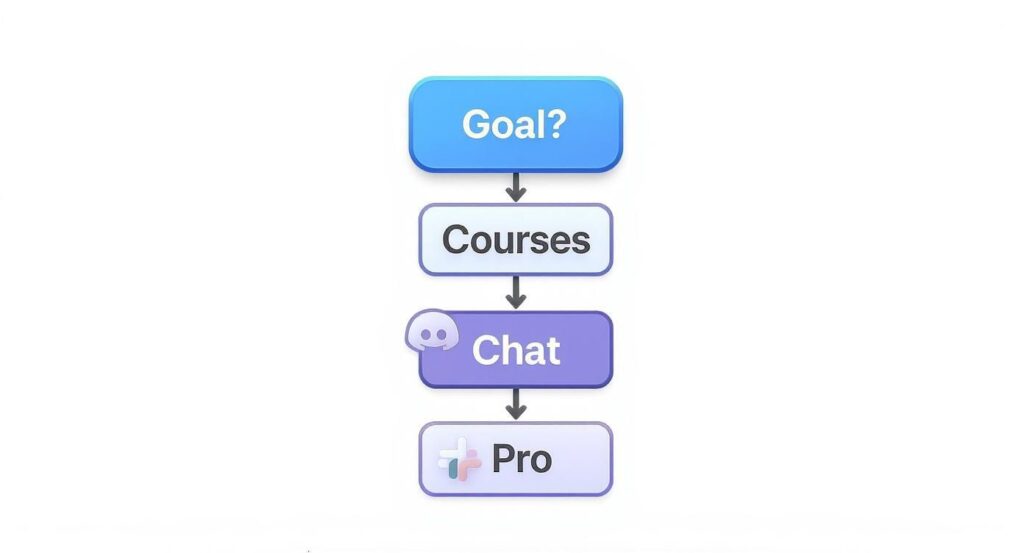
The key takeaway here is pretty simple: your community’s core purpose, be it structured learning, casual hangs, or professional collaboration, should directly guide your choice of tech.
Choosing Your Community Platform
To help you sort through the options, here’s a comparison of some of the top contenders. I’ve used all three at different points for different projects, and each one definitely has its own personality and strengths.
This table is a great starting point for comparing popular community platforms to help you decide which one best fits your community’s needs and goals.
| Platform | Best For | Key Strength | Potential Drawback |
|---|---|---|---|
| Circle | Course creators and brands wanting a polished, all-in-one space. | Seamlessly integrates courses, discussions, and live events in a clean interface. | Can be more expensive than other options, especially as you scale up. |
| Discord | Gamers, hobbyists, and communities that thrive on real-time chat. | Excellent for voice channels, instant messaging, and a highly casual, energetic vibe. | The constant flow of conversation can feel disorganized or overwhelming for some. |
| Slack | Professional groups, masterminds, and tech-focused communities. | Powerful integrations and a familiar, work-oriented layout with organized channels. | The free version has significant limitations, and it can feel too formal for casual communities. |
Making the right call here really does set the stage for everything that comes next. Take some time to think about the experience you want to create for your members, then pick the tool that will help you bring that vision to life.
Launching and Attracting Your First 100 Members

The idea of launching your community to a screen full of empty channels can be paralyzing. I’ve been there. The secret I’ve learned is to forget about a big, flashy public launch right away. The real magic happens when you focus on building momentum one person at a time, starting with a handpicked group of “founding members.”
These first members are the spark. They’re the ones who will help you set the tone, kickstart the first conversations, and make the space feel alive before you ever open the doors to everyone else. This initial phase is all about quality over quantity.
Your Soft Launch: Finding Founding Members
Think of your soft launch as a private, VIP preview. Your goal here is to personally invite between 10 to 20 people who are already invested in what you do. These individuals will become your cultural cornerstones.
So, where do you find these key people? Start by looking in places you already have connections.
- Your Email List: Who are the people that always open your emails and click your links? They’re clearly engaged and already believe in what you have to say.
- Social Media: Look for your most active followers, the people who consistently comment, share your posts, or send you thoughtful DMs.
- Past Customers or Clients: If you’ve sold products or services before, your best customers are prime candidates. They already trust you and understand the value you provide.
Once you have a shortlist, the next step is crafting a personal invitation that makes them feel truly special.
Don’t just send a generic mass email. Take a few minutes to write a personal note to each person. Mention something specific you appreciate about them, like a thoughtful comment they left or their long-time support. This small touch makes a massive difference.
Your invitation should clearly state that you’re building something new and you’d be honored if they would join as a founding member. Let them know their early feedback will be crucial in shaping the community’s future.
Going Public and Getting the Word Out
After your founding members have had a week or two to settle in, start conversations, and make the place feel lived-in, it’s time for the public launch. This doesn’t need a massive budget or a complicated marketing plan. The goal is simply to attract people who are genuinely interested and ready to participate.
Your existing audience is your most powerful asset. Start by announcing the community to your email list and social media followers. Explain the mission you defined earlier and tell them exactly who the community is for and what they’ll get out of joining.
Collaboration is another incredibly effective strategy. Reach out to a few peers in your niche who serve a similar audience but aren’t direct competitors. You could offer to do a content swap or simply ask if they’d be willing to share your new community with their audience. Even a single mention from a trusted source can bring in a wave of high-quality members.
Of course, the potential audience for any online community is massive. Globally, 6.04 billion people are internet users, with 5.24 billion active on social media. This huge pool of users means that finding your niche is more important than ever to attract the right people who will actively contribute. You can discover more insights about the global digital population on Statista to better understand these trends.
For those considering a paid or subscription-based model, it’s also worth thinking about the technical setup from the start. Attracting members is just the first step. Providing them with a seamless experience is what keeps them there. If you’re looking for guidance, our guide on how to build a membership site can walk you through the essential steps and tools.
https://learnstream.io/blog/build-a-membership-site/
Creating a Culture of Consistent Engagement

So you’ve got your first members. Fantastic. But now the real work begins. An empty, silent community is one of the fastest ways to kill the momentum you worked so hard to build. The goal is having a space that feels alive, buzzing with conversation, and genuinely helpful.
This is all about sparking consistent engagement that goes way beyond posting a generic “ask me anything” and hoping for the best. We need to build rituals and routines that make members want to show up and participate, day in and day out.
Kickstart Conversations with Engaging Prompts
As the community leader, it’s your job to get the ball rolling, especially in the early days. Most people are hesitant to be the first to post, so you need to create low-pressure opportunities for them to jump in.
Think of yourself as the host of a great party. You don’t just stand in the corner, you introduce people, ask fun questions, and make sure everyone feels included. Here are a few of my favorite prompts that always get people talking without making them feel like they’re being put on the spot:
- Weekly Themed Discussions: Dedicate a specific day to a recurring topic. It could be “Tool Tuesday” where members share a favorite app, or “Win Wednesday” to celebrate small victories. This creates a predictable rhythm people can look forward to.
- Member Spotlights: Once a week, feature one of your members. A short Q&A about their work or a recent project makes them feel valued and helps others put a face to a name.
- Behind-the-Scenes Content: Share a peek into your own work or process. This creates a more personal connection and makes members feel like they’re getting an inside look.
A key takeaway here is that your content prompts should be almost ridiculously easy to answer. The goal is to lower the barrier to participation so much that it feels effortless for someone to chime in with a quick comment.
To really nail this, it’s vital to learn how to create social media content that engages and converts your audience. Many of the same principles apply within a closed community. It’s all about encouraging that active participation you’re looking for.
The Power of Simple Automation and Gamification
Manually welcoming every single person and tracking their milestones is a one-way ticket to burnout. This is where a little bit of smart automation and fun gamification can make a huge difference in building a lively community.
These systems work in the background to encourage the exact behaviors you want to see, like logging in regularly and contributing to discussions, without you having to be “on” 24/7.
I’ve found that even the smallest automated touches can have a big impact on making members feel seen and appreciated. This is about providing positive feedback loops that encourage people to stick around, not about turning your community into a video game.
Making Engagement Automatic and Fun
You can set up simple systems that pretty much run on their own, creating a more dynamic experience for everyone. Here are a few ideas to get you started:
- Automated Welcome Messages: Have a system that automatically sends a warm welcome message to new members when they join. This can point them to the community guidelines or a “start here” thread. First impressions matter.
- Member Milestones: Automatically celebrate member anniversaries (like their one-year join date) or when they hit a certain number of posts. Public recognition is a powerful motivator.
- Simple Leaderboards: A weekly or monthly leaderboard that showcases the most helpful or active members can spark a bit of friendly competition and encourage others to get more involved.
Recent data on community engagement metrics shows just how effective this is. Using automation and gamification can lead to more than twice the number of logins and a serious uptick in discussion participation. For even more actionable advice on this, you might want to check out our guide on community engagement best practices.
The same data also reveals that email is a powerhouse for community interaction. Community digest emails can hit open rates as high as 56%, way higher than typical marketing emails. This tells us that members genuinely want to stay in the loop.
By blending engaging prompts with smart, subtle automation, you create a self-sustaining culture. Members feel welcome from day one, get recognized for their contributions, and have consistent, fun reasons to check in. This is how a quiet group transforms into a vibrant hub where members start connecting with and helping each other, often without any prompting from you at all.
Moderation and Setting Healthy Boundaries
A great online community is a lot like a well-tended garden. It doesn’t just grow on its own. It needs care, attention, and a few clear boundaries to really flourish. Without them, even the most promising spaces can quickly get overgrown with spam, arguments, and endless self-promotion.
This is where thoughtful moderation comes in. You need to create a safe, respectful, and genuinely valuable environment where everyone feels comfortable sharing. This process starts with setting clear expectations from the moment someone joins.
Writing Human-Friendly Community Guidelines
Your community guidelines are the foundation of a healthy culture. But if they’re written like a legal document, nobody will read them. The goal is to be clear, concise, and human.
You should focus on establishing a shared understanding of “how we do things here.” It’s better to highlight the positive behaviors you want to encourage, not just the negative ones you want to stamp out.
Here are a few principles I stick to when drafting guidelines:
- Keep it simple. Use plain language and avoid jargon. Bullet points are your friend here.
- Explain the “why.” Instead of just saying “No self-promotion,” you could say, “We encourage sharing your work when it’s relevant to a conversation, but please avoid unsolicited links. This keeps the focus on learning and mutual support.”
- Lead with your values. Start by outlining the community’s core mission and what you stand for, whether that’s collaboration, kindness, or constructive feedback.
Remember, the purpose of your guidelines is to empower your members, not police them. They should feel like a helpful guide to participating in a way that benefits everyone, including themselves.
For a deeper dive, our guide on crafting the essential rules of the community offers some great templates and examples to get you started. This document will be your north star for all moderation decisions.
The Art of Being a Present Moderator
Being a good moderator is a delicate dance. You need to be present enough to guide conversations and enforce boundaries, but not so overbearing that you stifle organic interaction. Your role is to be a facilitator, not a dictator.
Leading by example is the most powerful tool you have. The way you interact with members, handle disagreements, and respond to questions sets the tone for the entire community. If you are consistently helpful, positive, and respectful, your members are far more likely to follow suit.
This also means knowing when to step in and when to let the community handle things. If two members are having a minor disagreement, sometimes it’s best to watch and see if they can resolve it themselves. But if a conversation veers into personal attacks or violates a clear guideline, you need to intervene swiftly and decisively.
Handling Common Community Issues
No matter how great your members are, you will eventually have to deal with tricky situations. Spam, off-topic self-promotion, and heated arguments are just part of managing any online space. The key is to handle them gracefully and consistently.
To maintain a safe and respectful environment, implementing AI-powered moderation filters can help enforce healthy boundaries efficiently. These tools can automatically flag problematic content, allowing your team to address issues before they escalate.
When you do need to have a tough conversation with a member, follow a simple framework:
- Always start privately. Never call someone out in a public channel. Send a direct message.
- Be specific and kind. Clearly state which guideline was violated, linking back to your rules. Assume good intent first.
- Offer a path forward. Explain what needs to happen next, whether that’s editing a post or simply acknowledging the rule for the future.
Your consistent, fair, and human approach to moderation is what will ultimately protect your community’s culture and ensure it remains a valuable and safe space for everyone involved.
Scaling Your Community by Empowering Leaders
There’s a moment in every growing community’s life that hits you like a ton of bricks: you simply can’t be everywhere at once. When you’re just starting out, it’s easy to greet every new face and get every conversation started. But as your group balloons from dozens to hundreds, then thousands, that hands-on approach becomes a one-way ticket to burnout.
I learned this the hard way. I was trying to juggle everything, and my energy was stretched paper-thin. The real breakthrough came when I flipped my mindset. I realized that my role had to evolve, so I started looking for ways to empower my most dedicated members to help carry the torch.
Scaling successfully means your role has to evolve. You graduate from being the community’s manager to its architect. You’re building a venue so incredible the party starts running itself.
Spotting Your Future Leaders
First things first, you need to figure out who your potential leaders are. These aren’t always the loudest people in the room. They’re the members who consistently add value, show up with kindness, and genuinely live the culture you’re trying to build.
I keep an eye out for a few specific behaviors that scream leadership potential:
- The Welcomers: These are the people who jump in to say hello to new members before you even get the chance. They make others feel seen from day one.
- The Helpers: When someone asks a question, these members are consistently the first to offer a thoughtful, helpful answer. They have a genuine desire to see others succeed.
- The Super-Engaged: They regularly participate in discussions, show up for live events, and contribute positively across different channels.
Once you have a shortlist of a few people, reach out to them personally. A simple, private message can make all the difference.
“Hey [Name], I’ve really noticed how incredibly helpful and welcoming you’ve been in the community. You’re a huge part of what makes this place special. I’m thinking about creating a small team of community ambassadors, and I immediately thought of you. Would you be open to chatting about it?”
This kind of approach makes people feel recognized and valued. You’re not just asking for a favor, you’re acknowledging their positive impact, which is a powerful motivator in itself.
Creating a Simple Ambassador Program
You don’t need some complex, bureaucratic system to empower your leaders. A simple “ambassador” or “moderator” program can work wonders. The trick is to keep it straightforward, with crystal-clear expectations and rewarding perks.
The whole point is to give these members a sense of ownership. When they feel like they have a real stake in the community’s success, they’ll be even more motivated to contribute. Plus, their involvement makes the community feel more member-led, which in turn encourages others to step up.
What Ambassadors Can Do
Keep their responsibilities manageable. This should be a fun role, not a stressful second job. Here are a few tasks that pack a big punch without being a huge time sink:
- Welcome New Members: Assign ambassadors a day of the week to be the official “greeter” for new folks joining the community.
- Spark Conversations: Ask them to post one or two discussion prompts per week on topics they’re passionate about.
- Provide Feedback: Set up a private channel just for your ambassadors where they can give you direct feedback on what’s working and what isn’t.
In return, offer them some exclusive perks. This doesn’t have to be monetary. Things like access to a private channel with you, free entry to paid events, or a special badge next to their name can all be meaningful rewards that recognize their contribution.
Keeping the Vibe Alive as You Grow
As your community gets bigger, one of the toughest challenges is maintaining that close-knit feeling it had in the early days. It’s easy for new members to feel lost in a sea of thousands of people. This is where you, as the architect, need to build smaller “rooms” within your larger “house.”
Creating dedicated sub-groups or channels for niche interests is a fantastic way to do this. For example, if you run a community for freelance writers, you might create smaller spaces for copywriters, fiction authors, and technical writers. This allows members to connect on a much deeper level around specific, shared interests.
Finally, make data your friend. Most community platforms, like Circle or Mighty Networks, offer analytics that show you which topics are buzzing with engagement and which are collecting dust. Pay close attention to this information. It’s direct feedback from your members telling you what they value most, which can guide your content strategy and help you keep the community vibrant as it continues to scale.
Frequently Asked Questions

As you start figuring out how to build an online community, a ton of questions are going to pop up. I’ve been there, and I’ve seen the same concerns come up time and time again from other founders. This final section is dedicated to answering the most common ones I get.
We’ll cover everything from the real time commitment it takes to get things off the ground to the best ways to earn money from your hard work, without making your members feel like they’re just a number.
How Much Time Does It Really Take to Build a Community?
I’ll be straight with you: it takes a significant time commitment, especially when you’re just starting. In those crucial first few months, you should plan to spend at least 10-15 hours per week just getting things going.
This time is spent on essential tasks like creating the first wave of content, personally welcoming every new member to make them feel seen, and actively sparking conversations to set the community’s tone. The good news is that this intense effort pays off.
As your community gains momentum and members begin starting their own discussions, your weekly time commitment can often drop to a more manageable 5-10 hours. This time will be focused on moderation, planning events, and engaging with your core leaders.
The key is the upfront investment. The energy you pour into the community at the beginning is what builds the initial inertia needed for it to eventually thrive on its own.
What Is the Best Way to Monetize a Community?
There are several great ways to monetize a community without making it feel transactional or salesy. The most important rule is to deliver overwhelming value long before you ever ask for a single dollar. Your members should always feel like they’re getting a fantastic deal.
Here are a few models that work really well:
- A “Freemium” Model: This is one of my favorite approaches. The main community space is free for everyone, but you offer a paid, premium tier with exclusive benefits like advanced content, direct access to you, or special virtual events.
- A Simple Subscription: This is the most straightforward model. Members pay a recurring fee (monthly or annually) for full access to the community and all its resources.
- Affiliate Partnerships: Partner with brands that sell products or services you genuinely use and recommend. You earn a commission when members make a purchase through your link.
- Paid Virtual Events: Host exclusive, high-value workshops, masterclasses, or Q&A sessions with experts and charge a ticket fee for access.
No matter which path you choose, just make sure the paid offer is a clear and compelling upgrade from the free experience.
What Should I Do If My Community Is Not Engaging?
First off, don’t panic. A quiet community is a super common problem, especially in the early stages. It’s usually a sign that you need to adjust your strategy, not that your idea has failed.
If you find yourself talking to an empty room, here’s a simple three-step plan to get things moving again:
- Go Directly to Your Members: Don’t guess what they want. Just ask them. You can run a simple poll or even send a few direct messages to your most active members asking what topics they’d love to discuss.
- Be the Chief Conversation Starter: You have to take the lead and make engagement easy. Tag specific people in posts you think they’d find interesting. Start fun, low-effort daily threads like “Share your biggest win this week!”
- Host a Live Event: Nothing breaks the ice like a live virtual event. A casual video call, a Q&A session, or a co-working hour can make people feel more connected to you and each other. That connection almost always translates to more engagement in the main community forums afterward.
Start there, and your community will tell you where to go next!