How to Motivate the Student: Proven Strategies That Work

Figuring out how to truly motivate a student is about looking past the quick fixes and realizing that a student’s drive is a delicate mix of their inner world and the classroom environment you create for them.
True motivation is so often misunderstood. It’s not a switch you can just flip on. It’s much, much deeper than that.
Why Student Motivation Can Feel So Elusive
It feels like a constant puzzle, doesn’t it? One day, a student is fired up and completely engaged, and the next, they seem a million miles away. I’ve been there, and I learned the hard way that you can’t just will a student to be motivated.
Many of us, myself included, have fallen for some common myths. We might think some students are just “lazy,” or that a clever rewards system is the magic bullet that will solve everything. But that’s rarely the case.
The reality is far more complex. A student’s internal fire is fueled by their own self-belief and the world we build around them. When that spark fizzles out, it’s usually a signal that something deeper is going on.
The Real Reasons Students Lose Momentum
So, what are the actual roadblocks? More often than not, students lose steam when they feel completely disconnected from the material. If they can’t see the “why” behind what they’re learning, their internal drive just vanishes.
Another huge factor is their own self-belief. A student who has already decided they “can’t do it” has put up a massive barrier before they even start. Why try if you’re convinced you’ll fail?
This isn’t just a hunch from my years in the classroom. It’s a widespread challenge. The recent PISA 2022 study uncovered something striking: nearly 50% of students across OECD countries say they struggle to motivate themselves for schoolwork at least once a week. The data makes it clear that the biggest barrier to learning often isn’t a lack of resources, but a profound lack of internal drive. You can dig into the specifics in the OECD’s full report on student engagement.
The core issue is that we often try to fix the symptoms of low motivation, like missed assignments, instead of addressing the root causes like disconnection and low confidence.
The infographic below lays out some of the top reasons students check out.
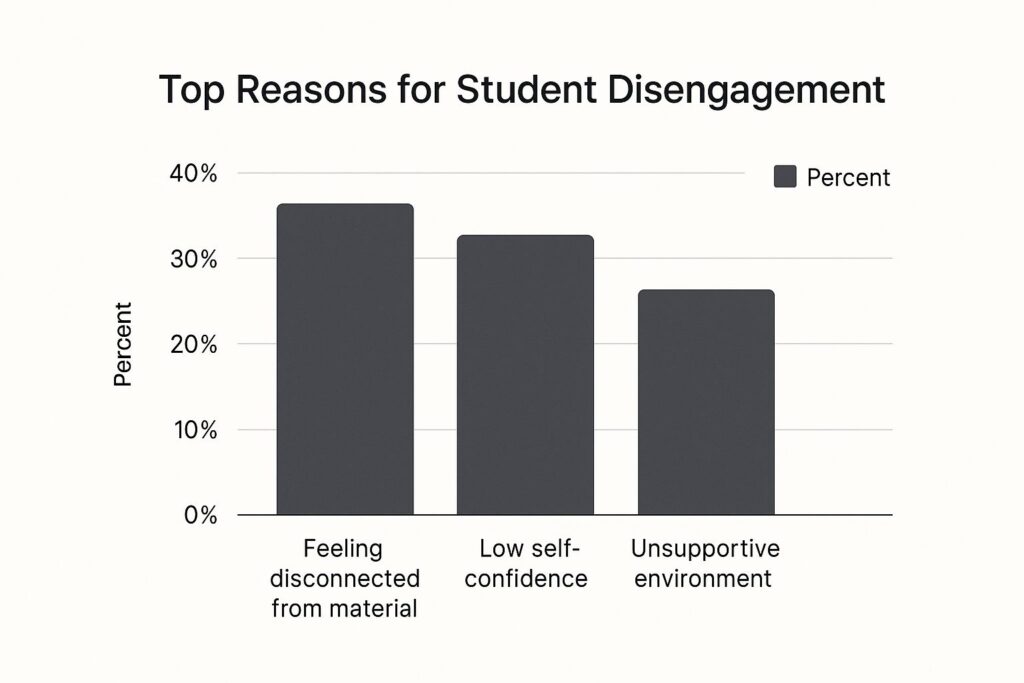
As you can see, that feeling of being disconnected from the “what” and “why” of learning is a massive hurdle. Before we dive into specific strategies, it’s worth taking a moment to separate the common myths from what actually works in a real classroom.
Motivation Myths vs Classroom Realities
Here’s a quick look at some common misconceptions about student motivation versus the more effective, research-backed realities.
| Common Myth | What Actually Works |
|---|---|
| “Some students are just lazy.” | Laziness is a symptom, not a cause. It often signals fear of failure, boredom, or a lack of connection to the material. |
| “Praise and rewards are the best motivators.” | External rewards can work short-term but often kill intrinsic motivation. Fostering autonomy and mastery is more sustainable. |
| “Motivation is the student’s responsibility.” | Motivation is a partnership. The learning environment, teacher-student relationships, and lesson design are huge factors. |
| “If a student fails, they just didn’t try hard enough.” | Effort is only part of the equation. A student also needs to believe they can succeed and have the right strategies to do so. |
Understanding these realities is the first step. When we get to the core of these problems, we can start building practical solutions that genuinely reignite a student’s desire to learn.
Building a Foundation of Trust and Connection
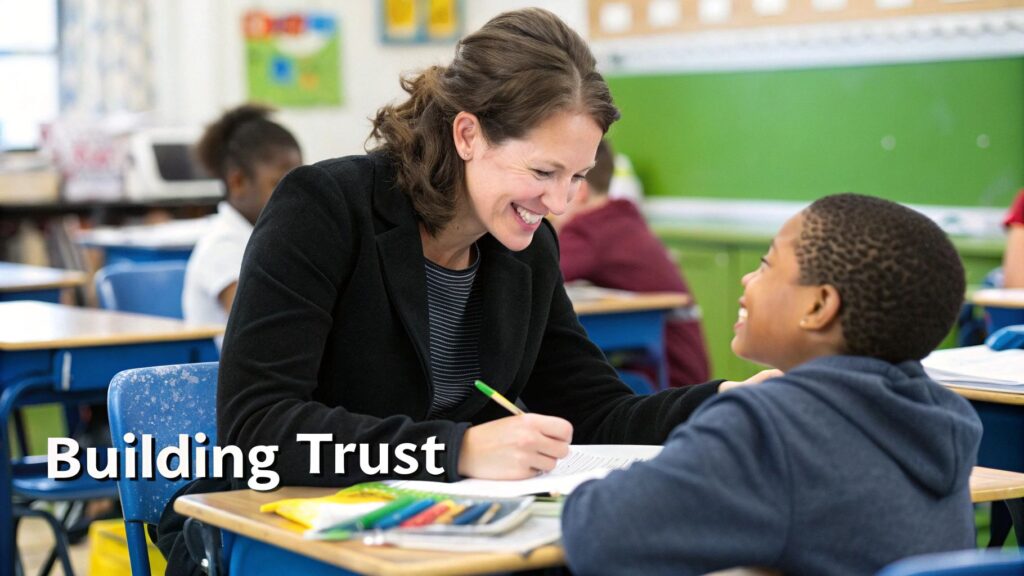
Before we can even begin to talk about sparking academic drive, we have to start with the human element. Motivation doesn’t just appear out of thin air. It’s built on a foundation of trust and connection. It sounds almost too simple, but it’s the bedrock for everything else that follows.
When students feel you genuinely care about them as people, not just as names on a roster, their willingness to try new things and push through challenges grows immensely. Every positive interaction is like making a deposit into their “motivational bank account.”
Small Actions That Build Big Trust
Building this kind of rapport doesn’t require grand, time-consuming gestures. In my experience, the most powerful trust-builders are the small, consistent actions that show a student they are seen and valued.
For instance, learning a student’s name and pronouncing it correctly is a basic sign of respect that goes a surprisingly long way. So is asking about their interests outside of class, whether it’s a sport, a video game, or their favorite musician. These little moments show you see them as more than just their last test score.
The goal is to create a professional, supportive relationship. When students feel seen and respected as individuals, they’re far more willing to invest their effort and trust your guidance.
This kind of atmosphere creates what’s often called psychological safety. It’s the feeling that it’s okay to ask a “dumb” question, make a mistake, or admit you don’t understand something without fear of judgment. Without this, genuine learning struggles to take root.
Creating a Safe Space for Mistakes
One of the biggest hurdles to motivation is the fear of failure. If your classroom culture punishes mistakes, students quickly become reluctant to try anything they aren’t already sure they can master. This is where connection and trust really pay off.
You can actively build a safe space for learning by:
- Sharing your own mistakes: Talk about a time you struggled with a concept. This shows that learning is a messy process for everyone, including you.
- Reframing errors as learning opportunities: Instead of just marking something wrong, try asking, “What can we learn from this attempt?” This shifts the focus from failure to growth.
- Celebrating effort over perfection: Praise the hard work and creative thinking that went into an attempt, even if the final result isn’t perfect.
These strategies aren’t just for physical classrooms. If you’re teaching online, creating that same sense of belonging and safety is just as crucial. For more ideas on this, check out our guide on how to build community in an online course.
Ultimately, these connections are what empower students to take the risks necessary for learning. A student who trusts their teacher is far more likely to ask for help, try a difficult problem, and stay engaged even when the material gets tough.
Giving Students a Sense of Autonomy and Control
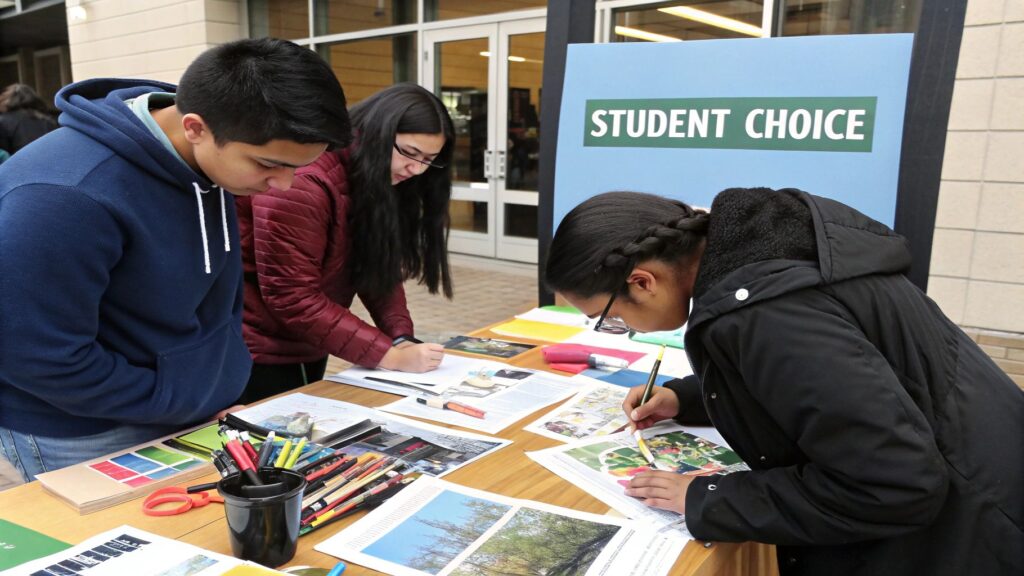
Nobody likes feeling like they’re just following orders. That’s especially true for students. A huge piece of the motivation puzzle is giving them a genuine sense of control over their own learning.
When students feel like active participants instead of passive passengers, their natural drive to learn really starts to kick in. This doesn’t mean you have to give up control of your classroom. It’s about offering meaningful choices that empower them to take the driver’s seat in their own education.
That shift from compliance to ownership is a game-changer. It’s how you motivate students from the inside out.
Offering Meaningful Choices
One of the most direct ways to foster autonomy is by building choices right into your assignments. You can make this as simple or as complex as you want. The real key is making sure the choices feel authentic and significant to the student.
Here are a few ideas that have worked wonders in my own experience:
- Topic Selection: For a research paper or a history project, instead of assigning a topic, provide a list of approved options. Let them choose the one that actually sparks their curiosity.
- Presentation Format: Not every student shines writing a standard report. Why not let them choose how to present their findings? They could create a video, design a slideshow, record a podcast, or even build a physical model.
- Learning Path: On a larger project, you could offer different pathways to the same learning goal. One student might prefer digging through articles, while another might learn best by watching documentaries or conducting interviews.
When you offer options like these, you give students a real stake in the outcome. Their work becomes a reflection of their choices and interests, not just another task to check off a list.
When a student chooses their project topic, they aren’t just learning about history or science. They’re learning how to direct their own curiosity and manage a project they actually care about.
Co-Creating the Learning Environment
Autonomy can and should extend beyond individual assignments. Try involving students in setting classroom rules or goals. This creates a powerful sense of shared ownership. When they help build the framework for how the class operates, they’re far more invested in upholding it.
This process also prepares them for self-directed learning, a skill that’s absolutely essential for lifelong success. It’s an area where they need our help.
Interestingly, while about 75% of students feel confident using tools like video for learning, only 60% feel confident in their ability to motivate themselves independently. That gap shows us that technical skill doesn’t automatically translate to the internal drive needed for autonomous learning. It’s a huge opportunity for us to step in and provide support.
Ultimately, finding the right balance between guided instruction and independent learning is what it’s all about. For a deeper look at different models, you might want to check out our comparison of instructor-led training vs. self-paced learning.
Giving students control doesn’t mean stepping back completely. It means becoming a facilitator, a guide who helps them learn to navigate their own educational journey.
Making Learning Relevant and Meaningful

We’ve all heard it. That dreaded question, “When will I ever use this?” It’s a dead giveaway that a student’s motivation is tanking. If they can’t see the point, why on earth would they put in the effort?
This is our chance, as educators, to build a powerful bridge between the classroom and the real world. We need to show them that learning is about gaining skills and knowledge that have actual value in their lives, both now and down the road.
Connecting Curriculum to Real Life
Let’s make this practical. You can turn abstract concepts into something tangible by linking them to things students already get or will run into soon.
Here are a few ways to pull this off:
- Math: Forget just solving for x. Frame a lesson around building a personal budget, calculating the interest on a car loan, or even figuring out the stats for their favorite sports team.
- History: Connect historical events to what’s happening in the news today. Discussing how past conflicts or social movements shape their current world makes history feel alive, not like a collection of dusty facts.
- Science: A chemistry lesson can be tied to cooking or understanding the labels on their snacks. A physics concept can explain the mechanics behind their favorite video game or sport.
These connections answer the “why” before they even have a chance to ask it. For a deeper look into this approach, our article on discovery-based learning explains why we learn best by doing.
Tapping Into Personal Interests
Every student has passions outside of school. These interests are a goldmine for motivation. When you connect learning to something they already love, engagement happens almost on its own.
Got a student who lives and breathes video games? A creative writing assignment could be about crafting a character’s backstory or designing the lore for a new game world. A physics problem could involve calculating the trajectory of an object in a game engine.
When a student sees how their personal interests intersect with their schoolwork, the material suddenly becomes meaningful. The assignment is an opportunity for them to explore their passion from a new angle.
This doesn’t just motivate them. It shows that learning is a versatile tool they can apply to any part of their life. For more ideas, explore different ways of using technology to motivate high school students.
Making these connections is a powerful driver on a larger scale, too. The desire for real-world experience has huge economic impacts. For example, over 1.1 million international students contributed $43.8 billion to the U.S. economy and supported around 378,000 jobs during the 2023–24 academic year, all driven by motivations like cultural exchange and future career opportunities. You can discover more insights about student mobility on aacsb.edu.
Cultivating a Growth Mindset in Your Classroom

A student’s belief about their own ability is an incredibly powerful force. When a student says, “I’m just bad at math,” they’ve essentially closed the door on their own potential before even getting started. They see their ability as a fixed, unchangeable trait.
That’s why one of the most important things we can do is actively cultivate a growth mindset. This is the core belief that intelligence and abilities aren’t set in stone. Instead, they can be developed through dedication, effort, and learning from mistakes.
Creating this kind of culture fundamentally changes how students approach challenges. It’s a true game-changer for building long-term, sustainable motivation that lasts well beyond a single test or project.
Shifting the Language of Praise
How we praise students makes a huge difference. For a long time, I thought telling a student, “You’re so smart!” was the best way to build their confidence. But it can actually backfire by reinforcing a fixed mindset. It suggests their success is due to some innate talent they have no control over.
Now, I focus my praise on the process, not the person. This small shift in language is a powerful tool for teaching students how to motivate themselves from within.
Here’s how that looks in practice:
Instead of: “You’re a natural at this.”
Try: “I love how you experimented with different strategies to solve that.”
Instead of: “You’re so smart.”
Try: “Your hard work on this project really paid off. You should be proud of your effort.”
This type of feedback highlights things the student can control: their effort, their strategies, and their persistence. It teaches them that their actions are what lead to success.
The goal is to make students see that their brains are like muscles. When they struggle and learn new things, they are literally making their brains stronger. This simple idea helps them view challenges as opportunities to grow.
Embracing Mistakes as Part of Learning
In a classroom with a growth mindset, mistakes aren’t just tolerated, they’re expected. Better yet, they’re celebrated as powerful learning opportunities. When a student gets an answer wrong, it’s not a sign of failure. It’s a sign that they are pushing the boundaries of their current abilities, which is exactly where learning happens.
You can frame mistakes as valuable data. When a student makes an error on a problem, try asking, “Great attempt! What did we learn from this that can help us on the next one?” This simple question reframes the experience from a negative outcome into a positive step forward.
Teaching students about how their brains work can also be incredibly effective. Explain that every time they learn something new or work through a difficult problem, their brains are forming new connections. This makes the concept of “growth” tangible and empowers them to take on challenges with a whole new perspective.
Feedback can be the single most powerful tool you have for student motivation. Or, it can be the thing that crushes their spirit completely. It all comes down to the delivery.
A simple “Good job” doesn’t give a student anything to build on, while a paper dripping in red ink feels less like guidance and more like an attack. The trick is to shift their perspective, and sometimes our own, from seeing feedback as criticism to seeing it as coaching from someone in their corner.
When a student truly believes you’re there to help them win, feedback becomes fuel. It gives them a clear map of where to go next, and that’s incredibly motivating.
Make It Specific, Make It Kind
Forget just pointing out what’s wrong. The most effective feedback feels like a balanced, supportive conversation. I’ve found a simple framework is the most reliable way to get this right. Start with a genuine win, zero in on one or two key areas for improvement, and then give them concrete steps to get there.
For instance, instead of just slapping a “disorganized” label on a presentation, try something like this:
“Your research on this topic was outstanding. You brought up some really great points I hadn’t even considered. For your next presentation, let’s really focus on locking down the structure. Try building it around a clear intro and conclusion, and use bullet points to keep each slide focused on just one main idea.”
See the difference? This approach validates their effort first, then gives them a specific, actionable game plan. It shows them how to get better, which is the whole point.
Turn Feedback into a Team Sport
Let’s be honest, students often feel like feedback is something that just happens to them. It’s a passive experience. We can flip that script by pulling them into the process and making it collaborative.
Here are a couple of ways to make it a team effort:
- Goal-Setting Conferences: Sit down with students one-on-one. Look at their work together and collaboratively set one small, achievable goal for the next assignment. This builds incredible ownership.
- Structured Peer Feedback: Guide students to give each other constructive feedback. Give them a clear, kind framework to follow so they focus on being helpful, not just critical.
When students have a say in their own improvement, their motivation skyrockets. It’s a reminder that what drives one student might not drive another. Interestingly, a 2022 study on international students found that those from Asia and Africa were highly motivated by academic quality, while European students often cared more about the personal experience of studying abroad.
You can learn more about these motivational findings in the full study. It just goes to show that the more we understand what makes each student tick, the better we can help them succeed.
Your Questions on Student Motivation Answered
Let’s dig into a few of the tough questions I always get from other educators. These are the situations we all run into, and the goal here is to give you some quick, practical answers that build on everything we’ve talked about so far.
What Do You Do When a Whole Class Is Unmotivated?
When you feel like you’ve lost the entire room, it’s a huge red flag that you need to hit the reset button. Trying to just push through the planned lesson is a recipe for frustration for everyone.
I’ve had the most success by pausing the regular curriculum and introducing a low-stakes, high-interest project that connects directly to their world. Think about something collaborative that gets them talking and creating without the pressure of a big grade.
This is also the perfect moment to revisit your classroom expectations together. A quick class meeting to openly discuss what’s working and what’s not can do wonders. By re-establishing that sense of shared purpose, you can often get everyone pulling in the same direction again.
How Do You Motivate a Student Who Has Given Up?
With a student who seems completely checked out, the approach has to be different. Your first goal isn’t academic. It’s about helping them experience a tiny win. Anything.
Focus on finding one small thing they can succeed at, even if it feels completely unrelated to your subject. Then, build from that single positive moment.
Your praise should be quiet, private, and focused entirely on their effort, not the final product. “I really appreciated how you kept working on that just now” is far more powerful than “See, you got it right.” This slow, steady approach is all about rebuilding their confidence from the ground up, one small step at a time.
The most important thing is to show them that progress is possible. A single small success can be the spark that helps a student believe in themselves again.
Are Rewards Like Pizza Parties Ever a Good Idea?
They absolutely can be, but you have to be incredibly strategic about it. If you’re not careful, you’ll accidentally teach students that the only reason to learn is to get a prize.
Use them sparingly, and here’s the critical rule: tie them to community goals, never individual academic performance.
For instance, you could celebrate when the entire class has worked together to maintain a respectful and supportive learning environment for a whole month. This shifts the focus from “what’s in it for me?” to “what did we accomplish together?” It uses the reward to strengthen your classroom culture instead of turning learning into a transaction.