Is an LMS a Good Choice for Distributor Training?
So, is an LMS the right tool for distributor training?
The short answer is a big yes, but it comes with a few key things to keep in mind. I think a great training program is the absolute backbone of any successful distributor network, and a Learning Management System (LMS) can be the perfect engine to power it.
Why an LMS Is a Game-Changer for Distributor Training
Let’s be real about the unique challenge of training distributors. You aren’t just educating employees on a payroll. You are equipping independent business partners who are the face of your company. They’re scattered across different cities (or even countries), juggle their own schedules, and need critical information delivered yesterday.
This is exactly where the old-school approach of emailing PDFs, hosting the occasional webinar, and just hoping for the best completely falls apart.
Information gets lost in cluttered inboxes, brand messaging becomes a game of telephone, and you have zero clue who is actually prepared to sell your products.
An LMS cuts through that chaos. It acts as a central command center for all your training, ensuring everyone in your network gets a consistent, high-quality message no matter where they are.

To really see the impact, it helps to look at the common pain points of distributor training and how an LMS directly addresses them.
LMS for Distributor Training At a Glance
| Common Distributor Challenge | How an LMS Solves It |
|---|---|
| Scattered and inconsistent information | Creates a single source of truth for all product specs, sales collateral, and brand guidelines. |
| Inflexible training schedules | Provides on-demand, 24/7 access so partners can learn on their own time, on any device. |
| Zero visibility into training progress | Tracks completions, quiz scores, and engagement, showing who is trained and who needs a nudge. |
| Difficulty scaling training | Makes it easy to onboard new distributors and roll out new product training to the entire network instantly. |
| Generic, one-size-fits-all content | Allows for personalized learning paths based on a distributor’s region, product line, or experience level. |
This table just scratches the surface. When you put these solutions together, you start to see a fundamental shift in how you manage and grow your channel partners.
Creating a Central Hub of Knowledge
Imagine a distributor is meeting with a potential client and needs to pull up the latest product specs. Where do they look? An LMS gives them a single, organized place for everything they need to succeed, right on their phone. No more digging through old emails for a price sheet or calling you for an answer they should already have.
This centralized approach delivers a few huge wins:
- Consistency: Every distributor gets the same, up-to-the-minute information. This kills confusion and guarantees a unified brand voice in the market.
- Accessibility: Training is always on. Partners can learn whenever it fits their schedule, not just during a mandatory webinar that conflicts with a client meeting.
- Efficiency: Need to update product features or roll out a new sales tactic? You change it in one place, and the update is instantly live for your entire network.
From Guesswork to Data-Driven Decisions
Maybe the biggest leap forward an LMS provides is the data. You can finally stop hoping your training is working and start measuring its actual impact. An LMS tracks learner progress, completion rates, and assessment scores.
This means you can see which distributors have mastered the new product training and which ones might need a little extra coaching. More importantly, you can start drawing a direct line between training activity and real-world sales performance.
Think about it this way. Just as businesses implement structured GDPR training for staff to ensure compliance and avoid risk, an LMS brings that same level of rigor to your channel. By organizing, delivering, and tracking essential learning, you build a more professional and accountable network.
Suddenly, your training program transforms from a necessary cost into a clear driver of revenue.
What Makes Distributor Training Unique
Let’s get one thing straight. Training your distributors isn’t just a slightly different flavor of employee onboarding. It’s a completely different sport, played on a different field, with a whole new set of rules.
Your partners are independent business owners. For them, time is literally money. They aren’t collecting a guaranteed salary. Every hour they spend in a training session is an hour they aren’t out there selling, which hits their wallet directly.
This one fact changes everything. An employee might sit through an all-day workshop because it’s part of the job. A distributor, on the other hand, needs training that is fast, immediately valuable, and directly applicable to their very next customer conversation. They’re constantly on the move, juggling multiple product lines, and their loyalty is something you have to earn, not assume.

If you want to build a program they’ll actually use, you first have to get a handle on the unique hurdles they face every day.
The Challenge of a Dispersed and Diverse Network
Your distributor network is likely scattered across different cities, states, or even countries. This geographic spread makes old-school, in-person training a logistical and financial nightmare. But location is just one piece of the puzzle. Their product knowledge and sales experience can be all over the map.
You’re probably dealing with:
- Seasoned Veterans: Partners who have been selling your products for years and just need quick updates on new features.
- New Recruits: Fresh faces who are brand new to your company and need a comprehensive onboarding from square one.
- Specialized Experts: Partners who laser-focus on selling just one or two specific product lines from your entire catalog.
A one-size-fits-all approach is doomed from the start. It will inevitably bore the experts to tears while completely overwhelming the newcomers. Your training has to be flexible enough to meet each partner exactly where they are on their journey.
Content on Their Terms, Not Yours
Distributors live and work in the field, not chained to a desk. They’re in their cars between appointments, on-site with clients, or grabbing a coffee while waiting for a meeting to start. This is why a mobile-first approach isn’t just a nice feature. It is an absolute necessity.
They need the ability to pull up a product spec sheet or a quick sales tip on their phone just seconds before walking into a customer’s office.
The most effective distributor training is delivered in bite-sized, digestible pieces. Think five-minute videos, quick interactive quizzes, and downloadable checklists. This “microlearning” style respects their time and lets them learn during those small, scattered pockets of downtime they have throughout the day.
This is a core principle behind building effective sales training programs. The goal is to equip reps with practical skills they can use immediately, without yanking them out of the field for days at a time.
Motivation and Brand Consistency
Finally, you have to remember what truly drives a distributor. They are motivated by commissions and sales success, not by a corporate mission statement. Any training you provide has to give a crystal-clear answer to their unspoken question: “How will this help me sell more?”
At the same time, you have the constant challenge of keeping your brand message consistent across this fiercely independent network. Every single distributor needs to present a unified, accurate, and compelling story to the customer. Without a central hub for information, your brand’s message can get watered down or twisted into something you barely recognize.
Getting a firm grasp on these core differences is the first critical step. It helps you see not only why an LMS might be the right tool for the job, but also how to pick one that your partners will actually want to use.
Must-Have LMS Features for Your Partner Program

So you can see the potential an LMS holds for distributor training. But let’s get one thing straight. Not just any platform will do the trick. The world of partner training is fast-paced and results-driven. You need a tool built for that reality, not one designed for the quiet life of corporate cubicles.
Think of it like buying a vehicle. You wouldn’t buy a compact sedan to haul construction materials, right? In the same way, you need an LMS with a specific set of features. You need one designed for a mobile, independent, and sales-focused audience. This is where we get practical and build a checklist of non-negotiable items to look for when you’re vetting vendors.
A Flawless Mobile Experience
This isn’t just a nice-to-have. It’s the absolute foundation of successful distributor training. Your partners live on their phones, period. They need to squeeze in training during the moments between client meetings, not when they finally get back to a desktop at the end of a long day.
A top-tier mobile experience means:
- A responsive design that looks and works perfectly on any smartphone or tablet, without any awkward pinching and zooming.
- A native app option for even faster access and the ability to download content for offline viewing. This is a lifesaver for reps working in areas with spotty internet.
- Push notifications to instantly alert them about new product training, critical updates, or upcoming deadlines.
Without a stellar mobile interface, your LMS will just gather digital dust. The global workforce is overwhelmingly deskless, and your training platform has to meet them where they actually work.
Gamification That Ignites Competition
Distributors are naturally competitive people, and you can absolutely use that to your advantage. Gamification turns what could feel like a chore into an engaging challenge. This is about using proven motivational triggers to encourage consistent participation and, most importantly, completion. It’s not about making training a silly “game.”
Look for features like:
- Points and Badges: Award points for finishing courses or acing quizzes, with digital badges to recognize key achievements.
- Leaderboards: Stir up some friendly competition by showing top performers for the week, month, or a specific training campaign. This can be surprisingly effective.
- Certifications: Offer official certifications after a learning path is completed, giving partners something tangible to showcase their expertise.
These elements tap into the same psychological drivers that make sales contests so successful, boosting engagement and making learning feel more rewarding.
Powerful and Actionable Analytics
If you can’t measure it, you can’t improve it. Vague reports on “course completions” just don’t cut it anymore. You need deep, granular data that connects training activity directly to business outcomes. A powerful LMS will give you the analytics you need to prove the value of your distributor training program.
Your reporting dashboard should be a source of truth, not just a list of numbers. It needs to tell a story about who is engaged, what content is resonating, and how that engagement translates into better sales performance.
Key reporting features should let you track individual learner progress, see assessment scores, and ideally, integrate with your CRM. That CRM integration is the holy grail, allowing you to correlate training completions with actual sales figures. For more on this, you can learn more about how to choose an LMS in our detailed guide.
Easy Content Management and Customization
Finally, your platform needs to be flexible. The market changes in a heartbeat, and your training content must keep up. You should be looking for an LMS with simple authoring tools that let you create or update courses in minutes, not days.
Also, consider a feature called multi-tenancy. This lets you create separate, branded learning portals for different distributor groups. For instance, your partners in North America might need different pricing information than your partners in Europe. Multi-tenancy makes it easy to deliver tailored content to the right audience, ensuring everyone gets exactly what they need to succeed.
Measuring the Real ROI of Your Training Program
Let’s talk about the one thing your leadership team really cares about, which is the return on investment. Simply dumping training content into an LMS and calling it a day is a surefire way to watch your budget evaporate. You have to connect your training efforts directly to tangible business results, and a good LMS gives you the data to finally do just that.
When you can walk into a meeting and show exactly how training is driving revenue, you change the entire conversation. Your program stops being a line item on the expense sheet and transforms into a powerful growth engine. This is how you secure long-term buy-in and prove your program’s undeniable worth.
Moving Beyond Simple Completion Rates
The first step is to look past the vanity metrics. Sure, knowing that 85% of your distributors completed a course is a decent start, but it doesn’t tell the whole story. What you really need to measure is the impact of that completion.
Instead of just tracking who finished the training, start focusing on the key performance indicators (KPIs) that actually matter to the business. These are the numbers that show your training is making distributors better, more effective sellers.
A few powerful KPIs to track include:
- Shorter Time-to-First-Sale: How quickly do newly onboarded partners close their first deal? An effective training program should dramatically shorten this timeline.
- Increase in Average Deal Size: Are trained partners selling more premium products or creating larger, more valuable orders? This is a direct measure of their product knowledge and confidence.
- Higher Product Mix Penetration: Are distributors who complete advanced training selling a wider variety of your products, or are they just sticking to one or two?
- Fewer Support Calls: Well-trained partners can solve common customer issues themselves, reducing the burden on your internal support teams and creating a better customer experience.
Connecting Training Data to Sales Performance
This is where the magic really happens. A modern LMS can often integrate with your Customer Relationship Management (CRM) system, like Salesforce. This connection allows you to draw a straight line between learning activity and sales outcomes.
Imagine being able to see that distributors who scored over 90% on the latest product quiz have an average deal size that’s 20% higher than those who skipped the training. That’s not just a nice-to-know stat. It’s a powerful argument for making that training mandatory.
You’re no longer just reporting on training activities. You’re demonstrating a clear cause-and-effect relationship between knowledge and revenue. This transforms training from a “cost center” to a proven profit driver.
This isn’t just theoretical. One company that rolled out an LMS-driven program saw quiz scores jump from 70% to 88%. Just three months later, their sales revenue increased by $50,000 and customer complaints about product misinformation dropped by nearly a third. That worked out to a 450% ROI on their initial investment.
Proving Long-Term Value
The benefits don’t stop at immediate sales figures. A strong training program is also a powerful tool for partner retention. When distributors feel supported, knowledgeable, and successful selling your products, they are far more likely to remain loyal to your brand.
Reducing partner churn is a massive, often overlooked, financial win. The cost of recruiting and onboarding a new distributor is significant. By providing top-notch training that helps them succeed, you build a more stable and experienced sales channel that consistently delivers results year after year.
For a deeper dive, check out our guide on calculating the ROI of your training initiatives. It’s this long-term impact that truly solidifies the value of an LMS for your distributor training program.
How to Onboard a New Distributor With an LMS
Theory is great, but let’s see what this looks like on the ground. I want to walk you through a real-world example of how an LMS can completely transform the onboarding process for a new distributor, starting the moment they sign on the dotted line.
Imagine a new partner, we’ll call her Sarah, has just joined your network. The second you add her to the LMS, a fully automated welcome sequence kicks off. No more waiting for someone to manually email a mountain of PDFs.
The First 24 Hours
The moment Sarah logs in, she lands on a personalized dashboard. First up on her to-do list is a short, pre-recorded welcome video from your CEO. This is a small touch, but it immediately makes her feel like part of the team, not just another number.
From there, a guided learning path walks her through the absolute essentials:
- Module 1: The Brand Story: A quick, engaging course on your company’s history, mission, and what makes you different.
- Module 2: Core Product Lines: A series of bite-sized videos, each breaking down a key product.
- Module 3: The Sales Process: An interactive walkthrough of your sales methodology and the basics of your CRM.
After each module, Sarah takes a quick quiz. Passing it automatically unlocks the next section. For instance, once she aces the product module, she instantly gets access to all the official spec sheets and sales brochures in the LMS resource library. This system makes sure she has the foundational knowledge before getting buried in details.
From Self-Paced Learning to Live Interaction
The automation doesn’t stop with the basics. Once Sarah completes the initial self-paced modules, the LMS can trigger the next phase of her journey. In this case, it automatically enrolls her in the next “New Partner Q&A” webinar, which is hosted by her regional channel manager.
She gets an automated calendar invite and a notification on her phone. This move is critical because it seamlessly transitions her from independent learning to building a real, personal connection with her main point of contact. All the friction of manually coordinating schedules is just gone.
This kind of structured, automated approach creates a consistent and welcoming experience for every single new partner. It builds their confidence from day one and gets them ready to sell your products much faster and more effectively.
This graphic gives you a simple visual of how targeted training connects directly to better metrics and, ultimately, more revenue.
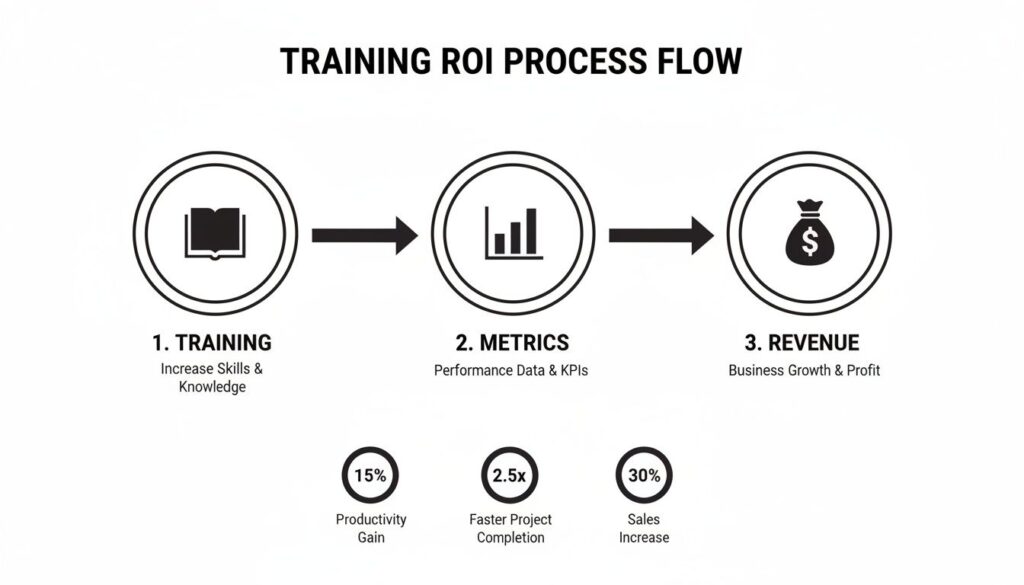
The key takeaway here is that direct line between focused learning and measurable business growth.
A Foundation for Continuous Growth
This onboarding workflow isn’t a one-and-done event. It actually sets the stage for Sarah’s entire relationship with your brand. The LMS now has a record of her progress and can start suggesting more advanced training down the line. She has a central hub she can always come back to when she needs a refresher or wants to get up to speed on a new product you’ve launched.
This process is a great example of what you can build. If you’re looking for more ideas, we have a great post that breaks down using an LMS for reseller education in even more detail. By mapping out a clear, automated path, you turn onboarding from a simple administrative task into a powerful strategic advantage.
Common Mistakes to Sidestep with Your LMS Implementation
An LMS can be a game-changer for your distributor network, but it’s not a magic wand. Just launching one without a clear strategy is like handing over a top-of-the-line power tool with no instructions. I’ve seen a few common mistakes derail otherwise great programs time and time again.
Knowing these pitfalls ahead of time can save you a world of headaches. The goal is to build something your distributors actually want to use, which is a tool that delivers real results from day one. Let’s walk through the most frequent stumbles so you can avoid them completely.
Using an Employee LMS for Partners
This is, without a doubt, the biggest and most common mistake I see. You can’t just take the LMS you use for internal corporate training, slap on a new logo, and expect it to resonate with your distributor network. Their needs are worlds apart.
An employee-focused LMS is usually built around a top-down, compliance-driven mindset. A platform for distributors, on the other hand, needs to feel more like a resource center designed to help them sell more. It should be mobile-first, a breeze to navigate, and built for performance support, not just formal courses.
Trying to force an internal LMS on an external audience is like trying to fit a square peg in a round hole. It creates friction and frustration, which are the fastest ways to kill engagement with your program.
Creating Long, Academic Courses
Remember, your distributors are busy entrepreneurs, not college students. They don’t have an hour to sit through a dense, text-heavy module. Yet, so many companies fall into the trap of creating long, academic-style courses that feel more like a lecture than a practical sales tool.
This approach completely ignores the reality of their workday. What they need is quick, actionable information they can pull up on the go.
- Ditch the hour-long modules: Break your content into bite-sized “microlearning” lessons that are five minutes or less.
- Focus on ‘just-in-time’ learning: Create content that solves an immediate problem, like a quick video on how to handle a common customer objection.
- Make it interactive: Lean on short quizzes, quick scenarios, and checklists instead of long, intimidating blocks of text.
Forgetting to Market Your Training
You wouldn’t launch a new product without a marketing plan, right? The same exact logic applies to your training program. You can’t just build it and expect distributors to show up. Instead, you have to actively promote your LMS and sell them on why it’s worth their incredibly valuable time.
You need to hammer home the “what’s in it for me?” factor. Show them exactly how this training will help them close more deals, earn more commission, and solve customer problems faster. A single email announcement won’t cut it. You need an ongoing communication plan to keep the platform top of mind.
This is especially true in this sector. The 2024 Training Industry Report revealed that manufacturers and distributors averaged 64 training hours per employee, which was the highest of any industry. With that kind of training load, it’s absolutely critical that your platform stands out as a valuable tool, not just another obligation. You can learn more about these key industry training findings.
Answering Your Lingering Questions About Distributor Training LMS
As we get to the end of this guide, I want to hit on some of the most common questions that come up when people think about using an LMS for their distributor network. Getting these cleared up can make all the difference when you’re deciding if this is the right path for your business.
Can an LMS Really Work for a Tiny Distributor Network?
Absolutely. In fact, it can be a secret weapon for smaller networks. It lets you punch above your weight and establish a professional, scalable training process from day one.
Think about it. As you add new partners, you already have a rock-solid onboarding system locked and loaded. You’re not reinventing the wheel every time someone signs on, which saves a massive amount of time and guarantees every single distributor gets the same high-quality start.
Isn’t an LMS Just a Fancy Website or Portal?
Nope, and this is a critical distinction to make. A standard website or partner portal is usually a Content Management System (CMS). It’s fantastic for storing and organizing files like spec sheets, price lists, or marketing slicks. Think of it as a digital filing cabinet.
An LMS, on the other hand, is a Learning Management System. Its entire purpose is to deliver structured learning experiences and track what people actually do with them.
An LMS doesn’t just hold your content; it guides people through it. You can build actual courses, create quizzes, issue certifications, and see exactly who has learned what. A simple website just can’t touch that.
What’s a Distributor LMS Going to Cost Me?
LMS pricing can be all over the map, but most modern platforms run on a subscription model. This is almost always based on how many active users you have each month.
For distributor training, this model is a game-changer. You only pay for the partners who are actually logging in and learning. It’s so much smarter than buying a huge, expensive software license upfront, especially when the size of your network ebbs and flows.
Can We Plug an LMS Into Our Other Business Tools?
This is one of the most important questions you can ask a potential vendor. A good LMS should absolutely connect with your other critical systems, especially your Customer Relationship Management (CRM) software like Salesforce or HubSpot.
Why does this matter so much? Because integrating your LMS and CRM is how you connect training activity directly to sales performance. It’s how you finally get to see if the partners who finish a particular product course are the ones out there selling more of it. That’s the ultimate proof that your training program is actually moving the needle.