Psychology of Retention in Monthly Memberships
If you run a monthly membership, you know the thrill of a new signup. You also know the gut-punch of seeing a cancellation email pop into your inbox.
What really makes one person stick around for years while another is gone in a few weeks? It’s a question that keeps every membership owner up at night.
I’ve found we tend to focus on what we offer, like the courses, the downloads, and the tools. While those things are important, they’re just the surface. The real reasons people commit, the things that turn a casual subscriber into a loyal advocate, are rooted in much deeper psychological drivers.
This guide is all about digging into that psychology. We’re going to move past simple tactics and look at the core human motivations that make your members feel like they’ve finally found their place.
The Real Drivers Behind Member Loyalty
When a member decides to stay, it’s rarely because of a single feature. It’s a combination of feelings and experiences that build up over time, creating a powerful, undeniable sense of value.
I’ve learned it really boils down to three core pillars:
- Building Habits: How do you weave your membership into the fabric of a member’s daily or weekly routine?
- Fostering Community: What does it take to create a genuine sense of belonging and connection with others?
- Showing Progress: How can you make a member’s personal growth tangible, something they can see and feel?
This diagram maps out how these three drivers work together to keep a member invested for the long haul.
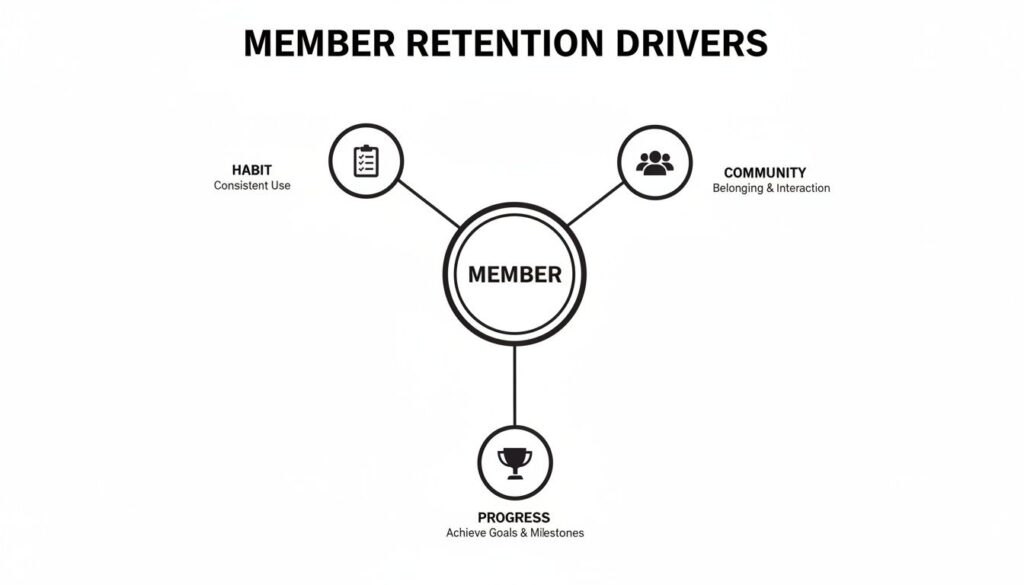
As you can see, a member’s loyalty is built on a foundation of consistent habits, a strong sense of community, and visible personal progress. When these three elements click, cancellations become an afterthought.
Let’s take a quick look at the core principles we’ll be covering and how they directly influence a member’s decision to stick around.
Core Psychological Drivers of Member Retention
Here’s a quick look at the key psychological principles we’ll cover and how they directly impact a member’s decision to stay.
| Psychological Principle | What It Means for Your Member | A Quick Win Strategy |
|---|---|---|
| Motivation | “I have a clear reason to be here and a desire to achieve something.” | Send a personalized welcome video asking new members about their #1 goal. |
| Habit Loops | “Logging in and participating is a natural part of my routine.” | Create a simple “first week checklist” to build an early engagement habit. |
| Social Proof | “I see others like me succeeding here, so I know I can too.” | Showcase a member success story or testimonial in your weekly newsletter. |
| Loss Aversion | “If I leave, I’ll lose my progress, connections, and special access.” | Offer a “Founder’s Rate” that members lose if they cancel and rejoin later. |
| Effort-Reward Balance | “The value I get is clearly worth more than the effort and cost.” | Send a monthly “progress report” email summarizing their activity and wins. |
Understanding these drivers is what separates memberships that just scrape by from those that truly thrive.
When you align your product, content, and community with how people are wired, you create a powerful and sustainable business. It stops feeling like you’re constantly fighting churn and starts feeling like you’re building a movement.
Throughout this guide, I’ll give you a clear roadmap for building a membership that people genuinely can’t imagine leaving. By the end, you’ll have a playbook of proven insights you can put into action today.
We’ll start by digging into the most critical period for any new member: their first 90 days. This is where the foundation for long-term loyalty is either built or broken.
Let’s get started.
Building the Habit Loop in the First 90 Days
When someone first joins your membership, they’re riding a wave of hope and motivation. But that initial excitement has a notoriously short shelf life.
The first three months are everything. This is the make-or-break period where they decide if your membership is a fleeting interest or an indispensable part of their routine.
To get them to stick around, you have to intentionally build a Habit Loop. It’s a simple psychological pattern with three parts: a cue, a routine, and a reward. Our job is to design an onboarding experience that wires this loop right from day one.
Think of it like starting a new gym routine. If you see quick, tangible results, maybe you feel more energetic or your clothes fit a little better, you’re far more likely to keep showing up. The exact same principle applies here.
Designing the “First Wins” Experience
The secret to building a habit is delivering a payoff, fast. A new member shouldn’t feel like they’ve been dropped in a maze, forced to wander around looking for the good stuff. You need to be their guide and lead them directly to their first rewarding experience.
A “First Wins” checklist is the perfect tool for this. Instead of overwhelming them with your entire library of content, give them a simple, structured path to follow in their first week.
Here’s what that could look like:
- Watch this 2-minute welcome video: A quick, personal greeting that immediately makes them feel seen.
- Introduce yourself in the community forum: This gets them connected and feeling like part of the group right away.
- Complete your first 10-minute micro-lesson: A small, easy-to-digest piece of content that delivers an immediate “aha!” moment.
- Download your starter kit PDF: A tangible resource they can hold onto and use immediately.
Each time they check an item off the list, they get a small dopamine hit, reinforcing the idea that taking action inside your membership feels good. This is a core part of building positive momentum from the very beginning.
The goal of the first week is simple: make your member feel smart, capable, and successful. Small victories create the confidence needed to tackle bigger challenges later on.
This early engagement is statistically crucial. In the world of monthly memberships, from gyms to online communities, the drop-off rates in the first few months are staggering.
For example, 50% of new gym members quit within the first six months, with a huge chunk of them vanishing after just 90 days. The data shows that members who hit early milestones are far more likely to stick around. This principle directly applies to online learning where simply completing the first module builds powerful momentum and satisfaction.
Using Drip Content and Micro-Lessons
Once you’ve guided them through that first week, you have to keep the momentum going. This is where drip content and micro-lessons become your secret weapons for habit formation.
Drip content means releasing new material on a set schedule, like one new lesson every week. This creates a predictable cue (the weekly email notification) that prompts the routine (logging in to watch the lesson), which leads to the reward (learning something new and feeling productive).
Pairing this with micro-learning makes the whole process feel effortless. Nobody has time for a two-hour lecture. But almost everyone can find 10 minutes for a short, focused lesson that delivers a specific outcome.
Breaking down complex topics into bite-sized pieces does two powerful things:
- It lowers the barrier to entry: It feels so much easier to commit to a 10-minute task than a 60-minute one.
- It increases the frequency of rewards: More lessons mean more frequent feelings of accomplishment and progress.
This strategy transforms engaging with your content from a chore into a rewarding, repeatable behavior. You can amplify this effect even more with gamification elements like points and badges. For more ideas on this, check out our guide on applying gamification in eLearning.
By focusing on building this habit loop in the first 90 days, you create a rock-solid foundation for long-term loyalty and make your membership an indispensable part of their routine.
Foster Belonging Through a Strong Community
Content is what gets people to sign up for your membership. But community? That’s what gets them to stay.
A genuine sense of belonging is a powerful psychological anchor that makes your membership feel less like a transaction and more like coming home. This is where we stop thinking about “users” and start building a thriving, supportive tribe.
Humans are fundamentally wired for connection. We want to be part of something bigger than ourselves. When your members forge real relationships with one another, they’re no longer just paying for your content. They’re investing in maintaining those valuable connections. A good community creates a space where people feel seen, heard, and understood.

Choosing the Right Platform for Connection
The first step is picking the right home for your community, and this isn’t just a technical choice. The platform you select shapes the entire vibe of the group and dictates how members interact. Your goal is to find a tool that encourages conversation, not just passive scrolling.
Platforms like Circle.so and Heartbeat are popular for a reason. They’re built from the ground up for community, with features that go far beyond a simple forum. Think of it as choosing between a library and a coffee shop. Both are great places, but only one is truly designed for sparking conversation.
When you’re looking at your options, ask yourself these questions:
- Is it intuitive? If your members struggle just to figure out how to post or reply, they simply won’t bother.
- Does it support different ways to connect? Look for a mix of features like live events, direct messaging, and dedicated topic spaces.
- Does it play nicely with your other tools? A smooth experience between your content and your community is absolutely critical.
Making the right platform choice is a huge piece of the puzzle. A clunky, hard-to-use platform creates friction and can kill engagement before it ever has a chance to get started.
Designing Spaces That Spark Conversation
Once you have your platform, you can’t just open the doors and expect magic to happen. You have to be an intentional architect of conversation. This means creating specific, focused channels designed to get people talking.
A blank page is intimidating. Giving members specific prompts and dedicated spaces to share makes it much easier for them to take that first step and participate.
Instead of one giant “General Discussion” forum that feels overwhelming, try creating focused channels. For example:
- Introductions: A low-stakes place for new members to say hello and share what they’re working on.
- Weekly Wins: A space dedicated to celebrating progress, no matter how small. This builds powerful social proof and collective motivation.
- Ask for Help: A safe spot where members can be vulnerable and get support from their peers, reinforcing trust.
- Random & Fun: A channel for non-work topics, like hobbies or pets, that helps members connect on a more personal level.
These designated spaces lower the barrier to participation and signal what kind of interactions are valued in your community. For a deeper look, check out our guide on community engagement best practices for more actionable ideas.
The table below breaks down a few key strategies and the psychological triggers that make them so effective.
Community-Building Strategies and Their Psychological Impact
| Community Strategy | Psychological Principle | Implementation Idea |
|---|---|---|
| Member Spotlights | Social Proof & Recognition | Feature a member’s success story in your weekly newsletter or a dedicated “spotlight” channel. |
| Peer-to-Peer Support Channels | Reciprocity & Belonging | Create an “Ask & Answer” space where members can help each other solve problems. |
| Live Co-working Sessions | Shared Experience & Accountability | Host a weekly 90-minute “focus session” on Zoom where members work quietly on their own projects together. |
| Gamified Challenges | Motivation & Consistency | Run a 7-day challenge with a small prize, tracking participation with badges or a leaderboard. |
Each of these tactics does more than just fill your community with content. It strengthens the social fabric that holds your membership together.
Facilitating Connections and Shared Rituals
My role as the community leader is to be a facilitator. I’m the host of the party, making sure everyone feels welcome and has someone to talk to. This means actively encouraging member-to-member connections, not just member-to-creator interactions.
A great way to do this is by hosting engaging live events like Q&A sessions, expert interviews, or virtual co-working calls. These events put faces to names and turn online avatars into real people.
Creating shared rituals also builds a powerful group identity. This could be something as simple as “Wins Wednesday,” where everyone shares a recent success, or a monthly “Book Club” discussion. These predictable, recurring events give members a reason to keep coming back and reinforce their sense of belonging to the group.
The impact of community is a real thing backed by hard numbers. Globally, while health clubs average a 71.4% annual retention rate, those that actively build community see much better results. For instance, members who attend group classes have 56% better retention rates. This principle translates directly to digital memberships, where adding community features can lift long-term retention by 13-24%. When members feel connected, they stay.
The Power of Personalization and Progress
No one wants to feel like just another number on your spreadsheet. It’s a fast track to cancellation.
When a member feels anonymous, they start to wonder if they really matter to you, and that’s a dangerous place to be. This is where personalization becomes one of your most powerful tools.
Making your members feel seen, heard, and genuinely valued is what turns a simple transaction into a committed relationship. It means creating tailored experiences that reinforce their decision to join and make staying feel like the obvious next step.

Making Each Member Feel Seen
Personalization goes way beyond just slotting a {first_name} tag into your emails, though that’s a decent start. True personalization is about proving you’re paying attention to their individual journey inside your membership.
It starts with listening. Are you tracking what content they’re diving into? Do you know what goals they set for themselves when they first signed up? This data is pure gold because it lets you craft experiences that feel uniquely relevant to them.
Here are a few ways I’ve put this into practice:
- Personalized Learning Paths: If someone is bingeing all your content on a specific topic, nudge them towards other related lessons or resources. You’re acting as their guide, not just providing a library.
- Segmented Communication: Stop sending the same email to everyone. Instead, segment your list based on activity. Send a gentle re-engagement nudge to members who haven’t logged in for a bit or celebrate those who just hit a key milestone.
- Tailored Offers: If you sell add-on products or services, you can present offers based on a member’s specific behavior and interests. It feels helpful, not pushy.
When a member receives communication or content that feels like it was made just for them, their connection to your brand deepens. It sends a clear message: “We see you, we understand you, and we’re here to help you succeed.”
This isn’t just a feel-good tactic, it has a real, measurable impact. Personalization is a retention powerhouse. Just look at the fitness world, where gyms saw a 30% increase in retention when members received tailored offers based on their habits. In online learning, when customers use an onboarding incentive, they are 33% more likely to stick around after a year. It shows how even a small, personalized touch can make a huge difference.
The Psychology of Visual Progress
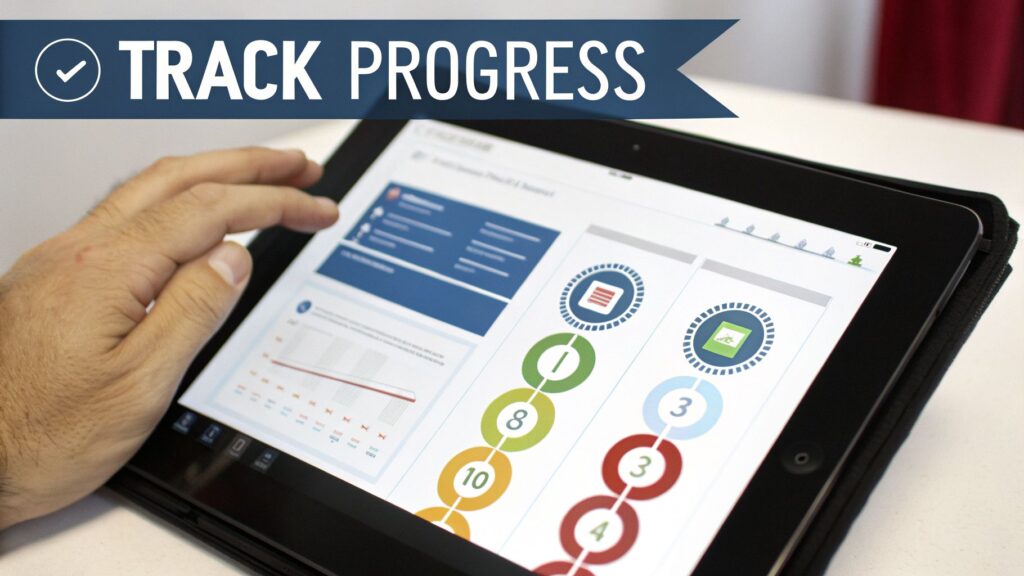
Alongside personalization, the feeling of making progress is a massive psychological driver. When members can clearly see how far they’ve come, their motivation to continue the journey skyrockets. It’s like climbing a mountain. Seeing the distance you’ve already covered is just as motivating as looking up at the peak.
You can bake this feeling right into your membership experience by making progress visible and tangible. This gives your members a steady stream of small dopamine hits that constantly reinforce the value of their subscription.
Implementing Progress Markers
Making progress visible doesn’t have to be complicated. The goal is simple: give your members clear, visual cues that they are moving forward. This is a great place to get creative and make engagement fun.
A few effective ideas include:
- Progress Trackers: A simple progress bar showing how far a member is through a course or learning path is incredibly powerful. It visually represents their investment of time and effort.
- Milestone Badges: Awarding digital badges when someone completes a module, participates in the community for 30 days straight, or helps another member creates a real sense of achievement.
- Certificates of Completion: Offering a formal certificate at the end of a major course gives members a tangible asset they can share, providing both personal satisfaction and social proof.
Implementing visual progress trackers, like the kind you see in stamp card loyalty programs, can also be incredibly effective for motivating repeat engagement by showing members just how close they are to a reward. These markers make their accomplishments feel real and give them a compelling reason to keep striving for the next level.
Tapping into Scarcity and Loss Aversion (Without Being a Jerk)
It’s just human nature. We want things that are a little harder to get, and we absolutely hate losing things we already have.
These two principles, scarcity and loss aversion, are powerful forces in keeping members around. When you use them the right way, they can make a huge difference in your retention numbers.
This isn’t about manufacturing fake urgency or tricking people. The goal is to frame your membership as the valuable asset it truly is, something they’d genuinely miss if it were gone. When someone feels like they possess something special, the thought of giving it up becomes a lot harder to swallow.
Frame It As Something They Already Own
The secret is to gently remind members what they’ll forfeit if they cancel. This makes the decision to stay a conscious choice to hold onto something good, rather than just letting another subscription payment slide by.
Think about what makes your membership unique and irreplaceable. What exactly would a member lose access to?
- Your Exclusive Content Library: All those courses, workshops, and resources they’ve come to depend on? Poof. Gone.
- The Community: The relationships, the support network, and the private conversations they’ve become a part of would vanish.
- Their Personal Progress: Any completed courses, earned badges, or tracked achievements could be wiped clean. It feels like throwing away all the time and effort they’ve already invested.
This feeling of potential loss is often a much stronger motivator than the promise of a future gain. In fact, research shows the pain of losing something feels about twice as powerful as the pleasure of gaining something new. That’s the core of loss aversion.
By reminding members of the value they currently hold, you shift their mindset from “Is this worth paying for?” to “Am I willing to lose all of this?” That’s a very different, and much more powerful, question.
Legacy Pricing and Time-Sensitive Offers
One of the most effective ways to put these principles into practice is with your pricing structure. Offering a special “legacy” or “founder’s” price to your early members is a brilliant strategy. This means they lock in a lower monthly rate for as long as they stay a member.
If they cancel, they lose that special rate forever. Should they decide to come back down the road, they’ll have to pay the current, higher price like everyone else. This simple policy creates a powerful reason to stay subscribed, even during months when they might be less active. They aren’t just paying for access. They’re preserving their special status and their smart investment.
You can also use scarcity with time-sensitive offers for new members. For instance, a bonus course or a one-on-one call that’s only available for a limited time can be a great nudge for people on the fence. The key is to make these offers genuine. If you’re constantly extending your “limited-time” deals, you’ll destroy trust and the effect will wear off completely.
The Great Debate: Free Trials vs. Low-Cost Intros
How you structure your trial period has a surprisingly big impact on long-term loyalty. The choice between a free trial and a low-cost introductory offer taps into very different psychological triggers.
A free trial is fantastic for getting lots of people in the door, but it doesn’t create any sense of ownership. Since they haven’t invested a dime, it’s incredibly easy to just walk away and forget about it.
A low-cost introductory offer, like “$1 for the first month,” completely changes the dynamic. Even that tiny financial commitment makes the person feel like they have some skin in the game. They are now a paying customer, which subtly activates loss aversion. They’ve bought something, and canceling means losing it. Studies suggest that subscribers who start with a paid trial often show higher retention rates down the line because they’ve already crossed the initial hurdle of making a purchase.
Alright, we’ve waded through a lot of the theory behind membership retention psychology. Now it’s time to roll up our sleeves and actually put these ideas to work. Think of this as your practical checklist for auditing and upgrading your retention game, turning those big psychological ideas into simple steps you can take today.
Making small, psychologically-smart tweaks can have a massive compounding effect over time. They create a far better member experience and, frankly, a much more stable business for you. Let’s build a concrete plan.
Quick Wins for Your Onboarding Flow
Your onboarding is the first, and best, chance you have to hook someone and build a habit. Don’t blow it. The whole point is to get members to their first “aha!” moment as fast as humanly possible.
Here are a few things to look at right now:
- Create a “First Wins” Checklist: Guide new members with a dead-simple, 3-5 step list for their first week. Things like “watch welcome video,” “introduce yourself,” and “complete one small lesson.” This builds immediate momentum and a sense of accomplishment.
- Send a Goal-Oriented Welcome Email: Go way beyond a generic “welcome.” Ask them, “What is the #1 thing you hope to accomplish here?” This does two things: it makes them feel seen, and it gives you incredibly valuable data.
- Review Your Welcome Video: Is it a dry, robotic tour of the platform, or is it a warm, personal greeting from a real person? Seeing a friendly face on day one makes a world of difference in making someone feel like they belong, not like they just bought a piece of software.
These small steps are all about making your new member feel successful and connected from the very beginning.
Your entire job in the first 72 hours is to prove to the member that they made a smart decision. Every single email, notification, and piece of content should reinforce that feeling.
Auditing Your Community and Progress Markers
Next, let’s look at how you’re fostering connection and showing people they’re making progress. It’s simple: people stay where they feel seen and where they feel like they’re growing.
- Split-Test Engagement Prompts: Don’t just post a lazy “What’s on your mind?” Try more specific, actionable prompts like, “Share a small win you had this week” or “What’s one thing you’re stuck on right now?” Track which types of questions actually get people talking.
- Map Out Progress Markers: Does your membership have clear, visual cues for progress? If not, consider adding simple course completion bars, digital badges for key milestones, or even just a congratulatory email when a member finishes a core module. People need to see how far they’ve come.
- Check Your Cancellation Flow: When someone clicks that dreaded “cancel” button, what do they see? Instead of just a cold confirmation screen, you could have a simple page reminding them of their legacy pricing they’ll lose or the community connections they’re about to sever.
Building a comprehensive strategy to keep members engaged requires looking at the full picture. For instance, you can find a ton of inspiration in these 10 Proven Gym Member Retention Strategies. Many of the ideas are surprisingly adaptable to any kind of membership. For a deeper dive into content- and community-specific tactics, our guide on membership retention strategies is a great next step. These small adjustments can have a truly big impact on your bottom line.
You’ve got questions, and I’ve got answers.
Once you start digging into the psychology of how to keep members around, a few common themes always pop up. Let’s tackle some of the most frequent ones so you can put these ideas to work in your own membership.
How Much Do I Really Need to Personalize?
This is a great question because it’s easy to get overwhelmed, picturing some hyper-complex system that tracks every click. The truth? You can start small and still make a huge impact.
Simply using a member’s first name and referencing the last course they took can work wonders. The goal isn’t to build a completely unique, one-to-one experience for every single person. It’s about sending signals that you see them and you’re paying attention.
An automated email triggered by an action, like, “Hey Jason, I saw you just finished the module on habit loops! Here’s another resource you might find helpful,” is incredibly powerful. It shows you recognize their progress and are invested in their journey, not just their credit card number.
Can I Use Scarcity Without Seeming Pushy?
Absolutely. The secret is to be genuine. Ethical scarcity is not about manufacturing fake pressure. It’s about highlighting the real, inherent value that someone will lose if they leave.
A perfect example is offering a “Founder’s Rate.” It’s a real, tangible benefit you give to your earliest, most loyal supporters. If they cancel and decide to come back later, they lose that special rate. This isn’t pushy, it’s just a clear and fair consequence of their decision. Another approach is to close enrollment for certain periods. This creates natural scarcity and, as a bonus, allows you to focus all your energy on serving your current members.
The difference between ethical scarcity and being pushy is simple. Ethical scarcity is based on truth (e.g., “This price is only for our first 100 members”). Pushy tactics are based on manufactured urgency (e.g., “Only 3 spots left!” when it’s not actually true).
What if I Don’t Have Time to Manage a Big Community?
Here’s the thing: you don’t need a massive, bustling community right out of the gate. In fact, starting small can be a major advantage. Your job isn’t to be a 24/7 cruise director. It’s to be a facilitator.
Here are a few low-effort, high-impact ideas to get you started:
- One Weekly Prompt: Post one thoughtful, open-ended question each week. Something as simple as, “What’s one small win you had this week related to our work?” can spark great conversations.
- Monthly Live Calls: Host a single live Q&A or a co-working session once a month. This creates a recurring, predictable touchpoint without demanding a huge chunk of your time.
- Encourage Peer Support: When someone asks a question, don’t just answer it yourself. Tag another member who might have experience with that topic. This empowers your members to help each other and takes the pressure off you to be the sole expert.
Focus on creating quality interactions, not just a high quantity of posts. A small, engaged group is always more valuable than a large, silent one. The psychology of retention is all about connection, and even small, consistent efforts can build incredibly strong bonds.

![How to Launch a Membership Site Using Squarespace [Step By Step Guide]](https://learnstream.io/wp-content/uploads/2024/11/image-768x433.png)