7 Powerful Social Learning Theory Examples in Online Training
Have you ever wondered why some online courses feel alive and buzzing with energy, while others feel like you’re just reading a textbook alone in a library? The secret often comes down to social learning. It’s the idea that we learn best by watching, imitating, and interacting with others. I know it sounds simple, but it’s a total game-changer for online training.
For a long time, we thought online courses had to be a solitary journey. Click, watch, repeat. But that’s not how we’re wired as humans. We thrive on connection, feedback, and seeing how others tackle problems. When we bring that social element online, something magical happens. Engagement goes up, completion rates climb, and people actually remember what they learned. As learning evolves beyond individual study, platforms that offer robust collaborative features become essential for fostering a dynamic online environment.
I’m Jason Webber, and over at LearnStream, I’ve seen firsthand how powerful this can be. Intentionally designing experiences that let people learn together is the key. In this article, I’m going to walk you through seven practical social learning theory examples in online training that you can actually use. We’ll break down what they are and how to implement them to create a course that people will love.
1. Peer-to-Peer Discussion Forums and Threaded Conversations
Peer-to-peer discussion forums are one of the most basic and effective social learning theory examples in online training. These are structured digital spaces where learners can engage in asynchronous conversations. This means they don’t have to be online at the same time. This setup lets them discuss course content, share unique insights, ask questions, and offer feedback to their peers.

This method directly applies Albert Bandura’s concept of observational learning. Learners see how others interpret course material, tackle problems, and articulate their thoughts. This observation process allows them to model successful approaches and refine their own understanding without direct instruction. Forums also create a persistent, searchable knowledge base that future cohorts can reference, turning past conversations into a valuable learning asset.
How to Implement Discussion Forums Effectively
Creating a successful discussion space is more than just turning on a feature in your learning management system (LMS). It requires a thoughtful strategy to foster a genuine learning community.
Implementation Tips:
- Start with Clear Guidelines: At the beginning of your course, establish clear rules for communication. This includes norms for respectful feedback, response time expectations, and how to format posts for readability.
- Use Specific Prompts: Tie your discussion prompts directly to learning objectives. For example, instead of asking “What did you think of this week’s video?”, ask “After watching the video on negotiation, share one tactic you would use in a real-world salary discussion and explain why.”
- Model the Behavior You Want: As an instructor, be the first to engage. Respond promptly to early posts to show you are present and to model the depth and tone of conversation you expect.
Strategic Insight: A key goal is to make the community self-sustaining. Initially, you might need to be very active, but over time, you can step back as learners begin answering each other’s questions. Recognize and reward top contributors to encourage this peer-to-peer support.
For more ideas on building a thriving online group, you can find proven community engagement best practices that will help you create a space where learners feel connected and motivated to participate. When learners feel part of a community, they are more likely to stay engaged and complete the course.
2. Live Group Video Sessions and Virtual Cohort Learning
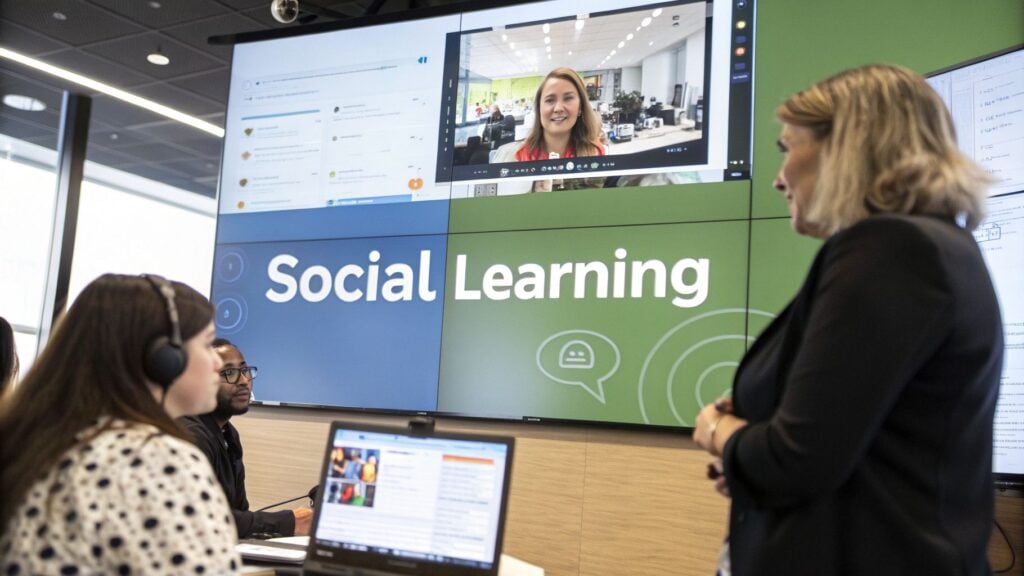
Live group video sessions and virtual cohort learning are powerful social learning theory examples in online training that bring the immediacy of a classroom into the digital space. These synchronous, or real-time, sessions allow learners and instructors to gather via platforms like Zoom or integrated LMS features to discuss topics, collaborate on tasks, and build connections. This face-to-face interaction fosters a strong sense of community and accountability.

This approach directly engages the modeling component of social learning. Learners observe the instructor’s expertise in real time, and just as importantly, they see how their peers analyze problems and ask questions. This dynamic interaction provides immediate feedback and diverse perspectives, helping everyone in the cohort learn from one another’s thought processes and experiences.
How to Implement Live Sessions Effectively
Running a successful live session requires more than just sending out a meeting link. You need to create an environment that encourages active participation and psychological safety, where learners feel comfortable sharing their thoughts.
Implementation Tips:
- Establish Interactive Norms: On your first call, set clear expectations. Ask participants to keep cameras on to increase presence and connection, and explain how to use features like the “raise hand” button or chat.
- Use Breakout Rooms: For larger groups, breakout rooms are essential. Divide learners into small groups of 3 to 5 to discuss a specific prompt. This gives quieter students a better opportunity to speak up before sharing with the larger cohort.
- Prepare and Distribute Agendas: Send out an agenda with any pre-work materials at least 24 hours in advance. This allows learners to come prepared to contribute, making the session more productive and engaging for everyone.
Strategic Insight: The first live session should be dedicated almost entirely to community building. Use icebreakers and personal introductions to help learners connect on a human level. This foundation makes them more likely to support each other academically and professionally throughout the course.
To make these discussions and insights more permanent and reviewable, leveraging meeting transcription software can be highly beneficial for learners. For a deeper look at this model, you can learn more about building successful cohort-based courses.

3. Peer Review and Collaborative Assignment Systems
Peer review and collaborative assignment systems introduce a structured process where learners evaluate, critique, and provide feedback on each other’s work. Using tools like rubrics and clear guidelines, this method turns assessment into a reciprocal learning experience. It’s a powerful way to scale feedback in large courses and is a core example of social learning theory in online training.
This approach directly engages the cognitive processes of social learning. By evaluating a peer’s work, a learner must internalize the standards of quality, compare the work against those standards, and articulate their reasoning. This act of evaluation strengthens their own understanding and ability to self-correct. They learn from the feedback they receive and also from the act of giving it. Platforms like Coursera’s peer assessment for capstone projects and Skillshare’s portfolio reviews are excellent demonstrations of this concept in action.
How to Implement Peer Review Effectively
Setting up a peer review system is more than just telling learners to grade each other’s papers. You have to build a culture of constructive criticism and provide the right tools for success.
Implementation Tips:
- Provide Detailed Rubrics: Don’t leave quality to interpretation. Create a clear, exemplar-based rubric with specific descriptors for each performance level. This gives reviewers a concrete framework to use.
- Train Learners on Feedback: Before the first assignment, teach learners how to give helpful feedback. Model the language you want them to use. For example, using a “What’s working… Consider…” template can balance praise and suggestions.
- Start with Low-Stakes Assignments: Ease learners into the process with smaller, less critical assignments. This builds their confidence in both giving and receiving feedback before they move on to higher-stakes projects.
Strategic Insight: Use anonymity to foster more honest and objective feedback. When learners aren’t worried about social repercussions, they are often more willing to provide candid critiques. This also helps reduce personal bias, focusing the evaluation purely on the quality of the work itself. You can find more practical tips on this in guides about creating better rubrics.
4. Small Group Models: Masterminds and Study Circles
Moving beyond large-group discussions, small-group models like masterminds and study circles offer a more focused environment for collaboration. These formats create dedicated pods where a handful of learners can form accountability partnerships, share resources, and work through course content together. Masterminds typically focus on achieving personal or professional goals, while study circles concentrate on content mastery and problem-solving.
This approach is a powerful application of social learning theory because it fosters a high-trust environment. In a small group, learners are more likely to be vulnerable, share real challenges, and receive personalized feedback. They observe how their peers process information, apply concepts, and overcome hurdles, creating a tight-knit feedback loop that accelerates learning and builds confidence.
How to Implement Small Groups Effectively
Just telling learners to form groups is not enough. Success depends on providing structure and guidance to help these small communities thrive.
Implementation Tips:
- Guide Group Formation: During the first week of a course, facilitate the group formation process. You can match members based on similar goals, time zones, or experience levels to ensure compatibility.
- Provide a Starter Kit: Give each group a structured agenda or template for their first few meetings. This removes initial awkwardness and sets a productive tone. Include prompts for introductions, goal-setting, and weekly check-ins.
- Keep Groups Small: Limit groups to 5 to 8 members. This size is ideal for ensuring everyone has a chance to speak and contribute. It prevents members from getting lost in the crowd.
- Use a “Jigsaw” Method: To encourage deep engagement with the material, assign each group member a different section of the content to master and teach to the others. This promotes both individual responsibility and collaborative learning.
Strategic Insight: The key to sustained small-group success is shared ownership. Encourage groups to rotate the facilitator role weekly. This gives every member a chance to lead and keeps the energy fresh. Celebrate group milestones publicly in your main community channel to reinforce the value of their collaborative work.
5. User-Generated Content and Learner Resource Libraries
User-generated content (UGC) and learner resource libraries transform students from passive consumers into active co-creators of knowledge. This system encourages learners to create, share, and organize valuable learning materials like study guides, case study analyses, or practical templates. Over time, these contributions build a growing, community-owned knowledge base that supports both current and future students.
This approach is a powerful application of social learning theory. When learners create content, they are motivated to achieve mastery of the subject matter to teach it effectively. Observing the high-quality work of their peers, like in Skillshare’s project galleries or a shared GitHub repository, provides a concrete model for excellence. This process reinforces learning through teaching and builds intrinsic motivation through community recognition and contribution.
How to Implement Learner Resource Libraries Effectively
A successful resource library is not just a digital file cabinet. It requires a clear strategy to guide content creation and ensure quality. This turns learner contributions into a dependable asset for your entire community.
Implementation Tips:
- Establish Quality Standards: Provide clear guidelines and templates for submissions. This ensures consistency and helps learners understand what a “good” resource looks like. It standardizes the format for things like case studies or how-to guides.
- Feature and Reward Contributors: Regularly highlight exceptional submissions. You can create a “Resource of the Week” feature or award top contributors with special badges or recognition within the community to encourage participation.
- Implement a Review Process: Before making a resource public, have a peer-review or instructor-review process in place. This maintains high quality and ensures the information is accurate, reliable, and genuinely helpful to others.
Strategic Insight: The key is to make contributing feel both meaningful and achievable. Start with small, focused requests. You can ask learners to share a single template or a short summary of a key concept. As the library grows, the community’s collective intelligence becomes a primary value driver, making the course more valuable with each new cohort.
6. Mentorship and Reverse Mentorship Programs
Structured mentorship programs are powerful social learning theory examples in online training that pair experienced individuals with newer learners. These arrangements create a direct line for guidance, feedback, and modeling. Mentors can be seasoned professionals, successful course alumni, or even instructors who offer one-on-one support.
This approach brings Bandura’s modeling principle to life in a very personal way. A learner observes and interacts directly with a role model who has already achieved the success they aspire to, like the industry mentors in Thinkful’s programs. This close relationship provides targeted, contextual advice that is difficult to replicate in a group setting. Reverse mentorship, where newer members teach established ones about emerging trends, also creates a dynamic learning culture where everyone is a potential teacher and student.
How to Implement Mentorship Programs Effectively
A successful mentorship program requires more than just matching people up. It needs a clear framework to guide the relationship and ensure it produces meaningful results for both the mentor and the mentee.
Implementation Tips:
- Recruit and Train Mentors: Your best mentors are often successful alumni or advanced learners who are passionate about giving back. Provide them with brief training on active listening, providing constructive feedback, and setting goals.
- Establish a Clear Cadence: Set expectations from the start. A 30 to 60-minute monthly meeting is a common and manageable schedule. This consistency helps build rapport and ensures progress.
- Use Structured Templates: Give your pairs a head start with simple templates for their first meeting. Include an agenda, goal-setting prompts, and a space for action items to keep conversations focused and productive.
Strategic Insight: The key to a sustainable program is making mentorship a valued and recognized role within your community. Offer incentives like free access to premium content, special badges, or public recognition. This not only rewards mentors but also models the importance of peer support to the entire community.
Tracking outcomes is vital to demonstrating the program’s value. Monitor metrics like course completion rates, mentee satisfaction scores, and even career-related outcomes like job placements to show the tangible impact of these relationships.
7. Gamification with Social Leaderboards and Collaborative Challenges
Gamification integrates game mechanics like points, badges, and leaderboards into a non-game context to boost participation. When combined with social elements, it becomes a powerful motivator. Social gamification uses friendly competition and community celebration to drive engagement, making it one of the most dynamic social learning theory examples in online training.

This approach connects directly to social learning theory by making progress and achievement visible. When learners see peers earning badges or climbing a leaderboard, they are motivated to model that behavior. It creates a feedback loop where success is publicly recognized, reinforcing the value of participation and skill mastery. Collaborative challenges also encourage learners to work together, sharing knowledge to achieve a common goal.
How to Implement Social Gamification Effectively
A successful gamification strategy is carefully designed to support learning, not just create competition. The goal is to make progress feel rewarding and fun.
Implementation Tips:
- Align with Learning Outcomes: Design challenges and badges that directly represent meaningful learning milestones. A badge for “Completing 5 Modules” is good, but a badge for “Successfully Applying the XYZ Framework” is better.
- Offer Team-Based Challenges: Create opportunities for learners to collaborate on a task. This builds peer bonds and encourages them to share knowledge, turning competition into cooperation.
- Celebrate Progress, Not Just Top Ranks: Use leaderboards that can be filtered by recent activity (e.g., “Top This Week”) to give everyone a chance to shine. This prevents the same top performers from always dominating the view.
- Encourage Consistent Engagement: Implement “streaks” for daily or weekly logins and course activities. This simple mechanic, popularized by apps like Duolingo, builds a powerful habit of continuous learning.
Strategic Insight: The key is to balance competition with collaboration. Pure competition can demotivate those who fall behind. By mixing in team challenges and celebrating personal milestones, you create an environment where everyone feels capable of achieving success.
For a deeper dive into these mechanics, you can discover more about effective gamification for eLearning and how to apply it without creating unhealthy competition. When done right, gamification makes learning feel less like a task and more like a shared journey.
7-Point Comparison of Social Learning in Online Training
| Approach | Implementation complexity | Expected outcomes | Ideal use cases | Key advantages |
|---|---|---|---|---|
| Peer-to-Peer Discussion Forums and Threaded Conversations | Low to Medium | Persistent searchable knowledge base; improved critical thinking and community | Self-paced courses, large asynchronous cohorts, ongoing communities | Asynchronous access; low cost; diverse perspectives; reusable archive |
| Live Group Video Sessions and Virtual Cohort Learning | Medium | Stronger interpersonal bonds, immediate feedback, higher accountability | Cohort-based courses, workshops, skills requiring demonstration | Real-time interaction; adaptive teaching; recordings for review |
| Peer Review and Collaborative Assignment Systems | Medium to High | Scalable assessment, stronger evaluative skills, reduced instructor grading load | Large courses, capstones, writing or project-based assessments | Multiple perspectives on work; scalable grading; authentic feedback practice |
| Small Group Models: Masterminds and Study Circles | Low to Medium | Higher completion and engagement; stronger accountability and networking (30–50% retention gains) | Accountability pods, study groups, goal-focused cohorts | Personalized peer support; higher completion; distributed knowledge sharing |
| User-Generated Content and Learner Resource Libraries | Medium | Growing course assets, increased learner ownership, content multiplier effect | Project-heavy courses, communities emphasizing peer teaching and resources | Reduces instructor content load; builds searchable resources; highlights contributors |
| Mentorship and Reverse Mentorship Programs | Medium to High | Faster competency, higher completion/success (mentored learners 80%+), stronger career outcomes | Career-focused programs, advanced cohorts, alumni engagement initiatives | Personalized coaching; networking and career support; leadership development |
| Gamification with Social Leaderboards and Collaborative Challenges | Medium to High | Significant engagement lift (≈40–60% DAU); improved completion (≈15–25%) | Habit-forming courses, motivational communities, cohort competitions | Drives daily engagement; social recognition; motivates consistency and teamwork |
Your Next Step: Start Small, Think Social
Whew, that was a lot. But I hope you see the common thread running through all these examples. The most successful and memorable online training programs are the ones that remember we’re human. We need connection, we need to see others succeed, and we often need a little friendly push from our peers.
We’ve explored a ton of social learning theory examples in online training, from peer review systems to gamified leaderboards. Looking at all seven of these powerful strategies, it might feel a bit overwhelming. You don’t need to implement all of them at once. In fact, you definitely shouldn’t.
My advice? Pick one. Just one.
Think about the biggest opportunity in your current program. Is it adding more structured discussion prompts to your existing forums? Or maybe it’s setting up a single, structured cohort-based live session for your next course launch? Perhaps a simple peer feedback system for one key assignment is the easiest entry point.
Making Your First Move
To get started, consider these practical first steps:
- Identify Your Quickest Win: Which example from our list feels the most achievable right now? Choose the path of least resistance to build momentum.
- Survey Your Learners: Ask them directly. A simple poll asking, “Would you prefer a live Q&A session or a small group project?” can provide incredible direction.
- Audit Your Tech: What social features does your current LMS or community platform already have? You might be sitting on tools like discussion boards or group creation features that you aren’t using to their full potential.
Key takeaway: The goal is to take a single, deliberate step away from isolated, solo learning and toward building a true learning community. The purpose isn’t to be perfect from day one. The goal is to start the process.
The Real Value of Thinking Social
Implementing these ideas does more than just make your course feel more alive. It directly impacts learning outcomes and business results. When learners feel connected, they are more likely to complete the course, apply what they’ve learned, and become advocates for your program. This creates a positive feedback loop where engaged students attract more engaged students.
Remember, the journey to creating a truly dynamic learning experience is a marathon, not a sprint. The powerful social learning theory examples in online training we’ve covered aren’t just trendy add-ons. They represent a fundamental shift in how we design effective education. By adding that social layer, you build a resilient, supportive environment that helps everyone cross the finish line together, feeling more confident and capable than when they started. Now, go pick your one thing and get started.