Top Trends in Technology for Education
Let’s be honest, the world of education is changing, and it’s happening faster than ever. Technology isn’t just a part of that change, it’s driving it. The biggest shifts I’m seeing right now are about using smart tools like artificial intelligence for personalized learning, creating truly immersive experiences with virtual reality, and using data to finally understand what’s working in the classroom.
The Classroom Of Tomorrow Is Already Here
I’m not talking about simply putting a tablet on every student’s desk. We’re in the middle of a fundamental shift toward learning that’s smarter, more personal, and far more engaging than anything we’ve seen before.
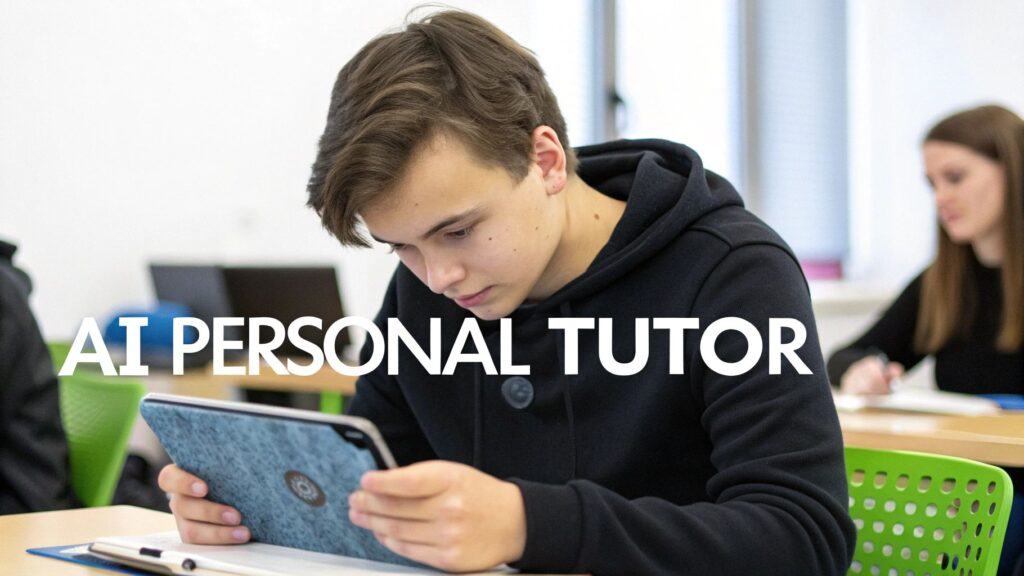
Imagine trading a one-size-fits-all textbook for a personal AI tutor who knows exactly where you’re struggling and what you need to succeed. That’s not science fiction anymore, it’s the direction we are headed.
The growth here is staggering. The global educational technology market is expected to hit USD 285.0 billion by 2025 and is projected to more than double over the next decade. This isn’t a fleeting trend. It’s a complete reimagining of how we teach and learn.
Key Drivers Of Educational Change
So, what’s really fueling this fire? It all boils down to a few core ideas gaining serious traction:
- Personalization at Scale: Technology is finally letting us move beyond the one-size-fits-all lesson plan. We can now cater to individual learning styles and paces without overwhelming educators.
- Engagement Through Interaction: Passive learning is dead. Today’s learners expect interactive content that grabs their attention and makes learning feel like an active pursuit, not a passive lecture. A major part of this is the rise of Gamification in Education to make the experience stick.
- Data-Informed Instruction: For the first time, educators can see precisely where students are getting stuck. They can adjust their teaching methods in real-time, backed by actual data, not just guesswork.
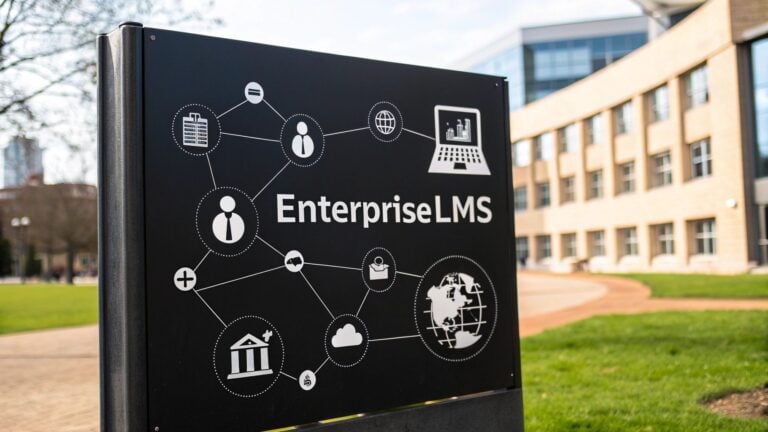
This diagram breaks down how these pillars of modern educational technology all connect.
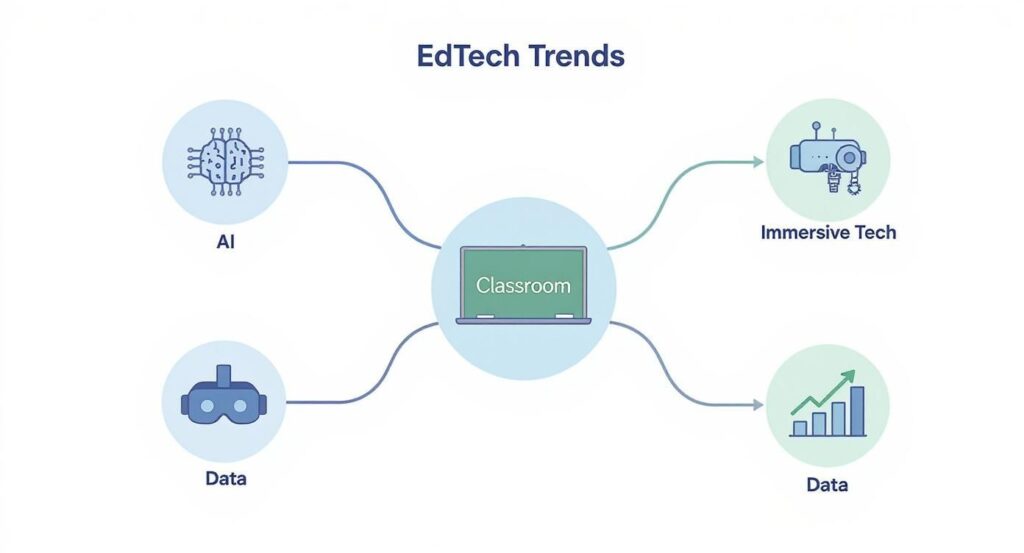
As you can see, these are not just isolated tools. They are interconnected pieces of a brand-new learning ecosystem. Getting a handle on these trends is essential for anyone serious about creating effective and relevant learning experiences today.
To help you get a quick overview, here’s a snapshot of the major trends we’ll be diving into.
Key EdTech Trends at a Glance
A quick summary of the major technology trends transforming education and their primary impact.
| Technology Trend | What It Means for Learners | Key Benefit |
|---|---|---|
| AI-Driven Personalization | Learning paths adapt to individual needs and pace. | Deeper understanding and improved retention. |
| Immersive XR | Hands-on, simulated learning in safe environments. | Practical skills without real-world risk. |
| Data & Analytics | Pinpoints knowledge gaps for timely support. | More effective, data-backed instruction. |
| Microlearning | Bite-sized lessons for focused, on-demand learning. | Fits learning into busy schedules easily. |
| Community-Driven Learning | Collaborative platforms foster peer-to-peer support. | Builds a sense of connection and shared knowledge. |
These are the forces shaping the future of how we learn, teach, and build educational businesses. Let’s explore what each one means for you.
AI-Driven Personalization & Adaptive Pathways
Artificial intelligence in education often sounds like something out of a futuristic movie, but it’s here, and it’s already giving creators some incredible new abilities. I’m seeing AI tools become powerful partners for both educators and learners. They are moving way beyond simple automation to create learning experiences that are truly personal.
This is a complete game-changer because it allows us to deliver one-on-one attention at a massive scale. Think about it. Instead of a single lesson plan for thirty students, imagine a platform that instantly adjusts the difficulty of a math problem the moment it sees a student struggling. Or one that suggests the perfect short video to clarify a tricky science concept just moments after a learner gets a quiz question wrong.
How AI Creates Individualized Journeys
At its core, AI personalization is about creating a unique path for every single learner. It constantly gathers data on how a student interacts with the material. It tracks what they get right, where they stumble, and even how long they spend on a particular activity. This information is then used to adapt the learning environment in real time.
This is a rapidly growing reality. Artificial intelligence has emerged as one of the fastest-growing segments in edtech. The global AI in education market hit USD 7.57 billion in 2025, a stunning 46% jump from the previous year. What’s more, an extraordinary 86% of education organizations are now using generative AI, which is the highest adoption rate of any industry.
The real power of AI in education is its ability to meet learners exactly where they are. It can pinpoint knowledge gaps with a precision that’s almost impossible in a traditional classroom, offering the right support at exactly the right moment.
This level of customization makes the trend so powerful. For a closer look at how this works under the hood, check out our guide on the best https://learnstream.io/blog/adaptive-learning-software/ available today.
Practical Examples of AI in Action
So, what does this look like in the real world? It’s not as complex as you might think. Here are a few common ways AI is personalizing education right now:
- AI-Powered Tutors: These platforms offer students 24/7 support. If a student is stuck on their homework at 10 PM, an AI tutor can walk them through the problem step-by-step. It provides hints and explanations designed for their specific misunderstanding.
- Dynamic Content Recommendations: Much like Netflix suggests movies you might like, AI-driven learning systems suggest articles, videos, and practice exercises based on a learner’s progress and interests. This keeps the material relevant and engaging.
- Automated Feedback and Grading: AI can provide instant feedback on quizzes and assignments, explaining why an answer was incorrect. This frees up educators from hours of grading, letting them focus on more meaningful interactions with students.
These tools are becoming more accessible every day. To dig deeper into the practical applications, you can explore resources on AI tutoring software designed for learning centers.
What This Means for Course Creators
If you create educational content, this is incredibly exciting. You can start thinking about how to build more dynamic and responsive courses that feel alive. It all begins with designing your content in smaller, more modular pieces. This allows an AI system to mix and match them on the fly to create the perfect learning sequence for each individual.
You don’t need a team of data scientists to get started. Many modern learning platforms are beginning to build these features right into their systems. The key is to shift your mindset from creating a single, linear course to building a flexible ecosystem of learning resources. By doing that, you can provide a much more effective and engaging experience for every single one of your learners.
Why Microlearning Is So Effective
Let’s be honest, we’ve all been there. Trying to stay focused during a long lecture or a marathon training session is a real challenge. That’s where microlearning comes in as one of the most practical trends in technology for education. It’s all about breaking down big, complicated topics into small, manageable pieces.
I’m talking about five-minute videos, quick interactive quizzes, and simple infographics you can look at on your phone. It’s a learning style designed for the way we live now. It fits neatly into our busy schedules instead of demanding huge blocks of our time.
Built for the Modern Brain
The real magic of microlearning is how well it aligns with how our brains actually work. We’re simply better at absorbing and remembering information when it’s delivered in short, focused bursts. This approach avoids the cognitive overload that often happens with traditional, longer formats.
Think of it like this: trying to drink water from a firehose is impossible. But taking small sips from a glass is easy and effective. Microlearning is that glass of water, delivering just enough information at one time to be useful without being overwhelming.
This method leads to better knowledge retention. In fact, studies have shown that breaking content into smaller chunks can improve information transfer by more than 17%. When learners can focus on one key concept at a time, it just sticks.
Microlearning is about making content more potent by delivering the right information at the exact moment a learner needs it, which dramatically boosts engagement and recall.
Adaptive Learning Meets Bite-Sized Content
When you pair microlearning with another powerful technology like adaptive learning, things get even more interesting. An adaptive learning system can track a learner’s progress through these small content pieces and then create a personalized sequence just for them.
This means if a student masters a concept quickly, the system can move them ahead to the next topic. But if they struggle with a quiz, it might suggest a different video or a quick reading to help reinforce the idea before they move on. It creates a dynamic, responsive learning path that’s different for everyone.
- For quick learners: It prevents boredom by letting them skip ahead.
- For those needing more time: It offers extra support right where it’s needed most.
- For everyone: It makes the learning experience feel more relevant and personal.
This combination of short content and smart delivery is a powerful one. For those looking to implement this, understanding a few core principles is key. If you want to dive deeper, you can find helpful guidance on microlearning best practices that can get you started.
Real-World Examples
So, where can you see this in action? It’s everywhere.
Corporate training is a huge area where microlearning shines. Companies use it for everything from onboarding new employees with short “how-to” videos to providing ongoing safety training through quick mobile quizzes. It allows employees to learn on the job without taking them away from their work for hours at a time.
Course creators are also building entire programs around this bite-sized philosophy. Instead of releasing a two-hour video module, they might offer a series of ten-minute lessons. This makes the content feel less intimidating and helps keep learners motivated to continue. It’s a smart way to design educational content that respects the learner’s time and attention span.
Step Inside Your Lessons with Immersive XR
Get ready to do more than just read about your subject matter. It’s time to step directly into it. Immersive technologies like Virtual Reality (VR) and Augmented Reality (AR), collectively known as Extended Reality (XR), are completely rewriting the rules of engagement in education.
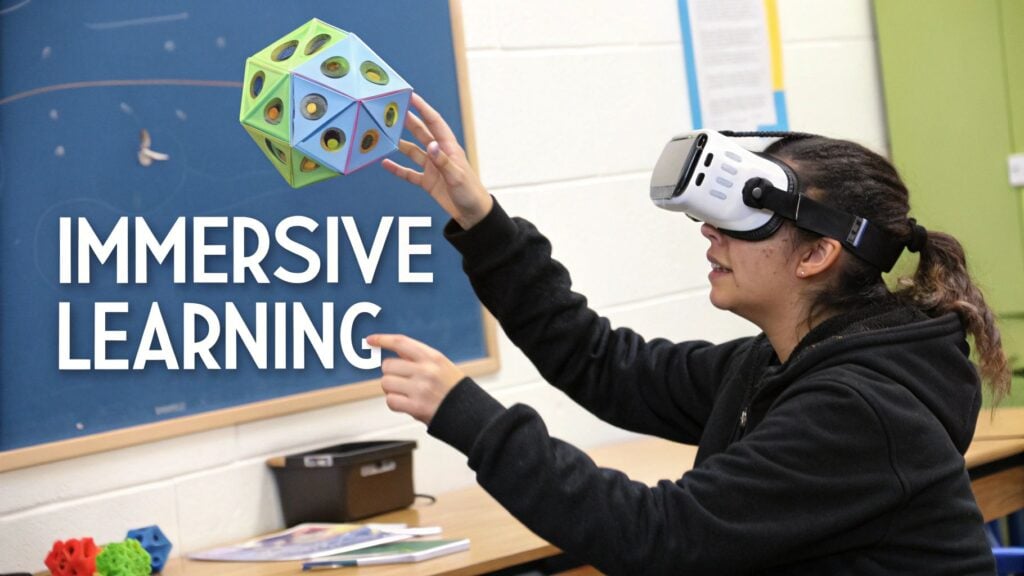
Instead of just looking at pictures of ancient Rome, you can actually walk its streets. Forget studying a flat diagram of the human heart. With XR, you can hold a pulsating, three-dimensional model right in your hands.
This helps to make learning more interactive, memorable, and profoundly effective. We’re moving from passive observation to active participation, and that’s a massive leap forward.
So, What’s the Difference Between VR and AR?
It’s easy to get these terms mixed up, but the distinction is actually pretty simple. Think of it this way: one replaces your world, and the other adds layers to it.
- Virtual Reality (VR) is a total immersion. When you put on a VR headset, your real-world surroundings vanish, and you’re transported to a completely digital environment. It’s perfect for creating experiences that would be impossible, dangerous, or wildly expensive in real life.
- Augmented Reality (AR), on the other hand, overlays digital information onto your real-world view, usually through your smartphone or a pair of smart glasses. It enhances your reality. Think of the game Pokémon Go or an app that lets you see how a new sofa would look in your living room.
The big idea behind XR in education is to finally deliver on the promise of “learning by doing” in a controlled, safe space. It lets learners build muscle memory and practical skills without facing real-world consequences, which is a powerful way to build genuine confidence.
This technology has officially graduated from a niche hobby for tech enthusiasts into a serious, rapidly expanding part of the edtech market. The VR-in-Education market alone is projected to hit USD 31.28 billion by 2025, with some forecasts showing it racing toward USD 81 billion by 2030. You can find even more about EdTech market trends to see just how fast this space is moving.
How XR is Already Being Used in Education
The applications are incredible and span nearly every subject you can imagine. These technologies provide a deeper understanding that only direct experience can offer.
Here’s where XR is already making a huge impact:
- Medical and Technical Training: Medical students can now practice complex surgeries in a risk-free virtual environment, repeating procedures until they’re perfect. Similarly, mechanics can learn to assemble a jet engine piece by piece without ever touching a piece of multi-million dollar equipment.
- Bringing History to Life: Imagine a history class where students don’t just read about an event but actually experience it. They could stand on the virtual battlefield of Gettysburg or walk through the halls of the Palace of Versailles as it looked centuries ago.
- Visualizing Complex Concepts: For subjects like chemistry or physics, XR is an absolute game-changer. Students can physically manipulate 3D molecules to understand their structure or see abstract physics principles demonstrated right in front of them.
Why Immersive Learning is Such a Big Deal
So what makes this trend so incredibly effective? It all comes down to how our brains are wired to learn. By engaging multiple senses at once, XR creates stronger neural connections, making memories more vivid and much more likely to stick.
This method transforms abstract concepts into tangible, concrete experiences. When you can physically interact with your subject matter, you build a much deeper and more intuitive understanding of it.
As headsets get more affordable and the tools for creating XR content become easier to use, we’re going to see this technology become a standard part of classrooms and corporate training. It’s one of the most exciting trends in technology for education because it fundamentally changes the relationship between the learner and the lesson itself.
Using Learning Analytics to Improve Outcomes
How do you know if your course is actually working? I mean, really working. Are students just clicking through, or are they genuinely learning, growing, and getting the transformation you promised?
That’s the million-dollar question learning analytics helps you answer. This is about listening to what your students’ actions are telling you. It’s about moving from guesswork to informed decisions.
Think of it like getting a behind-the-scenes director’s cut of the learning process. You can see which videos get re-watched over and over, which quiz questions consistently stump people, and the exact moment in a lesson where learners start to lose focus.
This data is your superpower as a course creator. It lets you stop guessing what works and start knowing what works, based on real evidence from the people who matter most, your learners.
Making Data-Driven Decisions in Education
The big idea here is simple. We collect and analyze data about how learners behave and perform to understand their entire journey.
The goal is to use these insights to make our teaching sharper and more responsive. It unlocks what’s known as adaptive teaching, where you can tweak your approach based on what’s happening in real-time. You can spot a struggling student early and offer a hand before they get discouraged and fall behind.
Learning analytics helps you dig into the why behind student results so you can give every single person the support they need to actually succeed.
Let’s say the analytics on your platform show that a whopping 70% of students are bombing a specific quiz. That’s a massive red flag. Your first instinct might be to blame the students, but the data is telling you a different story. The problem probably isn’t the learners, it’s the way the material was taught. That insight gives you a clear next step: go back and create a better video, a clearer worksheet, or a more practical example for that one tough concept.
Common Metrics You Can Start Tracking Today
You don’t have to be a data scientist to get started. Most modern learning platforms (like LearnDash or Teachable) have dashboards that do the heavy lifting for you. Here are a few key things to keep an eye on:
- Completion Rates: This is the most obvious one. Are people actually finishing your courses? A big drop-off rate might signal that a course is too long, too difficult, or just not engaging enough.
- Time on Task: How long are students spending on a particular lesson? If they’re spending way more time than you expected, that section might be confusing. If they’re flying through it, maybe it’s too easy or they’re just skipping it.
- Assessment Scores: Don’t just look at the final score. Dig into the patterns. Are there one or two questions that almost everyone gets wrong? Bingo. That points you directly to a weakness in your teaching materials.
- Engagement Patterns: This is about how learners interact. Are they jumping into discussion forums? Are they re-watching certain videos? Clicking on the extra resources you provided? Low engagement is an early warning sign of a boring course.
Putting Analytics into Practice
Okay, let’s make this real. Imagine you run an online course on graphic design. You check your analytics and notice something interesting: the video on “color theory” has a crazy-high re-watch rate, but the quiz scores for that module are the lowest in the entire course.
This data tells a compelling story. Your students are clearly interested, but they’re struggling to grasp the concepts from the video alone. They’re trying, but something is missing. Armed with this insight, you can take immediate action.
- Create a downloadable cheat sheet: A simple one-page PDF summarizing the core principles of color theory could be a game-changer for them.
- Add a new interactive exercise: What about a simple tool where they can drag and drop colors to see different harmonies in action? This makes the learning more hands-on.
- Host a live Q&A session: You could schedule a 30-minute session focused entirely on answering their questions about color theory.
See what happened? By using data, you moved from a vague problem (“some students are struggling”) to a specific diagnosis and a set of practical solutions. This is the real power of learning analytics. It closes the feedback loop, turning student behavior into your roadmap for creating a better, more effective course.
How to Actually Get Started With These EdTech Trends
We’ve covered some incredible, game-changing trends, but let’s get down to what really matters. How do you actually start using this stuff? The good news is you don’t need a Ph.D. in computer science or a venture capital-sized budget to make a real difference.
The secret is to start small. Zero in on one specific problem you want to solve for your learners. Trying to implement AI, XR, and a new analytics platform all at once is a classic recipe for burnout and frustration. Instead, pick one area that feels doable and promises the most immediate, tangible benefit.
Start With One Small, Achievable Step
The goal here is progress, not perfection. Think about which of these trends feels the most accessible to you right now. Your first step could be surprisingly simple.
Here are a few ideas to get you moving:
- Microlearning: Don’t build a massive new course module. Just try creating one five-minute video that explains a single concept your students always struggle with. See how they react.
- AI Tools: Fire up a free AI tool to help you generate a few quiz questions or brainstorm fresh ideas for your next lesson. It’s a low-stakes way to see what the technology can do.
- Analytics: Block off 20 minutes to look at the data you probably already have. Which lesson has the highest drop-off rate? That’s not a failure, it’s your starting point for making a meaningful improvement.
The idea is to build momentum with small, manageable wins. Every little experiment teaches you something valuable and gives you the confidence to try something bigger next time.
The most effective way to adopt new edtech is to focus on your learners’ needs, not the technology itself. Start by identifying a specific challenge they face, then find the simplest tool that can help solve it.
Finding the Right Technology for Your Goals
As you begin to build momentum, you’ll need a solid foundation to manage your courses and see how your students are progressing. This is where a Learning Management System (LMS) becomes your command center. An LMS is the central hub for all your learning content, and choosing the right one can make or break your ability to scale.
A modern platform will often have some of these features already baked in, like analytics dashboards or easy integrations with other tools. Before you commit to one, it’s worth doing some real digging. If you need a hand navigating your options, our guide on how to choose an LMS provides a clear framework to help you make a smart decision for your specific needs.
Always Keep the Learner at the Center
Ultimately, all these trends point toward one powerful idea: a shift toward more effective, accessible, and human-centered education. The technology is just the vehicle. Your learners are the destination.
The best way to stay on track is to stay curious. Be willing to experiment, and don’t be afraid when something doesn’t work out. Sometimes the best lessons come from a tech implementation that flops.
And always, always keep your learners’ needs at the very heart of everything you do. Ask for their feedback, listen to their frustrations, and let their real-world experience guide your choices. When you do that, you’re not just implementing new technology. You’re building better ways to help people learn and grow.
Common Questions About EdTech Trends

Whenever I talk about these shifts in educational technology, the same handful of questions always come up. I hear them from course creators, teachers, and business owners who are excited by the possibilities but also a little intimidated by the pace of change.
Let’s tackle a few of the most common ones. I’ll give you my straight-up take on each, based on what I’m seeing in the trenches every day.
Is This Technology Going to Replace Teachers?
This is the big one, the question on everyone’s mind. And the answer is a resounding no. The goal of all this tech is to amplify the human element of teaching. Think of these new tools as the world’s most capable teaching assistants.
AI can handle the grind of grading quizzes, finding the perfect resource for a specific student, and tracking progress. This frees up educators to do what they do best: mentor, inspire, and build real connections with their students. The most critical parts of learning, like empathy, creative guidance, and sparking curiosity, simply can’t be automated.
Technology is just a tool. Its real power is in clearing the administrative clutter so educators can focus more on the human side of learning.
Isn’t This All Too Expensive for a Small Business or School?
That’s a totally valid concern. When you hear phrases like “virtual reality” and “AI platforms,” it’s easy to imagine a price tag with way too many zeros. And while some of the high-end systems are definitely an investment, the barrier to entry is dropping much faster than people think.
In fact, many of the most powerful tools are becoming surprisingly accessible.
- Freemium AI Tools: A ton of AI-powered tools for creating content, like drafting quiz questions or outlining lesson plans, offer free or low-cost plans to get you started.
- Affordable AR: Augmented reality often works with the smartphones people already have in their pockets, so you don’t need a lab full of expensive, specialized hardware.
- Open-Source Software: A growing number of powerful learning tools are built on open-source platforms, which dramatically lowers the cost of implementation.
You don’t have to bet the farm to get started. The smart move is to begin with small, low-cost experiments. See what clicks with your audience, then scale what works.
How Do I Keep Up with All These Changes?
Things are moving at lightning speed, and trying to master every new tool that comes out is a perfect recipe for burnout. My best advice? Don’t try to drink from the firehose.
Instead, pick a few reliable sources to follow and let them do the filtering for you. Find a couple of solid edtech blogs or newsletters and stick with them.
Sites like Edutopia and EdSurge do a great job of breaking down what’s important without getting lost in the technical weeds. The goal isn’t to become an expert on everything overnight. It’s simply to stay informed enough to spot the opportunities that actually matter for you and your learners. Just stay curious, and you’ll be ahead of the curve.