Build a Learning and Development Strategy That Drives Growth
Let’s cut right to the chase. A learning and development strategy is your organization’s game plan for building the exact skills your team needs to crush your business goals.
It’s the difference between running random, one-off workshops and creating a genuine culture of continuous growth that actually moves the needle.
What Is a Learning and Development Strategy
Think of your company as a ship trying to reach a specific destination, and that destination is your core business objective. Your L&D strategy is the navigation chart.
It shows you which currents to ride and which storms to avoid, making sure your crew has the right skills to keep the ship moving forward, fast.
Without that chart, you’re just drifting. Sure, you might offer some training, but it’s probably disconnected and reactive. One team gets a workshop on new software, another gets a seminar on communication. These are fine on their own, but they aren’t tied to a bigger purpose.
A true strategy links every single learning initiative directly back to the company’s most important goals. It’s the framework that answers the big, critical questions about building a winning workforce.
Why This Strategic Approach Matters
So, why bother with a formal plan? Because the payoff is huge, both for your team members and your bottom line.
When you invest strategically in your people, you’re doing a lot more than just checking an HR box. You’re building a more capable, engaged, and loyal team.
In fact, research shows that a staggering 63% of employees who quit their jobs point to a lack of opportunities for advancement as the main reason. A clear L&D strategy tackles this head-on by creating visible pathways for growth.
Here’s what a solid strategy helps you achieve:
- Close critical skill gaps: You can spot the skills your team will need for future success and build training to fill those holes before they become problems.
- Boost employee engagement: When people see you’re invested in their careers, they become more invested in their work. Morale and job satisfaction go way up.
- Improve retention rates: Employees who feel supported and see a future with the company are far less likely to look for opportunities elsewhere. This slashes recruiting costs.
- Increase overall productivity: A better-skilled workforce is a more efficient one. The right training helps people master their current jobs and find new ways to innovate.
A well-crafted learning and development strategy is a powerful business tool. It aligns individual growth with organizational success, creating a win-win scenario.
Ultimately, a learning and development strategy transforms training from a cost center into a strategic investment. It ensures every dollar spent upskilling your team delivers a measurable return by making your organization more competitive and resilient. It’s about being intentional with your team’s professional journey, ensuring they grow with you, not away from you.
The Core Components of a Winning L&D Strategy
So, what exactly goes into a learning and development strategy that actually works? Think of it like building a house. You can’t just throw up some walls and hope for the best. You need a solid foundation and several key pillars to make sure the whole thing stands strong for years to come.
Each piece plays a critical role, and when they all work together, they create a powerful engine for growth.
Let’s break down the essential building blocks that separate a successful plan from one that just looks good on paper.
Every robust L&D strategy is built on a few essential pillars. Get these right, and you’re well on your way to creating a program that delivers real, measurable results.
Table: Key Pillars of a Modern L&D Strategy
| Pillar | What It Means | Why It Matters |
|---|---|---|
| Business Alignment | Directly connecting every learning initiative to core company goals and objectives. | Ensures training drives business results, not just completes a checklist. It answers the “why” behind the learning. |
| Skill Gap Analysis | Proactively identifying the skills your team has now versus what they’ll need in the future. | Allows you to be strategic and forward-thinking, preventing skill shortages before they become a crisis. |
| Leadership Buy-In | Securing active, vocal support from the C-suite and other key leaders. | Provides the necessary resources, credibility, and cultural backing for L&D to succeed. |
| Engaging Experiences | Designing personalized, modern learning that respects employees’ time and intelligence. | Boosts participation and retention by making learning something people want to do, not something they have to do. |
| Measurement & ROI | Using data to track progress, measure the impact of training, and prove its value. | Justifies L&D investment and provides the insights needed to continuously improve the strategy. |
Think of these pillars as the non-negotiables. Without them, even the most well-intentioned training programs tend to fall flat over time.
Aligning Learning With Business Objectives
This is the absolute cornerstone. Your learning initiatives can’t exist in a bubble. They have to be directly and clearly wired into what the company is trying to achieve.
For instance, if your company’s big goal is to expand into a new international market, your L&D plan should be laser-focused on cross-cultural communication, foreign language skills, or international sales techniques. The connection is direct and purposeful.
Without this alignment, you risk creating a team of highly skilled people in areas that don’t actually move the needle for the business. It’s all about making sure every course, workshop, or coaching session serves a strategic purpose.
Identifying and Addressing Skill Gaps
A great strategy is proactive. You need a system for figuring out what skills your team has today versus what they’ll need tomorrow. This is what we call a skill gap analysis.
This process helps you spot potential weaknesses before they become full-blown problems. Are you rolling out new software? You need to train people on it. Is your industry shifting? You’ll need to upskill your team to stay ahead of the curve.
By identifying these gaps early, you can design targeted learning programs that build the exact capabilities your organization needs to thrive, ensuring you’re always one step ahead.
Securing Leadership Buy-In and Support
Honestly, this one is a deal-breaker. If your company’s leaders aren’t fully behind the L&D strategy, it will starve for resources, visibility, and the employee participation it needs to succeed.
And you need more than just budget approval. You need champions in the C-suite who actively promote the value of continuous learning and, just as importantly, lead by example.
When leaders show up for training themselves and talk openly about their own development, it sends a powerful message to the entire organization. Their support transforms a simple training program into a core part of the company culture.
Designing Engaging and Personalized Learning Experiences
Long gone are the days of boring, one-size-fits-all training modules that put everyone to sleep. Today’s workforce expects learning that is relevant, engaging, and tailored to their individual needs and career goals.
This means building personalized learning paths that let employees choose topics that interest them and learn at their own pace. A winning strategy prioritizes building foundational skills across the board. Resources like a guide to mastering business communication skills training can be a fantastic addition to your toolkit.
It also means using a mix of learning formats to keep things fresh and interesting:
- Microlearning: Short, bite-sized videos or articles for quick knowledge boosts.
- Social Learning: Collaborative projects and discussion groups where people learn from each other.
- On-the-Job Training: Mentorships and stretch assignments that provide real-world, hands-on experience.
The focus is on creating a learning environment that people actually want to be a part of.
The trends are shifting, too. In one recent study, 55% of organizations said they are prioritizing generative AI and machine learning in their leadership development, and 43% use a mix of internal and external programs to get there.
How to Build Your L&D Strategy From Scratch
Staring at a blank page and being told to “build a learning and development strategy” can feel like being asked to boil the ocean. It sounds huge, complicated, and frankly, a little intimidating. But I promise, it’s not.
When you break it down into a logical flow, it becomes a series of manageable, common-sense steps.
Think of this as your roadmap. We’re going to build a living plan that actually moves the needle for your business and your people.
Let’s dive in.
Step 1: Conduct a Thorough Needs Analysis
Before you can build a solution, you have to deeply understand the problem. A training needs analysis is your discovery phase. It’s where you get real about the gap between where your team’s skills are today and where they need to be for the company to win tomorrow.
You can’t just guess what people need to learn. You have to get out there and gather some real intel. A solid analysis isn’t complicated, but it does involve a few key activities:
- Review Business Goals: What are the big-picture objectives for the company this year? Launching a new product? Entering a new market? Every single learning initiative should be a direct line of support to one of these goals.
- Survey Employees: Go straight to the source. Ask your team what skills they feel would help them crush their current roles and what they’re curious about for their own career growth. You’ll be amazed at the insights you get.
- Talk to Managers: Department heads and team leads have a frontline view of performance gaps, skill shortages, and the challenges their teams are facing right now. Their perspective is pure gold.
- Analyze Performance Data: Look at performance reviews, KPIs, and other business metrics. Are there trends? Do customer satisfaction scores dip when a certain topic comes up? That’s a signal.
This process gives you a data-backed foundation, not a strategy based on assumptions. To make this even easier, we’ve put together a guide on how to create a training needs assessment template that you can grab and adapt for your own organization.
Step 2: Set Clear and Measurable Objectives
Once you know the gaps, it’s time to define what success looks like. Vague goals like “improve communication skills” are a recipe for failure because you’ll never know if you’ve actually achieved them. We have to get specific.
I always come back to the SMART goal framework. It’s a classic for a reason, it works. Every objective for your L&D strategy should be:
- Specific: What, exactly, do you want to achieve?
- Measurable: How will you track progress and know when you’ve succeeded? (e.g., a 15% increase in customer satisfaction scores).
- Achievable: Is this goal realistic given your time, budget, and resources?
- Relevant: Does this tie directly back to a business need you uncovered in Step 1?
- Time-bound: When does this need to be accomplished?
Here’s what a great L&D objective looks like in the real world: “Increase the proficiency of our sales team in using the new CRM software, resulting in a 20% reduction in data entry errors within three months of completing the training program.”
See the difference? That level of clarity gets everyone aligned and keeps your efforts laser-focused on what matters.
Step 3: Choose the Right Learning Methods
With your objectives locked in, you can now figure out how you’re going to deliver the training. There’s no single “best” way to teach something. The right approach is a mix-and-match game that depends on the skill you’re teaching, your team’s work styles, and your budget.
Honestly, a blended learning approach, combining a few different methods, is almost always the most effective. It keeps things interesting and caters to the fact that people learn in different ways.
Consider pulling from this menu of options:
- On-the-Job Training: This is learning by doing. Think mentorship programs, job shadowing, and stretch assignments. It’s perfect for practical, hands-on skills.
- Online Courses (E-learning): Self-paced modules are fantastic for building foundational knowledge or teaching technical skills. They offer flexibility for busy schedules, which everyone appreciates.
- Virtual Instructor-Led Training (VILT): Live webinars and virtual classrooms are brilliant for interactive discussions, group problem-solving, and Q&A sessions where people can learn from each other.
- Social Learning: Don’t underestimate the power of peer-to-peer learning. Encourage knowledge sharing through internal channels like Slack, team projects, or informal lunch-and-learns.
The key is to match the method to the mission. A complex new software system might need some e-learning modules for the basics, followed by a live VILT session where people can ask specific questions.
Step 4: Create a Communication and Launch Plan
Here’s a hard truth. You could design the most incredible learning program in the world, but if nobody knows about it, or why they should care, it will fail.
A strong communication plan is non-negotiable. It’s how you get buy-in from the ground up.
Your plan needs to do a few things well. First, explain the “why.” Connect the dots for people, showing how this strategy supports both the company’s big goals and their personal career path.
Next, get tactical. Detail what programs are available, who they’re for, and exactly how employees can get involved. Make it easy.
Finally, build some genuine excitement! A quiet launch is a dead launch. Use all your channels, company-wide emails, team meetings, internal newsletters, to build momentum. The single most powerful thing you can do? Get managers to champion the initiatives with their teams. Their endorsement turns a corporate mandate into a real opportunity.
Adapting Your L&D Strategy for a Hybrid World
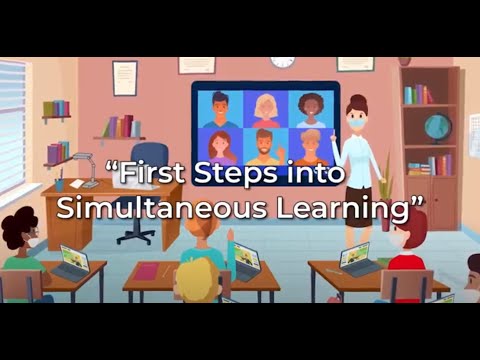
The shift to hybrid and remote work isn’t just a passing trend. For many of us, it’s the new reality. This has completely upended the old playbook for learning and development. Flying everyone to headquarters for a week of in-person training just doesn’t cut it anymore.
Our strategies now need to be as flexible as our work arrangements. We have to design learning that feels just as impactful for an employee in a different time zone as it does for someone sitting in the office.
This means embracing new tools, new methods, and a whole new mindset. It’s really about creating equity in learning opportunities, no matter where someone logs in from. The goal is to build a program that feels cohesive and connected, even when the team is physically miles apart.
Rethinking Delivery for Distributed Teams
So, how do you make training actually work when your team is scattered everywhere? The key is to stop trying to just replicate a physical classroom online. Instead, it’s time to lean into the unique strengths of a digital-first approach.
I’ve seen firsthand that the most successful strategies use a smart mix of synchronous and asynchronous learning. This combination gives people the flexibility they need while still creating crucial moments for real human connection.
Asynchronous Learning: This is all your self-paced content. Think pre-recorded videos, online modules, and articles that people can tackle on their own time. It’s perfect because it respects different time zones, work schedules, and personal commitments.
Synchronous Learning: These are your live, interactive sessions. We’re talking about virtual instructor-led training (VILT), group workshops on Zoom, or collaborative problem-solving meetings. This is where you build community and create space for those spontaneous, real-time conversations.
This simple, three-step flow gives you a great visual for planning your L&D initiatives, all the way from the initial analysis to a successful launch.
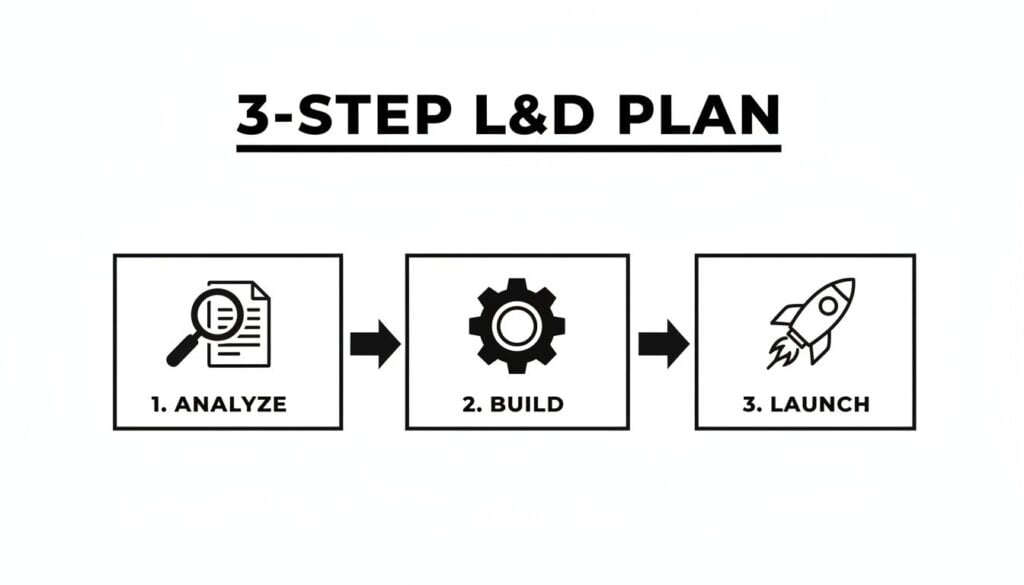
Following a process like this ensures that every learning program you create is tied directly to a real business need and is designed for maximum impact.
Fostering a Learning Culture from a Distance
One of the toughest challenges in a hybrid world is keeping a strong, unified company culture alive. A great L&D program can be the glue that holds everything together, but you have to be incredibly intentional about it.
It’s not enough to just give people access to a library of courses. You have to actively foster an environment where learning is encouraged, celebrated, and woven into the day-to-day fabric of work.
This is where a blended learning model really shines. It combines the best of both worlds, offering flexibility without ever sacrificing collaboration. If you want to go deeper on this, check out our guide that offers a full blended teaching and learning explanation.
In a hybrid setting, your learning and development strategy becomes a central pillar of your employee experience. It’s a powerful tool for keeping people connected to the company’s mission and to each other.
The numbers back this up, too. A striking 83% of organizations have shifted to hybrid or fully remote training models since 2020. Even more telling, 76% plan to maintain or even increase this approach. Courses that blend self-paced modules with collaborative elements see 32% higher completion rates.
The Right Tech for a Hybrid Strategy
Let’s be honest, having the right technology is non-negotiable. Your tools have to be accessible, intuitive, and built for a workforce that isn’t in the same room.
Here are a few essential pieces of a modern hybrid learning tech stack:
- A Solid Learning Management System (LMS): This is your central hub for hosting courses, tracking progress, and keeping all your learning content organized.
- Engaging Video Conferencing Tools: Platforms like Zoom or Microsoft Teams are essential for live training, but look for features like breakout rooms and polling to keep things interactive and avoid “Zoom fatigue.”
- Collaborative Communication Platforms: Tools like Slack or a dedicated community platform create spaces for informal learning, peer-to-peer support, and the kind of ongoing discussions that make learning stick.
Ultimately, adapting your L&D strategy for a hybrid world is all about putting your people first. By offering flexible, accessible, and genuinely engaging experiences, you empower every single person on your team to grow, no matter where they happen to be.
Future-Proofing Your Workforce With Continuous Learning
The skills that make your team superstars today might be obsolete tomorrow. That’s a tough reality, but it’s one we all have to face.
So, how do you build a learning and development strategy that actually prepares your people for a future you can’t fully predict?
The answer is to stop thinking about training as a one-time event and start building a proactive culture of continuous learning. It’s about creating a team that is resilient and adaptable enough for whatever’s around the corner. Learning becomes part of the daily routine, not a checkbox on a to-do list.
From Technical Skills to Durable Capabilities
For a long time, L&D was all about technical upskilling, like teaching someone to use a new piece of software. That stuff is still important, of course, but a truly future-proof strategy goes much deeper. It focuses on building durable skills. These are the kind of uniquely human abilities that stay valuable no matter how much the technology changes.
Think of it like building a house. Technical skills are the appliances in the kitchen. They’re essential for now, but they’ll eventually get old and need replacing. Durable skills are the foundation and the frame of the house itself. They provide the core structure that holds everything together, come what may.
These are the foundational skills you need to bake into your continuous learning plan:
- Critical Thinking and Problem-Solving: The ability to look at complex situations and dream up creative solutions never goes out of style.
- Communication and Collaboration: With teams becoming more spread out, working together effectively is more critical than ever.
- Creativity and Innovation: This is what helps your team spot new opportunities and find better ways of doing things.
- Adaptability and Resilience: The capacity to bounce back from setbacks and embrace change is what keeps a workforce strong and forward-thinking.
A smart strategy helps your people develop these durable skills right alongside the technical ones, creating well-rounded professionals who are ready for anything.
Anticipating Future Skill Needs
So how do you know which skills to focus on? A proactive learning strategy uses data and trends to peek around the corner and see what’s coming.
It means keeping your ear to the ground in your industry, watching how technology is shifting, and, most importantly, listening to your own people.
The goal is to provide the right learning at the exact moment it becomes relevant. By anticipating needs, you can make your team nimbler and more competitive.
This isn’t about gazing into a crystal ball. It’s about being observant and intentional. For example, the World Economic Forum projects that a staggering 39% of existing skill sets will be transformed or outdated between 2025 and 2030. That’s a massive shift that demands a strategic response.
Weaving Learning into Your Company DNA
You can’t just send out a memo and declare a culture of continuous learning. It has to be woven into the very fabric of your company. That’s how you make learning a habit, not a chore.
Start by making it easy. Offer bite-sized learning opportunities, short videos, quick articles, interactive quizzes, that people can actually fit into their jam-packed schedules.
To make sure your workforce has the latest capabilities, exploring the best AI training courses is a great way to stay ahead of major technological shifts.
Finally, lead by example. When leaders are open about what they’re learning and publicly carve out time for their own development, it sends a powerful message: growth is a priority for everyone here. That’s how you build an organization that doesn’t just survive change, but actually thrives on it.
Measuring the Real Impact of Your L&D Programs
You’ve built what you think is a fantastic learning and development strategy. The courses are engaging, the content is solid, and people seem to like it. But how can you be sure it’s actually working?
Sure, you can track course completion rates. That’s easy. But knowing that 85% of your team finished a module doesn’t tell you the whole story.
It doesn’t tell you if they learned anything, if their behavior changed, or if any of it made a lick of difference to the business. It’s time to look past the vanity metrics and measure the real, tangible impact.
Measuring impact is all about connecting the dots between your training initiatives and bottom-line business results. When you can show a clear return on investment (ROI), you don’t just justify your budget. You get the critical insights needed to make your strategy even better over time.
Going Beyond Completion Rates
To see the real picture, we need to focus on key performance indicators (KPIs) that tell a much more compelling story about the value of your L&D programs. These are the numbers that get executives to sit up and pay attention.
Here are a few powerful KPIs to start tracking:
- Improved Employee Performance: Look for direct improvements in job-specific metrics after training. Did that new sales training program lead to a 10% increase in closed deals per rep? That’s a story worth telling.
- Increased Employee Retention: Let’s be honest, a great L&D program makes people want to stick around. Track your turnover rates, especially in departments that have received targeted development initiatives.
- Higher Promotion Rates: Are the employees who actively engage with your L&D programs the ones getting promoted more often? This is a fantastic indicator that you’re building your internal talent pipeline and growing future leaders.
- Boosts in Productivity: This one is pure gold. Measure things like project completion times, customer support ticket resolution speed, or output per employee. When people are better skilled, they’re flat-out more efficient.
A Simple Framework for Measuring Impact
One of the most popular ways to think about measurement is the Kirkpatrick Model. It might sound a bit academic, but the idea behind it is incredibly simple and practical. It breaks down evaluation into four logical levels, helping you build a complete picture of your program’s effectiveness from start to finish.
The Kirkpatrick Model is a straightforward way to evaluate training effectiveness at four different levels: Reaction, Learning, Behavior, and Results. It guides you from initial employee feedback all the way to measurable business outcomes.
Think of it as a ladder. Each step you climb gives you a deeper, more meaningful level of insight into how well your training is actually landing. You can dive deeper into how to put this and other frameworks into practice by exploring different ways to measure training effectiveness.
By tying your learning and development strategy to concrete business metrics, you transform it from a “nice-to-have” expense into a proven engine for growth. This is what separates good L&D programs from the truly great ones.
Frequently Asked Questions About L&D Strategy
Even with a perfect roadmap, turning an L&D strategy into reality is going to bring up some thorny questions. Let’s dig into a few of the most common hurdles I see leaders run into when they’re trying to get their initiatives off the ground.
How Do I Get Budget Approval for L&D?
Walking into the C-suite to ask for budget can feel like you’re selling a luxury item. The trick is to stop talking about it like a cost and start framing it as a strategic investment.
Don’t just show up with a list of courses and their price tags. Instead, you need to build a rock-solid business case.
The first step is to draw a straight line from your L&D plan to a specific, high-stakes business goal. For instance, show exactly how a proposed customer service program will help hit that corporate objective of improving customer retention by 5%. Use the data from your needs analysis to show where the skill gaps are now and, more importantly, the risks of leaving them unplugged.
Think in terms of return on investment. If you can clearly show that investing $20,000 in sales training is projected to boost revenue by $100,000, the conversation changes completely. Your request shifts from spending money to making it.
You have to prove that L&D is a tool for driving real, measurable business outcomes. Once you can do that, getting the budget signed off becomes a whole lot easier.
What’s the Best Way to Engage Reluctant Learners?
Let’s be honest, every company has them. The folks who are skeptical about training or just feel too swamped to make time for it. Forcing everyone into a mandatory workshop is almost always the wrong move.
The real key is to focus on relevance and flexibility.
First, make sure the learning connects directly to their day-to-day work. Better yet, pull them into the planning process. Ask them what skills would actually help them solve the biggest headaches they face every week. When people see a clear “what’s in it for me,” their motivation goes through the roof.
Second, don’t offer a one-size-fits-all solution. Some people thrive in a live workshop environment, while others would much rather work through self-paced online modules on their own schedule. Giving people options provides a sense of autonomy and makes learning feel less like a chore.
Finally, don’t underestimate the power of social proof. Find and highlight success stories from their peers who have already benefited from the training. A rave review from a respected colleague about a new skill they picked up is infinitely more powerful than any top-down email from HR.
How Do I Choose the Right L&D Technology?
The sheer number of L&D tools on the market can feel paralyzing. But here’s the thing. You don’t need the flashiest, most expensive platform out there. The right technology is simply the one that supports your strategy and is easy for your people to actually use.
Start by looking at your goals. What do you need this tech to do?
- Host and track courses? A good Learning Management System (LMS) is probably what you’re looking for.
- Run live virtual training? Then you’ll want video conferencing tools with strong interactive features like breakout rooms and live polling.
- Spark collaboration and peer learning? Platforms like Slack or dedicated community tools can create the space for that to happen organically.
Before you sign any contracts, make sure to run a pilot. Grab a small group of employees and have them test-drive the platform and give you honest, unfiltered feedback. A tool is only worth the investment if people will actually use it, so prioritize a clean, intuitive user experience over a long list of features you’ll likely never touch.