How to Create a Membership Site People Will Love

Building a membership site from scratch can feel like a massive undertaking, but I promise you, it’s manageable when you break it down. Before you even think about platforms, plugins, or payment gateways, we need to get crystal clear on the foundation: your ‘why’ and your ‘who’.
What specific transformation are you offering that people will gladly pay for, month after month? And who, exactly, is that ideal member you’re building this all for?
Find Your Profitable Niche
The first instinct for many creators is to build something for everyone. Honestly, that’s usually a fast track to failure. A thriving membership is built on specificity. You have to find a sweet spot, a profitable niche where you have real expertise and can deliver consistent, undeniable value.
Think of it as a Venn diagram where three circles overlap: what you’re passionate about, what you’re legitimately skilled at, and what people are actually willing to pay for. For instance, instead of a generic “fitness membership,” you could create a “postnatal yoga community for new moms.” The second option is laser-focused and speaks directly to a specific person’s pain points and desires.
The secret to a successful membership site is solving a very specific problem for a very specific group of people better than anyone else.
Nail this planning stage, and everything that follows becomes exponentially easier. You’ll build a community people are genuinely excited to join and, more importantly, a place they never want to leave.
Define Your Unique Value Proposition
Okay, you’ve got your niche. Now it’s time to define your unique value proposition (UVP). This is the core promise you make to every single member. What tangible result will they get from being part of your world?
It’s so important to think beyond just “access to content.” People don’t pay for information anymore. It’s everywhere and it’s free. They pay for transformation, connection, and a clear path forward. Your value might come from a mix of things:
- Exclusive Content: Courses, workshops, templates, or resources they absolutely can’t get anywhere else.
- Community Access: A private forum, a Slack channel, or a Facebook group where members connect, get support, and hold each other accountable.
- Direct Access to You: This could be monthly live Q&A calls, expert coaching, or personalized feedback on their work.
- A Clear Path or Roadmap: A structured journey that takes a member from point A to point B, like a signature program delivered over several months.
Your UVP needs to be a clear, compelling statement. For example: “We help freelance writers land their first $5k client through expert-led workshops, a supportive peer community, and proven proposal templates.” See how clear and outcome-focused that is?
Validate Your Idea Before You Build
Here’s where so many people go wrong: they spend months and thousands of dollars building something, only to launch to the sound of crickets. Before you invest all that time and money, you must validate your idea. You need proof that people actually want what you’re planning to sell.
A great way to do this is with a small, core audience. You could throw up a simple landing page describing your future membership and ask people to join a waitlist. Even better, run a “founding members” launch. Offer a steep, one-time-only discount to the first 20-30 people who join. This gets you initial revenue and, more importantly, a dedicated group of members who can give you priceless feedback as you build.
Creating a membership site taps into the booming subscription economy, which hit a massive $487 billion in 2024 and is barreling toward $2,129.92 billion by 2034. For online educators and creators, this proves memberships are an incredibly powerful and sustainable revenue model. If you’re a numbers person, you can read more about these membership statistics to see the full picture.
Choosing the Right Platform and Tech Stack
Alright, let’s talk tech. This is the part that often feels the most intimidating, but it doesn’t have to be. It’s easy to get lost in a sea of options, but your main goal is simple: find tools that fit your budget, your goals, and your personal comfort level with technology.
We’ll walk through the main paths you can take, looking at everything from all-in-one platforms that handle the heavy lifting to self-hosted WordPress setups that give you complete control.
All-In-One Platforms vs. a WordPress Setup
The first big decision you’ll make is whether to use an all-in-one, hosted platform or build on a self-hosted solution like WordPress. There’s no single “best” answer here. It really boils down to what you value most.
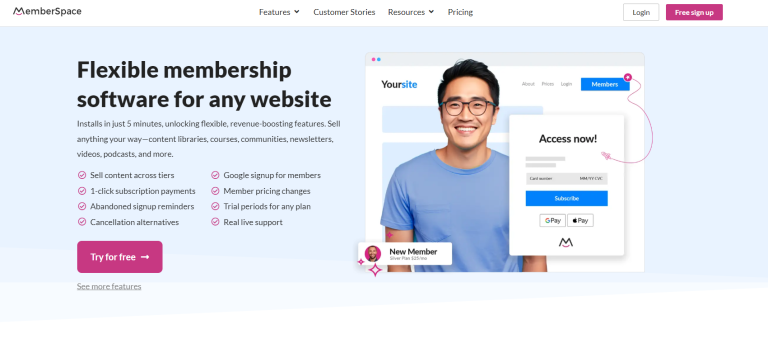
- All-In-One Platforms: Think of these as the “done for you” option. They bundle hosting, membership features, payment processing, and sometimes even email marketing into a single monthly fee. They’re built for creators who want to focus on content, not code.
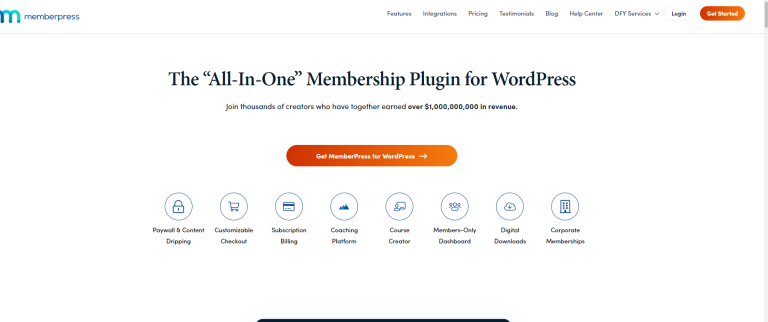
- WordPress with Plugins: This is the “build it yourself” route. You get a hosting account, install WordPress (which is free), and then add a powerful membership plugin like MemberPress to handle the specific features you need. This approach gives you endless flexibility.
I’ve used both, and the trade-offs are crystal clear. All-in-one platforms are faster to set up, but they can be more limiting and expensive as you grow. WordPress requires more of a learning curve initially, but it offers total freedom and can often be more cost-effective in the long run.
This decision tree can help visualize where to focus your efforts. Your tech choice should always support the intersection of your expertise, your passion, and what your audience will actually pay for, not the other way around.
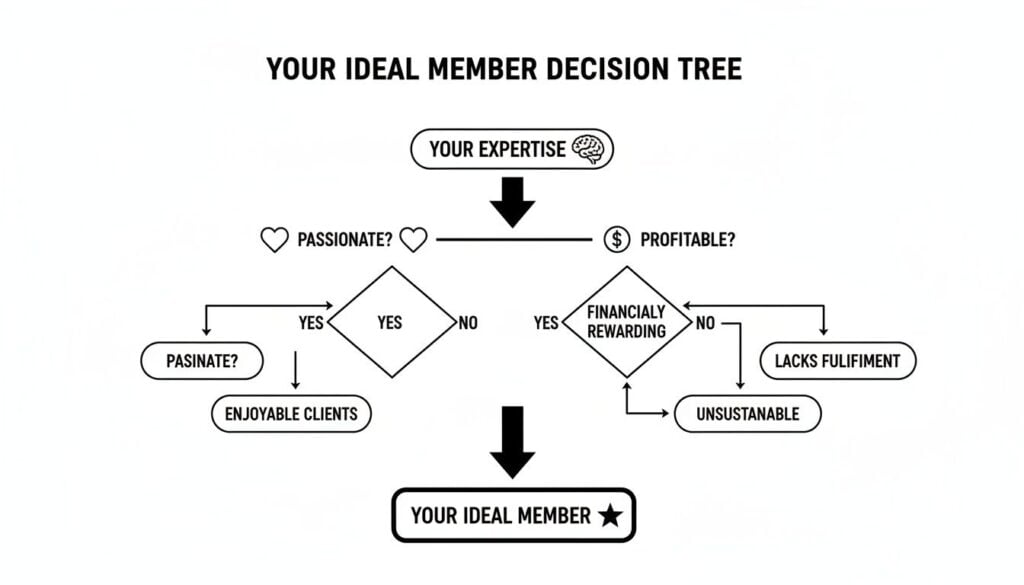
Ultimately, the platform is there to serve your business model, so pick the one that best supports the kind of value you’re delivering.
Membership Platform Options at a Glance
To help you decide, here’s a quick comparison of the most common approaches. Think about your technical skills, budget, and long-term vision as you review these options.
| Platform Type | Best For | Pros | Cons |
|---|---|---|---|
| All-in-One Platform | Non-technical founders who want speed and simplicity. | Fast setup, predictable costs, all features under one roof, dedicated support. | Less customization, higher long-term costs, potential vendor lock-in. |
| WordPress + Plugin | Creators who want maximum flexibility and control. | Total design freedom, own your data, large plugin ecosystem, cost-effective. | Steeper learning curve, you manage security & updates, initial setup is longer. |
| Custom Development | Businesses with unique needs and a significant budget. | Built exactly to your specifications, completely unique features. | Very expensive, long development time, requires ongoing maintenance. |
This table should give you a solid starting point. For most people reading this, the choice will come down to an all-in-one platform versus a WordPress build.
Key Features to Look For
No matter which path you choose, there are some non-negotiable features your platform must have. Don’t get distracted by shiny objects. Focus on these core functions first.
- Content Dripping: This lets you release content to members on a schedule, for instance, a week after they sign up. It’s perfect for courses or onboarding sequences and prevents people from feeling overwhelmed.
- Tiered Membership Levels: You absolutely need the ability to create different access levels (like Bronze, Silver, and Gold) with different pricing and content. This is key to maximizing revenue.
- Payment Gateway Integration: The platform must easily connect with payment processors like Stripe or PayPal. A smooth, trustworthy checkout process is critical for conversions.
- Community Tools: Look for built-in forums or simple integrations with community platforms. Community is the glue that keeps people subscribed long after they’ve gone through your content.
For those in the fitness industry, where specific features like workout builders and progress tracking are essential, a detailed guide on how to choose an online personal training platform can be incredibly helpful.
My Recommendation For Most Beginners
If you’re just starting out but want maximum flexibility for the future, I almost always recommend the WordPress route. Using a top-tier plugin like MemberPress gives you enterprise-level features without the huge price tag.
You get total control over your branding, your data, and your user experience. While it might seem like more work upfront, the ability to customize and scale without being locked into one company’s ecosystem is a massive advantage down the road.
Your tech stack should be a tool that serves your business, not a cage that limits it. Choose the platform that gives you the most room to grow into your vision, even if it requires a little learning at the start.
The goal is to make an informed decision now so you don’t have to go through a painful, expensive migration process in a year or two. If you want to go deeper, check out our guide on the best membership site platform options available today. It’ll help you compare specific tools and find the perfect fit.
Crafting Your Content and Community Strategy

Alright, let’s get to the good stuff. This is where your membership site really comes to life. Your content is what gets people to pull out their credit cards, but your community is what convinces them to keep it on file, month after month. The two have to be in perfect sync.
Thinking about what you’ll actually offer inside your membership can be a blast. Are you building a signature course? Maybe you’ll host live Q&A sessions or share exclusive templates and tools that make your members’ lives easier. The real goal is to map out a content plan that delivers undeniable value without running you into the ground.
But even more important is fostering a genuine sense of belonging. Just flicking the switch on a forum and hoping for the best isn’t a strategy. This is where you build the “stickiness” that turns a simple subscription into an indispensable part of your members’ world.
Designing Your Core Content Offer
Before you even think about opening the doors, you need a solid foundation of content ready to go. From the moment they sign up, members need to feel like they made a brilliant decision. This initial batch of content can take a few different shapes.
A great place to start is with a “quick win” library. Think of a collection of checklists, templates, or short video tutorials that solve an immediate, nagging problem for your ideal member. If you’re running a graphic design membership, this could be a killer set of customizable social media templates.
Another popular route is the signature course. This is a more structured learning path that guides members from A to B. It becomes the centerpiece of your membership, with all your other content playing a supporting role.
Your goal for day-one content is to provide enough high-impact material to make a brand-new member think, “Wow, joining this was a no-brainer.”
Whatever you choose, organize it logically. New members shouldn’t feel like they’ve been dropped in the middle of a maze. A simple onboarding sequence that points them to the most valuable starting resources can make a world of difference.
Mapping Out Your Content Calendar
Once you have your foundational content locked in, you need a plan to keep things fresh. A content calendar is your best friend here. It’s your promise to members that you’re consistently delivering new value, which is a massive piece of the retention puzzle.
Here are a few models to consider for your ongoing plan:
- The “Theme of the Month” Model: Each month, you dive deep into a specific topic. You could release a new workshop, host an expert interview on that theme, and facilitate focused discussions.
- The “Drip-Feed” Model: You release new content on a set schedule, like a new lesson dropping every Monday. This works wonders for longer courses because it prevents overwhelm and keeps people logging in regularly.
- The “Live Events” Model: Your primary value comes from real-time interaction, like weekly Q&A calls, co-working sessions, or monthly masterclasses. The recordings then become a growing library of evergreen content.
Honestly, a hybrid model is often the sweet spot. Mix some pre-recorded, always-relevant content with regular live events to get the best of both worlds. This gives members both the flexibility to learn on their own time and a compelling reason to show up and engage.
Building a Community, Not Just a Forum
This is the secret sauce. A strong community turns passive content consumers into active, engaged participants who feel like they belong to something special.
Here’s a game-changing stat for you: community-focused platforms often see 85-92% retention rates. That completely blows away the 60-70% seen on sites that just push out content. This is why building real interaction into your site from day one is non-negotiable.
So, how do you actually build a real community?
- Spark Conversations with Prompts: Don’t just wait for people to start talking. Post a “Win of the Week” thread every Friday or a “Goals for the Month” post on the first. Give people a reason and a place to share.
- Host Member-Only Events: These don’t have to be formal, high-production workshops. A casual “virtual coffee” chat or a member spotlight interview can be incredibly powerful. The goal is connection, not just content delivery.
- Create a Culture of Support: Actively encourage members to help one another. When you see someone ask a question you know another member is an expert on, tag them! Facilitate those connections.
Fostering this kind of environment takes real work, but the payoff is huge. When members build genuine relationships with each other, your site becomes an indispensable part of their lives. For a deeper dive, check out our guide on community engagement best practices, it’s packed with ideas you can implement right away.
Setting Your Price and Membership Tiers
This is it. The big question. The one that probably keeps you up at night.
How much should I charge?

If you price too high, you get that sinking feeling that no one will ever click “buy.” But if you price too low, you’re not just leaving money on the table. You’re actively devaluing your expertise and attracting members who aren’t really committed.
Let’s cut through the anxiety. The goal here isn’t to guess a random number. You want to find that sweet spot where the price is a no-brainer for your ideal member because it perfectly reflects the incredible value you’re offering them. It’s a mix of math, a little psychology, and a healthy dose of confidence in what you’ve built.
Common Membership Pricing Models
There’s no magic, one-size-fits-all price. The best model for your membership hinges entirely on what you’re providing, who you’re serving, and the kind of experience you want to create. I’ve seen all of the following approaches work wonders when they’re aligned with the right content and community.
Here’s a quick overview of different pricing strategies to help you choose the best model for your membership site’s value proposition and target audience.
| Pricing Model | How It Works | Best Suited For |
|---|---|---|
| Tiered Pricing | Offer different levels of access (e.g., Bronze, Silver, Gold) at different price points. Each tier unlocks more content, features, or personal access. | Memberships with a wide range of content or varying levels of desired interaction, catering to different budgets and needs. |
| All-in-One Pricing | One price, one level of access. Every member gets everything you offer. Simple and straightforward for both you and your members. | Communities where equality is key, or when the core offering is a single, unified experience (like a content library or forum). |
| Metered/Usage-Based | Members pay based on consumption, like a per-article fee or a monthly credit system for accessing a certain number of resources. | Niche content platforms where members may only need access to specific pieces of information rather than an entire library. |
Each of these models has its own strengths. By understanding how they work, you can make a much more informed decision that sets your membership up for success from day one.
While they all can work, the tiered model is often the smartest place to start. It gives you the flexibility to serve people at different price points and commitment levels. If you want to go deeper on this, we’ve put together a detailed breakdown of different subscription pricing models.
The price you set is more than just a number. It’s a signal that communicates the quality and transformation you’re promising. Don’t be afraid to charge what you’re worth.
Once you land on your pricing structure, you have to figure out how you’ll actually collect the money. This makes choosing a payment gateway a critical next step. You need a reliable processor that integrates smoothly with your membership platform to make sure that first payment experience is seamless for your excited new members.
Structuring Your Tiers for Success
If you do go the tiered route, clarity is everything. The value jump between each level needs to be crystal clear. Your goal isn’t just to list features but to design each tier for a specific member persona.
A simple yet powerful way to think about this is the “Good, Better, Best” framework.
The “Good” Tier (Entry-Level): This is your most accessible option, designed to lower the barrier to entry. It typically includes your core content and basic community access. It’s the perfect “foot in the door” for people who are new to your work and want a taste of what you offer without a major commitment.
The “Better” Tier (Most Popular): This is the one you want most people to buy. It’s the full experience, all your content, full community privileges, and maybe a monthly Q&A or live event. You should position and price this as your flagship offer.
The “Best” Tier (Premium): This is for your ride-or-die fans. It includes everything from the other tiers plus something that gives them direct, high-value access to you. Think one-on-one coaching, a small-group mastermind, or personalized feedback on their work.
When you lay these out on your sales page, make sure to visually highlight the “Better” tier as the “Recommended” or “Most Popular” choice. This little bit of social proof is a powerful psychological nudge that can significantly guide your visitors’ decisions.
Marketing and Launching for a Successful Start

You’ve done the hard work of building the house. Now it’s time to throw a killer party. A successful launch is never an accident. It’s the direct result of a smart, strategic plan that starts long before you even think about hitting the “go live” button.
Let’s walk through how to build real momentum before you open the doors and then dive into the launch itself. I’ll share a simple “founding member” strategy that I absolutely love. It’s a fantastic way to get your first wave of enthusiastic members and crucial, honest feedback.
Building Pre-Launch Buzz
The single biggest mistake I see creators make is building in silence and then expecting a flood of signups on day one. Your launch should feel like the exciting finale of a conversation you’ve already been having with your audience for weeks, or even months.
The goal here is to build so much anticipation that when you finally open the doors, people are already lined up and ready to join. This pre-launch phase is all about warming up your audience and proving there’s real demand for what you’ve built.
A great way to do this is by creating a waitlist. Set up a simple landing page that teases the upcoming membership, highlights the core value, and offers a compelling reason to sign up for early access. Maybe waitlist members will get a special early-bird discount or an exclusive bonus. It works.
Your launch is the peak of a carefully built momentum wave. The work you do in the weeks leading up to your launch will have a bigger impact on your success than anything you do on launch day itself.
Start talking about the problems your membership will solve on social media, in your newsletter, and on your blog. Share behind-the-scenes content of you creating the materials. This kind of transparency builds trust and gets people invested in your journey.
The Founding Member Launch Strategy
For your very first launch, I’m a huge fan of keeping things simple and focused. My favorite approach is the founding member launch. It’s less about a massive, high-pressure public event and more about inviting a small, dedicated group to be your very first members.
Here’s the basic idea:
- Create an Exclusive Offer: You’ll offer a limited number of spots, say 20-50, at a significantly reduced price. This could be a deep lifetime discount or a special low annual rate they get to keep as long as they remain a member.
- Be Transparent: The key is being upfront that they are the first ones in. You position it as a unique opportunity for them to help shape the community and get unparalleled access to you in exchange for their early support and feedback.
- Focus on Your Warmest Audience: You’ll promote this offer exclusively to your waitlist and your most engaged followers. This isn’t the time for broad advertising. You want the people who already know, like, and trust you.
This approach does a few amazing things all at once. It generates your first revenue, validates your offer with actual paying customers, and gives you a core group of passionate members who feel a real sense of ownership. Their feedback will be priceless.
Ongoing Marketing for Steady Growth
Your launch is just the beginning. After the initial excitement fades, your focus needs to shift toward creating a sustainable marketing system that brings in a steady stream of new members. You don’t want your growth to rely entirely on big, stressful launch events.
Content marketing is your best friend here. Consistently creating valuable free content, like blog posts, podcast episodes, or YouTube videos, that solves your ideal member’s problems is the best way to attract the right people. Think of each piece of content as a friendly invitation to learn more about your paid community.
A simple email funnel is another powerful tool. When someone joins your email list, you can automatically send them a short series of emails that introduces them to your work, provides genuine value, and gently guides them toward your membership offer. This system works for you 24/7.
Ultimately, your happiest members will become your best marketers. Membership growth is accelerating, with well-managed organizations seeing an 8% average annual increase. But what’s really telling is that word-of-mouth absolutely crushes paid ads, driving 86% of new sign-ups. This just proves the incredible power of building a strong community. You can find more details in these membership management statistics.
Focus on creating an amazing experience, and your members will do the selling for you.
Common Questions About Building a Membership Site
Alright, we’ve covered a ton of ground on how to plan, build, and launch your membership site. As we start to wrap up, it’s completely normal to have a few nagging questions still bouncing around in your head. Building something from scratch is a huge undertaking, and it’s smart to want every last detail buttoned up.
This is where I’ll tackle the most common questions that pop up for creators just like you. Think of this as a quick-fire round to clear up those final hurdles and give you that last jolt of confidence to dive in.
How Much Does It Cost to Start a Membership Site?
This is the number one question I get asked, and the honest answer is… it depends. The cost can swing pretty dramatically based on the tools you choose.
You could absolutely get a lean setup going with WordPress and a few quality plugins for just a few hundred dollars a year. On the flip side, dedicated all-in-one platforms typically start somewhere in the $50 to $150 per month range.
For most people just starting out, the biggest initial costs are going to be:
- The subscription for your membership platform or plugin.
- An email marketing service to actually talk to your members.
- Maybe a premium theme or page builder to make your site look professional.
A realistic starting budget for a solid, professional-looking site usually lands somewhere in the $500 to $1,500 range for the entire first year. You can definitely bootstrap it for less, but only if you’re comfortable handling more of the tech side of things yourself.
How Much Content Do I Need Before I Launch?
This is a classic “it depends” situation, but the good news is the answer is almost always “less than you think.”
You absolutely do not need a massive library of content ready to go on day one. In fact, trying to build one is a surefire way to burn out before you even launch. Overloading new members with too much content is also a real problem.
Instead, your focus should be on having a strong “core offer” ready to go.
This could be:
- One complete signature course that delivers a clear, tangible result.
- A small library of 5-10 foundational workshops that solve your members’ biggest pain points.
- A resource center with your 15 most valuable templates, checklists, and guides.
The goal is to provide immediate, tangible value the second someone signs up. You want your first members to log in and have that “aha!” moment where they know they made an amazing decision. From there, you can build out your content library over time with a consistent schedule, which also gives members a reason to stick around.
What Is the Best Way to Keep Members From Canceling?
Reducing churn, the rate at which members cancel, is the single most important metric for long-term success. While fresh content is great, the absolute best way to keep people from leaving is to build a strong, active community.
When members form real connections with you and, more importantly, with each other, your membership becomes more than just a content library. It becomes an essential part of their personal or professional lives. It becomes a place they belong.
To make this happen, you have to be proactive.
- Host Live Events: Regular Q&As, member spotlight interviews, or even casual “virtual coffee” chats can forge powerful bonds. It shows you’re present and invested.
- Spark Engaging Discussions: Don’t just wait for people to talk. Post weekly prompts, share interesting industry news, or create threads for members to share their wins and challenges. Get the conversation started.
- Listen to Feedback: When members feel heard and see their suggestions implemented, they develop a sense of ownership and loyalty. They stick around because they feel like they’re part of building something special.
Ultimately, a combination of consistent value and genuine connection is what makes a membership site truly “sticky.” When you deliver on both of those fronts, you’ll find that keeping members happy is just a natural outcome of the great experience you’ve built for them.

![How to Launch a Membership Site Using Squarespace [Step By Step Guide]](https://learnstream.io/wp-content/uploads/2024/11/image-768x433.png)