
Best Platform for Selling Cohort Based Courses (2026)
Your cohort course deserves a better home.
You’ve mapped the curriculum. You’ve picked the live session dates. Maybe you already have a waitlist, or at least a strong hunch that people want this. Then the platform search starts, and you’re buried in pricing pages, feature grids, “all-in-one” promises, and enough tabs to make your laptop wheeze.
That part quickly gets messy.
Cohort-based courses ask more from a platform than a typical self-paced course. You’re not uploading videos and adding a checkout page. You need enrollment flows, session logistics, reminders, structured pacing, discussion spaces, and a setup that keeps people showing up week after week. If the platform gets clunky, learners feel it. If the admin side is clunky, you feel it first.
I’ve seen creators make this harder than it needs to be. They bolt together five tools, save a little money at the start, then spend launch week chasing broken automations and confused students. I’ve also seen people overbuy and end up paying for enterprise-grade features they never touch.
Finding the right fit is simpler. Pick the platform that fits your delivery model, your audience source, and how hands-on you want to be with operations.
This guide cuts through the noise. I’m focusing on the strongest options for different use cases, not the platforms with the loudest marketing. Some are community-first. Some are all-in-one. Some are better if you already have an audience. Others help if you want distribution or lighter setup.
If you’re also thinking beyond the course itself, a solid referral program for course creators can help you turn happy students into your next cohort.
Let’s get to the tools.
1. Maven
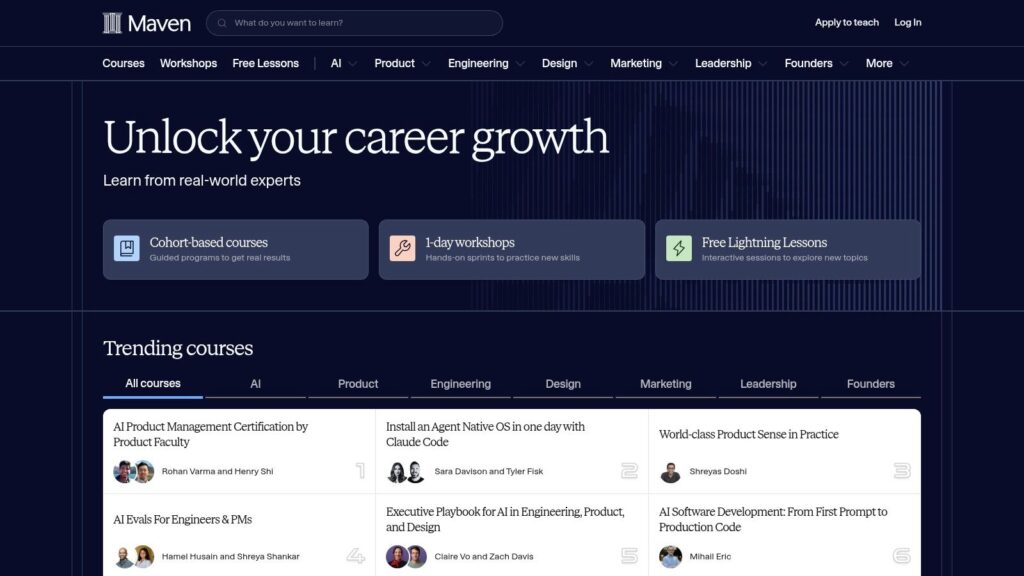
You have a strong course idea, a premium audience, and no interest in stitching together five tools before the first launch. Maven fits that situation well.
It stands out because it combines two things that are hard to get in one place. You get a platform built for live cohort delivery, and you get marketplace exposure. For creators selling expertise in areas like product, AI, leadership, or career growth, that mix can shorten the path from idea to first cohort.
Best for marketplace-first launches
Maven makes the most sense if discovery is part of your platform decision, not just course delivery.
A lot of cohort platforms assume you already have the audience and just need infrastructure. Maven is different. It gives you a cleaner path to applications, payments, scheduling, and launch logistics while also placing your course where interested buyers may already be browsing. That can help early-stage creators test positioning before they invest in a larger owned setup.
Here’s where it tends to work well:
- Built for live cohort operations: Applications, deadlines, reminders, and learner communication are part of the native flow.
- Strong match for premium outcomes: It suits experts selling transformation, access, and live guidance more than large libraries of self-paced content.
- Useful for offer validation: You can test demand before committing to a full website, CRM, and community stack.
If you’re still refining the teaching model, this guide to building cohort-based courses will help you pressure-test the offer before you choose software.
The trade-off to price out early
Maven is convenient at the start. Later, that convenience can become expensive.
This is the primary trade-off. Revenue share feels reasonable when you are proving demand and want speed. Once enrollments become repeatable, flat-fee platforms often leave more margin in your business. I usually recommend creators run the math on two or three successful cohorts, not just the first one.
Maven also works best for a specific category of course. If your program depends on a deep community layer, complex learning paths, or heavy customization, other platforms in this guide may fit better.
Choose Maven if you want marketplace exposure, fast setup, and a platform that matches premium live cohort teaching. Skip it if you already have reliable audience acquisition and want tighter control over margins from day one.
Direct site: Maven
2. Teachfloor
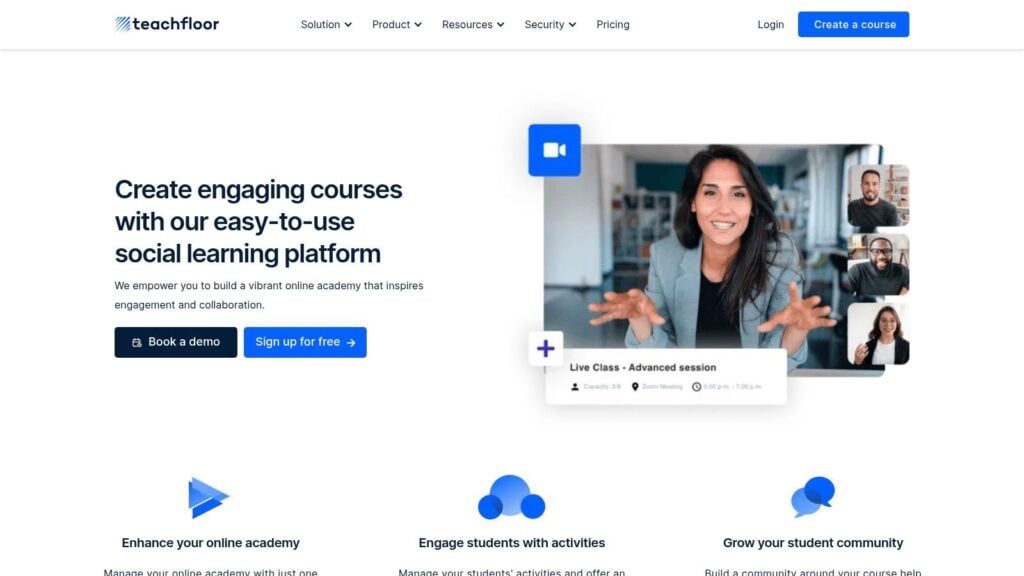
Teachfloor feels like it was built by people who understand the week-to-week reality of live instruction.
Some platforms are great at selling. Some are great at community. Teachfloor leans into structured learning delivery. If your course includes live sessions, assignments, peer work, and a more formal instructional flow, it’s a strong fit.
Best for cohort-first teaching
Teachfloor is the option I’d shortlist if your course looks more like a bootcamp or guided workshop than a creator product funnel.
The draw is operational clarity. You can run scheduled cohorts and self-paced products in the same environment, tie in Zoom-based teaching, and keep coursework organized without dragging learners across multiple tools. That makes a difference when your students need a clear path, not a digital scavenger hunt.
It also supports SCORM in the product plan notes, which matters if you want to serve corporate clients or organizations that need more standardized content packaging.
What works well in practice:
- Live delivery stays central: Zoom-native workflows and attendance handling support actual cohort teaching, not just content hosting.
- Course structure is stronger: Assignments, pacing, and certifications make more sense here than on community-led platforms.
- Flat pricing is easier to budget: You’re not paying a percentage every time a cohort fills.
Where it can feel limiting
Teachfloor is less useful if your growth plan depends on discovery, broad creator marketing tools, or a giant app ecosystem.
You’ll usually bring your own audience. For many educators, that’s perfectly fine. For newer creators, it means Teachfloor solves delivery better than demand generation.
I also think Teachfloor is better for people who like curriculum structure. If you want your program to feel loose, conversational, and community-led, Circle or Mighty Networks may feel more natural.
In short, Teachfloor is one of the more practical picks when you want a clean cohort LMS without enterprise bloat and without the constant feeling that you’re forcing a self-paced tool to act like a live one.
Direct site: Teachfloor
3. Circle
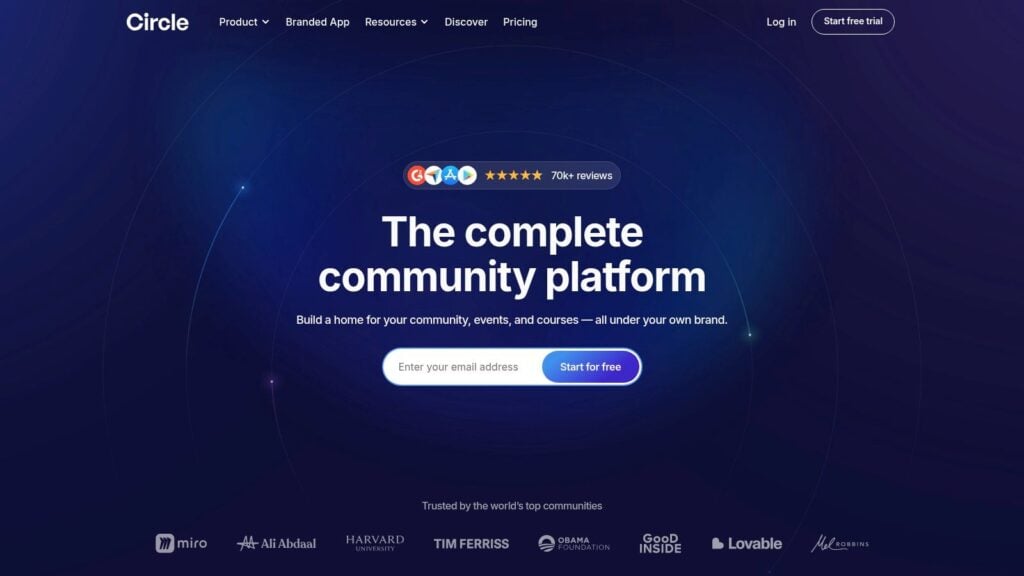
A live cohort can fall apart fast when the session ends and everyone disappears back into email, Slack, and DMs. Circle solves that problem well. It gives the cohort a home base, which matters when discussion and peer accountability are part of what students are paying for.
Circle is the platform I consider when the course is only one layer of the offer. If your program includes networking, office hours, peer feedback, discussion between calls, and an alumni experience after the cohort ends, Circle often makes more sense than a traditional LMS.
Best for community-first cohorts
Circle fits creators who want conversation to carry the learning, not just support it. The product is built around spaces, events, chats, posts, and member interaction. That changes how a cohort feels in practice.
A good example is a coaching-led program where students meet once a week, post wins and blockers between sessions, and stay in the community after graduation. In that setup, the hallway conversation has real value. Circle handles that better than platforms that treat community as an add-on tab.
It also pairs well with a broader community strategy. If you are building that layer intentionally, this guide on how to build online community is a useful companion.
What tends to work well:
- Dedicated cohort spaces: Separate current students, alumni, and paid members without stitching together extra tools.
- Live engagement in one place: Events, chat, discussions, and content live under the same roof.
- Flexible packaging: Sell a cohort as a standalone program, part of a membership, or an upsell into ongoing access.
Where Circle can feel weak
Circle is less convincing for grading-heavy programs, compliance training, or courses that need a formal instructional structure.
You can deliver lessons there. The trade-off is that Circle approaches learning from the community side first. Some educators love that because it keeps the experience lively and relationship-driven. Others miss stronger assignment handling, assessment workflows, and the clearer learning path you get in a more course-centered platform.
That distinction matters.
If your students are buying access to each other as much as access to you, Circle is one of the strongest options in this guide. If they need rigid curriculum control, tracked progress, and traditional LMS mechanics, another category will fit better.
Direct site: Circle
4. Mighty Networks
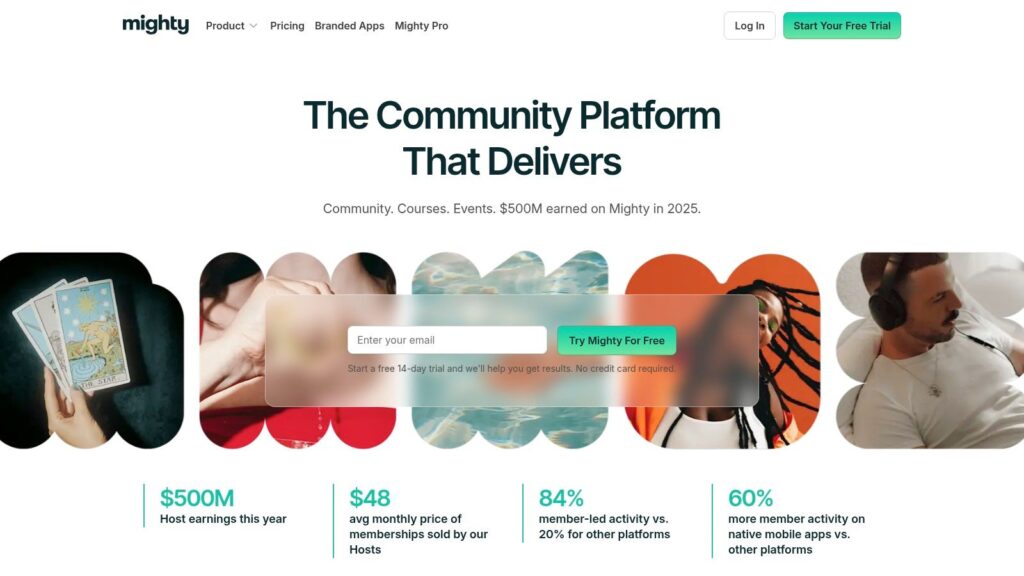
Mighty Networks sits in a similar neighborhood to Circle, but the feel is different.
Where Circle often feels like a polished community operating system for creators, Mighty Networks feels more like a social membership hub with courses layered into it. That can be a plus if your business model includes memberships, recurring engagement, and multiple offer types beyond one flagship cohort.
Best for memberships plus cohorts
Mighty Networks is strong when your cohort is one product inside a broader ecosystem.
Maybe students join a paid community first, then upgrade into a live cohort. Maybe they complete the cohort and roll into a membership for ongoing support. Maybe you sell events, bundles, and subscriptions around the main program. Mighty gives you room for that.
The product plan notes also point to flexible ticketing for multi-tier cohort access, subscriptions, and bundles through Stripe. That packaging flexibility matters more than people think. A cohort rarely stays a standalone product forever. The better businesses usually build an offer ladder around it.
What tends to work well:
- Mobile experience: Learners can stay connected without living in their email inbox.
- Community and courses together: Good fit for hybrid learning businesses.
- Flexible product packaging: Helpful for memberships, bundles, and layered access.
Where it can feel light
Course authoring is not the deepest here.
If you care most about instructional flow, assessment detail, or a more formal LMS experience, Mighty may feel too simple. It’s better at engagement architecture than curriculum architecture.
There’s also the usual plan-gating issue. Some features and fee structures only make sense once you move into higher tiers, so it’s worth checking the current plan details before you build your whole offer around them.
I like Mighty Networks for creators who think in ecosystems, not single courses. If that’s your model, it’s a practical contender for the best platform for selling cohort based courses.
Direct site: Mighty Networks
5. Kajabi

A common Kajabi buyer is already tired of stitching five tools together before a cohort even opens. Leads come in through one app, email lives in another, checkout breaks somewhere in the middle, and follow-up depends on a Zap that nobody has checked in months. Kajabi appeals to that creator.
Kajabi is the business-builder’s cohort platform. It works best for operators who care as much about lead capture, conversion, and post-purchase automation as they do about the course itself.
Best for all-in-one marketing and delivery
Kajabi makes sense when the cohort is one product inside a larger education business.
You can run a live program, sell an evergreen course, add coaching, and manage email sequences from the same account. That setup reduces handoffs and cuts down on the small admin problems that eat launch weeks alive. For a solo creator or lean team, that operational simplicity is a key benefit.
It also helps if your sales process has a few steps. Webinar registration, application funnels, checkout pages, upsells, and nurture emails are native territory for Kajabi. If you’re comparing broader tools for creators with mixed product lines, this guide to the best platform to sell online courses helps place Kajabi in the wider market.
What stands out in practice:
- Native marketing tools: Email, automations, funnels, and checkout live under one roof.
- Strong offer packaging: Cohorts, coaching, memberships, and evergreen courses can sit in the same business.
- Better brand control: The customer experience feels more like your company and less like a generic course portal.
Where Kajabi can pinch
Kajabi usually makes financial sense once the business model is clear.
If you only need a simple cohort setup with live calls, lesson delivery, and basic discussion, it can feel heavier and more expensive than necessary. Community is present, but it is not the center of gravity in the way it is on Circle or other community-first platforms. The trade-off is straightforward. Kajabi gives you more selling infrastructure, and you pay for it.
Plan limits also deserve a hard look before launch. The cheapest entry point can look fine on paper, then feel tight once you add advanced automations, multiple products, or the specific cohort workflow you had in mind.
Kajabi is a strong fit for premium offers with a real sales process behind them. If your question is not just “Where do I host this cohort?” but “How do I market, sell, onboard, and upsell it without bolting tools together?”, Kajabi belongs on the shortlist.
Direct site: Kajabi
6. Thinkific
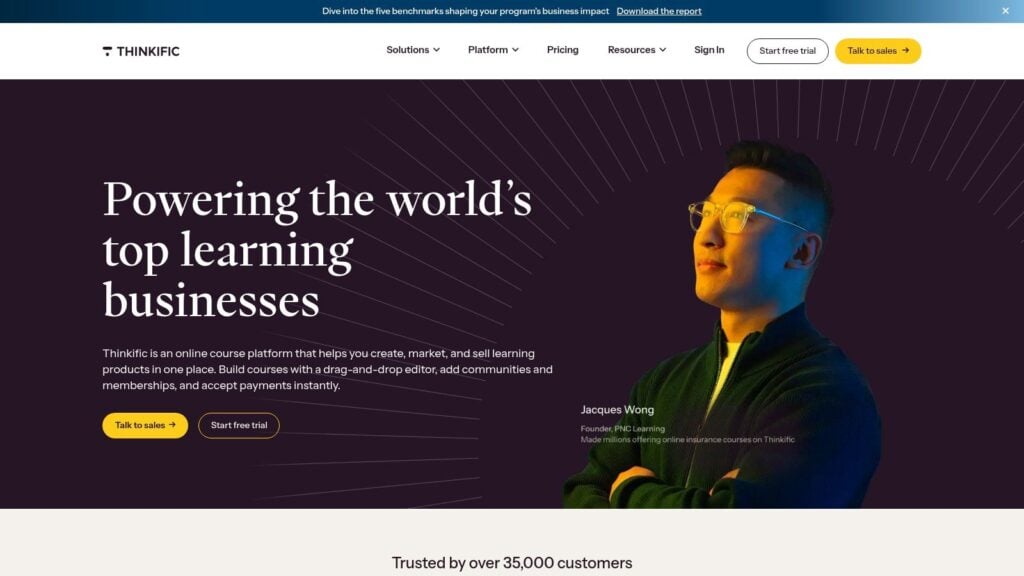
Thinkific is the practical middle lane.
It doesn’t scream “cohort platform” in the same way Maven or Circle does, but that’s part of its appeal. For many creators, the best setup is not the flashiest one. It’s the one that can support cohort launches, evergreen sales, digital downloads, communities, and admin workflows without becoming brittle.
Best for hybrid catalogs
Thinkific works well when your business has more than one teaching model.
You can use drip schedules and date-based unlocks to create a paced cohort experience. You can layer in live events and communities. You can also keep evergreen products and downloadable resources in the same account. That flexibility is useful if you’re still evolving the business model or if you plan to run both live and self-paced versions of the same course.
What I like here is predictability. Thinkific tends to feel more like stable infrastructure than a trend-driven creator tool.
A few strengths stand out:
- Flexible delivery modes: Good for paced courses, memberships, and mixed catalogs.
- Admin tooling: Group orders, invoicing, API access, and webhooks become useful as you grow.
- Cleaner cost structure: The plan notes highlight 0% platform transaction fees, which many creators prefer over revenue-share models.
What takes more setup
Thinkific does not give you a single “cohort mode” that magically handles every live-program need.
You build the cohort behavior by combining features like drip content, access windows, events, and segmentation. That’s workable, and for some teams preferable, but it requires more deliberate setup.
I usually recommend Thinkific to creators who want a dependable owned platform and don’t mind spending a little time designing the cohort experience themselves. If you want your system to feel more assembled around your business than dictated by a marketplace or community model, Thinkific deserves a close look.
Direct site: Thinkific
7. Disco
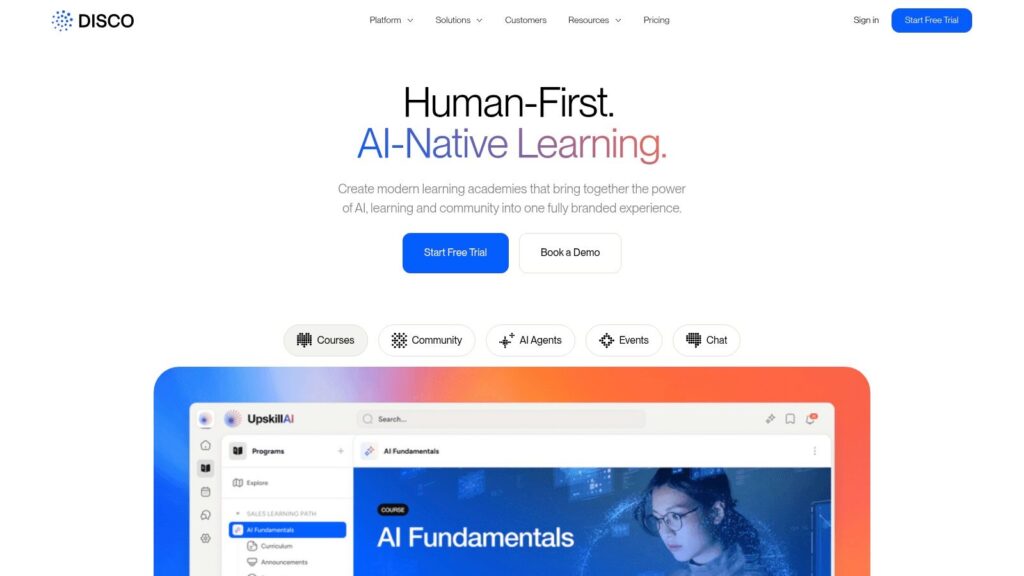
A single live cohort is one kind of business. An academy with multiple intakes, mentors, client stakeholders, and reporting needs is another. Disco is built for the second job.
Best for academies and B2B training
Disco fits teams that run structured learning programs at scale. That includes internal academies, client education, partner enablement, and repeat cohort programs with several people involved in delivery. Solo creators can use it, but it tends to feel more natural for operators managing a system, not just teaching a class.
What stands out is the way learning, community, and program management sit together. The social layer is part of the experience from day one, which matters when completion depends on discussion, accountability, and peer interaction instead of just watching lessons alone.
A few use cases make the fit clear:
- Multi-cohort delivery: Better suited to teams running several active programs at once.
- B2B packaging: Useful if you need a more formal setup for client training, partner programs, or organization-based access.
- Facilitator-led learning: Works well when mentors, coaches, or community managers play an active role in the cohort experience.
There is a trade-off.
Disco can feel like a lot of platform if you are still testing your first offer. The product direction and pricing make more sense once the program has operational complexity. If your setup still fits on a whiteboard and a simple calendar, you may not need this much infrastructure yet.
I usually recommend Disco to teams that already know their category. If you are building a community-first academy or a client education engine, it deserves a serious look. If you only need to launch one flagship cohort and keep overhead low, simpler tools are easier to live with.
The shortest way to frame it is this. Maven helps sell a premium learning experience. Kajabi helps run a creator business. Disco helps coordinate a training operation.
Direct site: Disco
8. Ruzuku
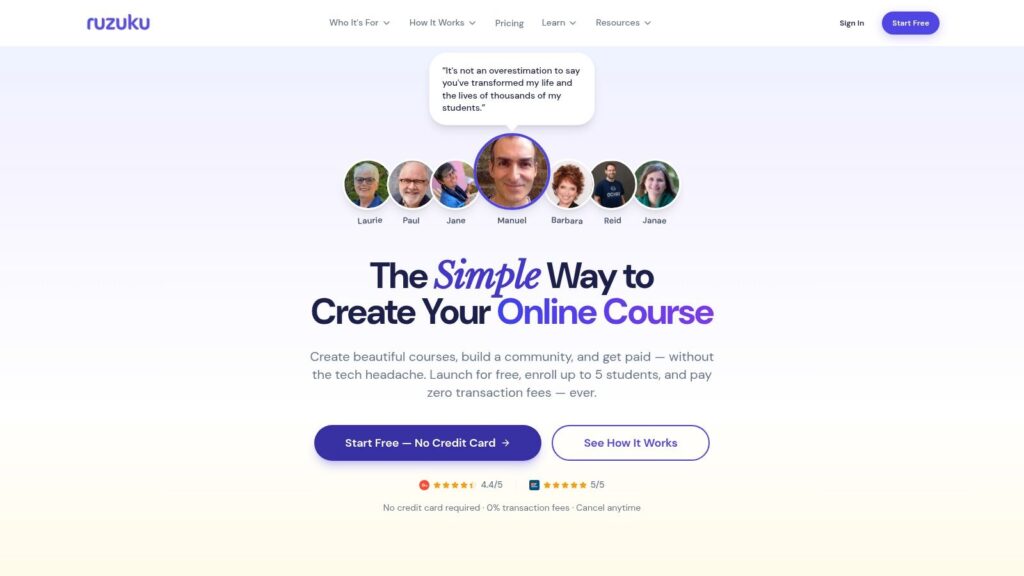
Ruzuku is the “keep it simple and get the cohort out the door” option.
I mean that in a good way. A lot of creators do not need a giant ecosystem, a built-in marketplace, or fifteen kinds of automation before they teach the first session. They need enrollment, pacing, discussions, live meetings, and a setup that won’t make them regret launch week.
Best for straightforward cohort delivery
Ruzuku suits educators who want a clean teaching environment without getting dragged into stack complexity.
You set start dates and enrollment windows, organize lessons around a shared schedule, host live sessions, and keep discussion inside the course experience. For coaches, instructors, and smaller cohort programs, that can be enough.
What makes it appealing is what it avoids:
- No revenue share in the plan notes: Easier to protect margin once the course starts selling.
- Transparent setup: You can understand the product quickly.
- Completion-friendly structure: It supports time-bound teaching without requiring a lot of technical gymnastics.
Where you may outgrow it
Ruzuku is not the tool I’d pick for advanced marketing funnels, layered communities, or broad discovery.
If your launch playbook depends on email automation, advanced segmentation, and upsells across a big digital product catalog, Kajabi or Thinkific will usually give you more room. If your offer depends on a lively member network, Circle or Mighty may serve you better.
Still, there’s real value in software that stays out of the way.
If your biggest risk is overcomplicating the launch, Ruzuku can be the better choice than a more powerful platform you never fully configure.
For solo educators and smaller teams, that trade-off is often worth it.
Direct site: Ruzuku
9. Virtually
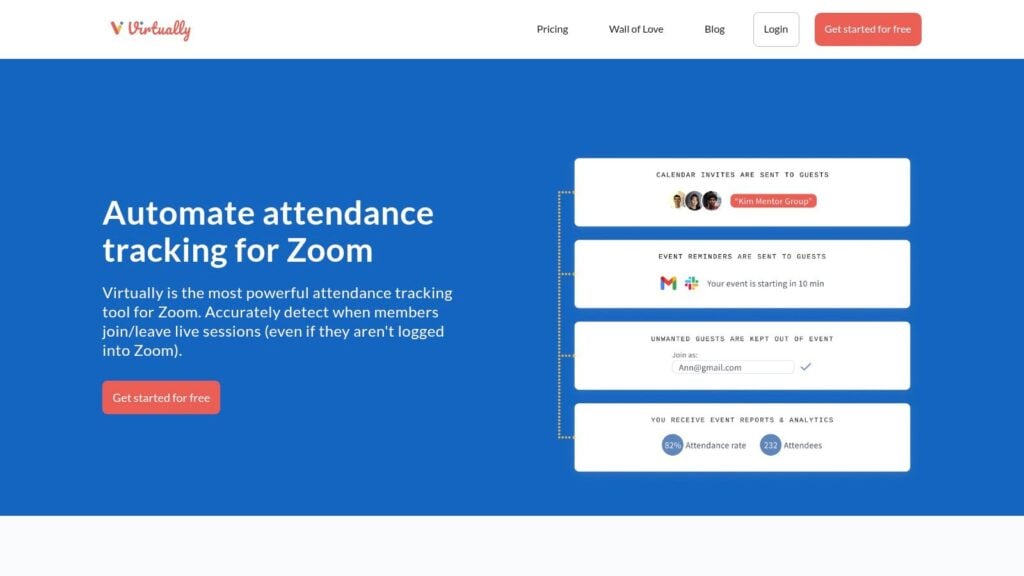
Virtually is not a course platform in the usual sense, and that’s exactly why some teams need it.
If you already like your course host or community platform but hate managing the live-ops side of a cohort, Virtually can fill that gap. It handles the scheduling-and-attendance mess that tends to eat up your time once a program has multiple sessions, facilitators, reminders, and moving cohorts.
Best for operations-heavy live programs
Virtually is a strong fit if your stack already exists.
Maybe you host content in Thinkific, community in Circle, and calls on Zoom. That can work, but the admin burden grows quickly. Virtually helps by automating event management, attendance tracking, reminders, and integrations with tools like Slack, Airtable, Zapier, and Circle.
That makes it especially useful for:
- Bootcamps and academies: Where live sessions repeat across several weeks.
- Teams with existing tools: You don’t have to migrate your whole business to benefit.
- Programs with facilitators: Attendance logs and reminder cadences get more important when more people are involved.
The obvious limitation
Virtually is an operations layer, not a standalone LMS.
You still need somewhere to host curriculum, community, payment pages, or member access. So it’s not the best platform for selling cohort based courses on its own. It’s the best support tool for making a cohort stack run with less friction.
I like it for mature programs that have outgrown manual coordination but don’t want to rebuild everything from scratch. If launch week feels manageable and week four feels chaotic, this is the kind of tool that helps.
Direct site: Virtually
10. Teachable
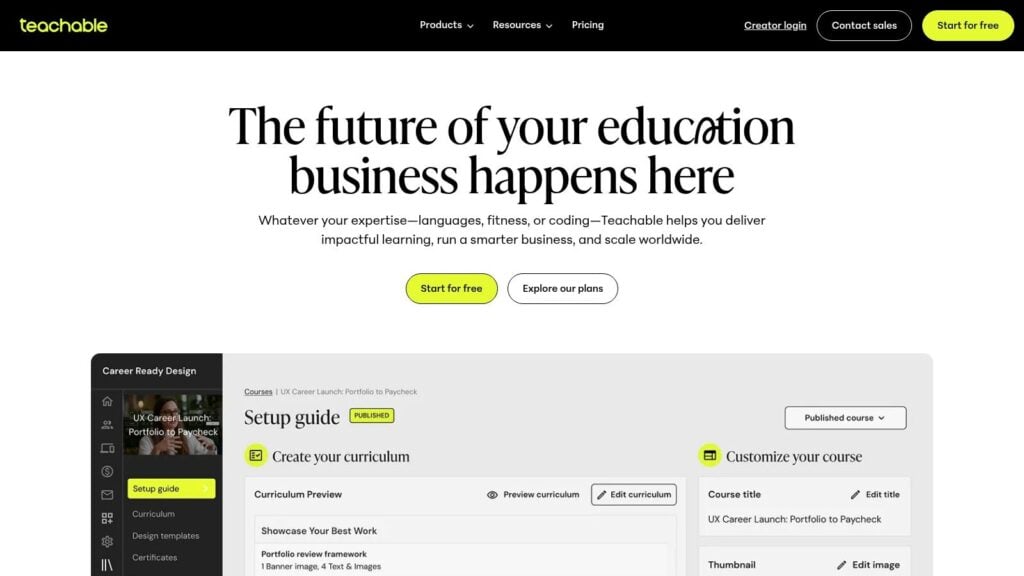
Teachable is the reliable generalist.
It’s known first as a self-paced course platform, but plenty of creators still use it for cohort-style delivery by combining access windows, drip schedules, segmentation, bundles, and live session workflows. That means it can work, as long as you’re comfortable building the cohort logic from general-purpose features.
Best for creators who want familiar infrastructure
Teachable makes sense when you already know the platform, trust the checkout flow, and want to run a hybrid catalog without switching systems.
For many course businesses, that’s enough reason to keep it in the mix. There’s value in choosing software your team can operate confidently. A technically “better” cohort platform is not better if no one enjoys using it.
Teachable’s practical strengths include:
- Simple commerce setup: Useful for bundles, subscriptions, memberships, and standard course sales.
- Broad ecosystem: Plenty of documentation and a large creator user base.
- Hybrid catalog support: Cohort products can sit alongside evergreen offers.
Where it asks for workarounds
The weakness is clear. Cohort delivery is not the native center of gravity.
You’re configuring a cohort experience rather than stepping into one that was built for the format from the start. That’s fine for some businesses, especially if the live component is relatively light. It becomes less attractive if peer interaction, pacing, and session logistics are the whole point of the offer.
Teachable is best when convenience and familiarity beat specialization. If your cohort is one part of a broader online course business, that can be a completely reasonable decision.
Direct site: Teachable
Top 10 Cohort-Course Platforms Comparison
| Platform | Best for | Key features | Pricing & fees | Unique selling point |
|---|---|---|---|---|
| Maven | Creators wanting marketplace demand + end-to-end cohorts | Cohort scheduling, apps & waitlists, reminders, assignments, marketplace | Revenue-share platform fee (reduces margin as scale) | Built-in discovery marketplace and optimized cohort lifecycle |
| Teachfloor | Zoom-native instructors who want fast cohort launches | Scheduled & self-paced modes, Zoom integration, attendance, payments, SCORM | Flat SaaS pricing, no revenue share | Native Zoom workflows and attendance tracking |
| Circle | Community-first cohorts focused on retention & engagement | Courses with drip/start dates, Spaces/groups, live rooms, paywalls | Higher-tier plans required for advanced features | Community + course experience with high completion potential |
| Mighty Networks | Mobile-first communities selling courses & memberships | Cohort/content templates, community feeds, events, analytics, payments | Transaction fees and gated features on some plans | Tight community-to-course integration and mobile UX |
| Kajabi | Creators who need built-in marketing & launch stack | Cohorts, native email, funnels, automations, community & coaching | Higher entry cost; Cohort feature on Growth/Pro plans | All-in-one marketing + course platform for launches |
| Thinkific | Teams wanting flexible cohort/evergreen/membership mix | Drip/date unlocks, live events, communities, group orders, API | 0% platform transaction fees (payment processing still applies) | Flexible product types without platform transaction fees |
| Disco | Academies & B2B training programs scaling multi-cohorts | Cohort & self‑paced templates, membership tiers, operations features | Enterprise-focused pricing | Built for multi-cohort academies and B2B workflows |
| Ruzuku | Creators wanting simple, cohort-focused LMS with clarity | Cohort scheduling, live sessions, discussions, certificates | 0% platform transaction fees | Simple, low-complexity cohort LMS with straightforward pricing |
| Virtually | Ops teams automating live-cohort logistics across platforms | Zoom-native event manager, attendance logs, reminders, Zapier/Airtable/Slack/Circle integrations | Custom pricing as an operational add-on | Operational automation layer for multi-session cohorts |
| Teachable | Creators needing dependable checkout + hybrid catalogs | Drip content, access windows, student tagging, subscriptions, mobile app | Plan-dependent fees; check 2025 plan changes | Reliable payments ecosystem and broad creator documentation |
Stop comparing, start building
If you’ve been stuck in research mode, here’s the honest answer. There is no perfect platform.
There’s the platform that fits your current model best, and there are platforms that create unnecessary friction. That’s the key decision.
For marketplace exposure and a fast way to validate a premium live course, Maven is compelling.
For community-led learning, Circle and Mighty Networks stand out.
For an all-in-one creator business with stronger built-in marketing, Kajabi is hard to beat.
For structured instruction and cohort-first delivery, Teachfloor deserves more attention than it usually gets.
For stable, owned infrastructure that can support cohorts alongside evergreen products, Thinkific and Teachable remain practical choices.
For academy-style programs and B2B learning operations, Disco makes a lot of sense.
For simplicity, Ruzuku is still a useful answer.
And if your delivery stack is already set but operations are getting messy, Virtually can save a surprising amount of admin time.
What usually works best is matching the platform to the shape of your business:
- You need discovery and are testing demand: Maven
- You sell transformation through peer connection: Circle or Mighty Networks
- You want fewer third-party tools: Kajabi
- You teach in a more formal, structured way: Teachfloor
- You run mixed product types: Thinkific or Teachable
- You manage multiple cohorts or client programs: Disco
- You want a lighter setup: Ruzuku
- You need operational support, not a full rebuild: Virtually
Before you commit, do one quick pre-launch check.
Make sure your platform can handle these five things without awkward workarounds:
- Enrollment flow: Applications, checkout, waitlist, or approval flow if needed
- Live delivery: Session links, reminders, and calendar clarity
- Pacing: Drip content, date-based unlocks, or fixed cohort timelines
- Interaction: Discussion, peer accountability, and easy communication
- Follow-up: Upsells, alumni access, feedback collection, or the next offer
If one of those is missing, you’ll feel it as soon as students start joining.
I’d also keep your first launch lighter than your ambition tells you to. You do not need the perfect stack to run a great cohort. You need a reliable home, a clear promise, and enough structure that students know where to go, what to do, and how to stay engaged.
That’s why I keep coming back to the same advice. Pick the platform that fits now. Run the cohort. Learn what breaks. Improve on the next round.
Migration is annoying, but it’s survivable. A delayed launch helps no one.
If you want another perspective on planning the actual offer and promotion side, this guide on how to create and promote an online course is a useful companion read.
And if you’re exploring alternatives, LearnStream is also relevant to this conversation because it supports community-driven learning and cohort-based classes for creators who want to build a more engaged teaching experience.
The software matters. The student experience matters more.
Choose the tool that lets you teach well, sell cleanly, and spend less time babysitting your stack. Then build the cohort.